



South Sudan is struggling to shift from reliance on family and replacement blood donors to voluntary donations, the World Health Organization (WHO) has said, warning that the unstable blood supply could put patients’ lives at risk.
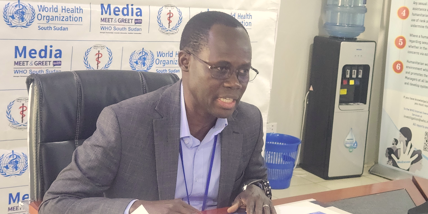
Pontius Bayo, Reproductive Health Officer at WHO South Sudan, said voluntary non-remunerated blood donations remain low, ranging between 7.6 and 34 percent, leaving health facilities heavily dependent on families to find donors when patients urgently need blood.
“A reliable supply of blood can mean the difference between life and death,” he said during a meet-and-greet session with journalists in Juba.
He said safe and timely access to blood is particularly important for women experiencing severe bleeding during childbirth, patients suffering from severe anemia, trauma victims and people undergoing surgery.
Bayo, an obstetrician and gynecologist, recalled treating a woman with a ruptured uterus who required urgent surgery and blood transfusion to survive. He said the patient’s relatives initially left the hospital, leaving medical staff to find blood for her. Bayo eventually donated blood himself before operating on the woman, who survived.
He also recounted the case of a severely anemic one-year-old child who needed a small amount of blood, but a potential family donor refused because of fears that donating blood could put her own life at risk.
“These are stories that are really very touching for me,” the medic said, stressing the need to build public confidence in voluntary blood donation.
A national assessment conducted by the Ministry of Health with WHO support identified several challenges affecting blood transfusion services, including inadequate blood-bank infrastructure and storage capacity, unreliable electricity and weak cold-chain systems.
The assessment also found shortages of essential blood-bank equipment and supplies, insufficient trained personnel, weak quality-management systems, and fragmented, largely paper-based data systems.
WHO said the heavy dependence on family replacement donors creates an unstable blood supply because hospitals often have to rely on relatives to mobilize donors when a patient needs blood urgently.
Bayo said WHO is working with the Ministry of Health and the National Blood Transfusion Services to address the gaps and strengthen the country’s blood transfusion system.
He added that WHO has supported the development of the National Blood Transfusion Services Strategic Plan 2026–2030, which provides a five-year roadmap for improving blood collection, testing, storage, distribution, quality management and emergency preparedness.
The organization has also supported the procurement and installation of 13 fully solar-powered blood-bank refrigerators across South Sudan’s 10 states and three administrative areas.
According to Bayo, health workers have also been trained in blood donor management, transfusion and blood administration, while community leaders have been engaged to help mobilize voluntary donors.
He said the next phase would focus on recruiting and retaining voluntary donors, community mobilization and regular blood-collection drives to gradually move South Sudan away from dependence on family replacement donations.
“Safe blood requires everyone,” Bayo said, calling on the government to provide leadership and sustainable financing, while urging communities, religious and traditional leaders, schools, workplaces and youth organizations to promote voluntary blood donation.
WHO also called on eligible citizens to consider becoming regular voluntary blood donors, saying a stronger national blood system would help ensure that patients receive safe blood when they need it.

 and then