



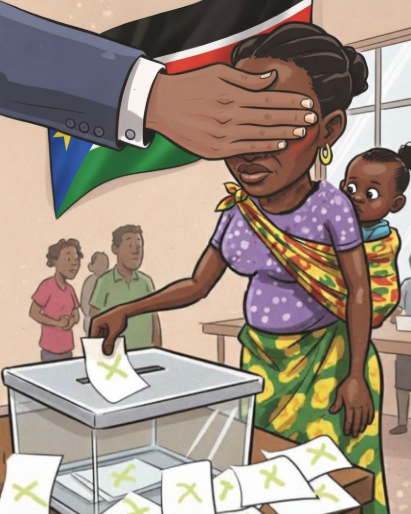
An election should gradually make political choice visible. Citizens should begin to recognize those seeking office, understand their proposals, and question their ability to govern. With South Sudan’s general elections scheduled for 22 December 2026, concern about limited candidate visibility deserves serious attention. However, limited visibility does not prove that elections will be cancelled, and it would be inaccurate to claim that every prospective candidate is silent.
The available evidence presents a more complicated picture: some political activity is taking place, but the breadth, accessibility and competitiveness of the emerging contest remain uncertain. The central question is whether preparations will give citizens a meaningful choice across the country, rather than merely produce a ballot on the appointed date.
On 3 October, Radio Tamazuj reported that the Sudan People’s Liberation Movement planned to open internal nominations from 5 to 9 October. The report described the SPLM as the most visible party in electoral preparations and noted that other parties had not announced comparable nationwide candidate-selection activities. This supports concern about uneven political visibility, rather than a conclusion that no preparation exists.
The distinction between party selection and formal candidacy is essential. Collecting a party’s nomination form does not mean an aspirant has been formally accepted by the National Elections Commission. Internal selection, electoral nomination and public campaigning are separate stages. Conflating them can exaggerate readiness and leave citizens uncertain about who will actually appear on the ballot. The SPLM itself distinguished its internal exercise from the national electoral process.
There is also evidence of opposition political activity. On 8 October, Kornelio Kon publicly denied withdrawing his presidential bid after a separate statement circulated claiming that he had abandoned the race. That episode demonstrates that prospective competitors are speaking, while exposing how contradictory information can confuse voters. Announcements of political intention must be verified, particularly when they concern withdrawal, disqualification or endorsement.
Public discussion should therefore distinguish an aspirant from an officially nominated candidate. Until the relevant electoral procedures establish eligibility and nomination status, declaring an intention to contest should not be presented as confirmation of a place on the ballot. Clear terminology protects the public from misunderstanding the stage the election has reached.
The absence of large rallies is also an imperfect measure of readiness. Parties may organize internally before a formal campaign period, while public engagement can occur through radio, meetings and community networks. Nevertheless, citizens need authoritative information about the timetable. Without clear dates for nominations, campaigning and polling, they cannot judge whether apparent quietness reflects a lawful sequence, delayed preparation or restricted political space.
The National Elections Commission’s own mandate includes candidate nomination, campaign regulation, civic education and electoral dispute resolution. Its public information recognizes citizens’ rights to nominate, seek nomination and express their choice through a secret ballot. These responsibilities place a substantial obligation on the commission to explain how political participation will work in practice.
For voters, the practical questions are straightforward. Who is eligible to contest? When will nominations be completed? Where can verified candidate information be obtained? How can an exclusion be challenged? When may candidates campaign, and what protections apply? An election becomes more credible when institutions answer these questions consistently and in languages communities understand.
Candidate visibility also depends on freedom of movement. On 13 October, Radio Tamazuj reported Kon’s allegation that security officials prevented him from boarding a flight from Juba to Wau without providing a written explanation. His spokesperson said the trip included meeting alliance members and supporters. The outlet reported that the National Security Service spokesperson could not immediately be reached for comment. The allegation therefore requires an official response and clarification; it should not be presented as a judicially established finding. [5]
The broader issue is significant. If political actors cannot travel predictably and lawfully, citizens outside the capital may hear little from potential competitors. An apparently quiet electoral environment can reflect barriers to participation rather than a lack of ambition. Authorities should explain restrictions transparently, apply lawful rules consistently and provide accessible remedies where decisions are challenged.
Political parties themselves also bear responsibility. They should explain their selection procedures, communicate their positions and maintain contact with communities. Parties cannot demand public confidence while leaving voters uncertain about their leadership, policies and intentions. Where internal disputes or limited resources affect preparation, honest communication is more useful than silence.
Visibility, however, should be judged by substance. Posters, convoys and crowded meetings do not establish that citizens have received a credible programme for government. Candidates should explain how they would address insecurity, public finances, food production, education, health services and corruption. They should also identify what their office can realistically deliver and how the public could assess their performance.
Media access is therefore central to electoral competition. A candidate with limited resources may reach communities through local radio more effectively than through expensive travel. Broadcasters should provide fair opportunities for political debate, distinguish reporting from paid promotion and correct false information promptly. Citizens need opportunities to compare proposals, including from women, young people and independent aspirants.
Security and civic freedoms remain major concerns. In July, the South Sudan Human Rights Defenders Network warned that shrinking civic and political space could undermine the credibility of the December elections. This was the organization’s assessment, but its relevance is clear: competition requires people to speak, associate and assemble without intimidation. Candidate visibility cannot be separated from the conditions under which candidates and supporters operate.
Institutional preparation is also underway. The NEC reported training state election officials in voter registration on 2 September. That is a useful step, although training alone does not establish that registration, nominations and the remaining electoral stages can be completed successfully. Each phase requires resources, realistic scheduling and public verification.
Regional diplomacy similarly combines support with demands for safeguards. The African Union’s declaration of 29 September called for a feasible, consensual and time-bound electoral roadmap, adequate financing and wider political inclusion. These requirements underline the difference between endorsing the goal of elections and confirming operational readiness.
Will elections take place on 22 December? The public record reviewed for this article does not justify a definitive prediction. Preparations and political declarations demonstrate an intention to proceed. They do not remove uncertainty about implementation, participation, or credibility. Equally, limited public campaigning is insufficient evidence that the vote will inevitably be postponed.
The coming weeks should provide measurable answers. Citizens should see clear nomination procedures, verified information about contestants, accessible registration arrangements and lawful opportunities for political engagement. Electoral authorities should publish progress against deadlines, while political parties explain their readiness and security institutions protect participation impartially.
South Sudan’s long wait for elections should end with an informed electorate exercising a meaningful choice. The country needs more than candidates becoming visible; it needs a fair opportunity for different candidates to be seen, heard and questioned. December’s credibility will depend on whether institutions turn that opportunity into a reality for citizens beyond the political centre.
The writer is a social researcher and peace advocate. He can be reached via mogtomloyo@yahoo.co.uk.
The views expressed in ‘opinion’ articles published by Radio Tamazuj are solely those of the writer. The veracity of any claims made is the responsibility of the author, not Radio Tamazuj.

 and then