



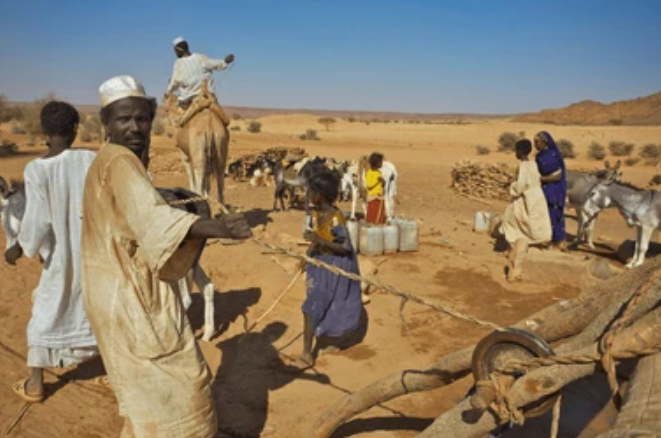
The Rawat area and neighbouring villages in Sudan’s White Nile State are facing a severe drinking water crisis following the drying up of traditional water reservoirs, known locally as hafirs, and the silting up of others.
The shortage has forced schools to close and some families to leave their villages in search of water, according to residents.
Rawat is located in Al-Salam locality in White Nile State, approximately 60 kilometers west of the White Nile River. The area comprises several villages whose residents depend on traditional water sources, including hafirs.
Sheikh Ibrahim Hamza said the area, which is nearly 400 years old, had endured a prolonged water crisis, adding that access to drinking water had become the community’s overriding priority as daily hardships continued to worsen.
“Our only demand in this world, our first and last priority, is water. For us, water is more important than education and healthcare,” he said, adding that residents were not lacking other services.
Meanwhile, Mustafa Mohammed, another resident, said 17 villages in the Um Sarayeh area relied on hafirs as their main source of water. Other affected villages include Gubeish, Abu Sabbagha, Sinadi and Ihimeir. He said the depletion of water sources had further compounded residents’ suffering.
“Two schools in the Um Sarayeh area have been forced to close because of the lack of water,” he said. “The hafirs on which residents depended have become silted up, turning access to drinking water into a daily struggle.”
The crisis is affecting all aspects of life in the area, with securing water taking precedence over other essential needs, including education and healthcare. Families are facing growing difficulties in meeting their daily needs.
Residents of Rawat and neighbouring villages have appealed to state and federal authorities, as well as humanitarian organizations, to intervene urgently to provide drinking water. They called for water tankers to be dispatched to affected villages and schools, and for the rehabilitation and cleaning of existing hafirs.
They also called for the establishment of permanent and sustainable water sources to end a crisis they said had plagued the area for decades and reduce the need for residents to abandon their villages in search of water.

 and then