



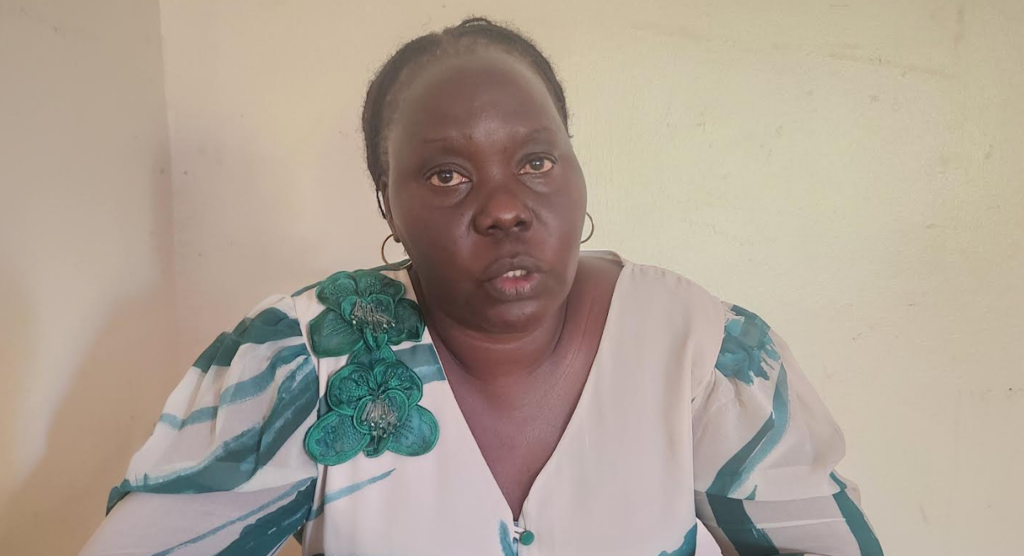
Women activists in South Sudan have accused the caretaker government of reversing gains in women’s political representation, saying the removal of women from decision-making positions threatens progress made under the 35% affirmative action quota ahead of elections scheduled for December 2026.
Jackline Nasiwa, Executive Director of the Centre for Inclusive Governance, Peace and Justice (CIGPJ), told Radio Tamazuj on Tuesday that women’s representation had declined under the current transitional arrangements, with some states reportedly having no women in leadership positions.
“What we are saying is that there should be no regression for women’s gains that we have made under the affirmative action for women’s empowerment,” Nasiwa said after a workshop bringing together women leaders, civil society representatives and other stakeholders to discuss women’s participation in the transition to democracy and the electoral process.
She said only two of the 13 caretaker ministers are women, adding that women’s representation has also declined in state-level leadership.
Nasiwa, a woman’s rights defender, said the situation is frustrating for women who had made progress in securing leadership positions under previous administrations. She said the decline raises concerns about the government’s commitment to affirmative action and women’s empowerment.
“Women’s participation is not tokenism; it’s a women’s rights issue,” she said, adding that South Sudan had committed to international frameworks aimed at protecting women’s rights, including the Convention on the Elimination of All Forms of Discrimination Against Women (CEDAW) and United Nations Security Council Resolution 1325 on women, peace and security.
Dr. Angelina Mathijo Bazugba, a women, peace and security analyst and assistant professor at the University of Juba, said South Sudan had progressive legal frameworks on gender equality, but implementation and enforcement remained major challenges.
“Having a policy is one thing which is very important, but implementation is another and again enforcement is another hurdle,” she said.
Mathijo said the minimum 35% quota for women’s representation had not been achieved across all decision-making positions. She added that women removed from appointed positions were sometimes replaced by men, reversing gains in women’s participation in public leadership.
She cited figures showing that women’s representation had reached 27% at the executive level and 32% in parliament, but said subsequent changes at national and state levels had contributed to a decline.
Mathijo warned that women’s underrepresentation could weaken their influence over legislation, peace negotiations, gender-responsive budgeting and policies affecting education, healthcare and economic empowerment.
Professor Pauline Riak, a national peacebuilding expert and deputy vice-chancellor for academic affairs at Rumbek University of Science and Technology, called on the government to implement existing commitments on women’s and youth representation.
“There is no harm in implementing those quotas. It would strengthen the nation,” she said.
Riak argued that including women and young people in leadership would enable South Sudan to draw on the experience, knowledge and abilities of a greater proportion of its population to address national challenges.
Nasiwa said the workshop is also examining pending legislation, including bills relating to affirmative action, women’s empowerment and gender-based violence, which she said are important for protecting women’s participation during the transition and beyond.
She said participants are developing collective strategies to support women seeking leadership positions, strengthen their capacity to participate in elections and identify practical recommendations for advancing women’s political representation.
The two-day workshop is expected to produce a communiqué outlining participants’ recommendations and commitments to promoting women’s participation in the electoral process.
South Sudan had an estimated 6.2 million women and girls in 2025, accounting for about 50.8% of the population, according to World Bank estimates based on United Nations data.
Beyond limited representation in leadership, women and girls in South Sudan face gender-based violence, child marriage, high maternal health risks and barriers to education and healthcare.

 and then