



South Sudan’s ceasefire monitoring body on Thursday said it recorded 29 new allegations of ceasefire violations in April, warning that insecurity continues to threaten the country’s fragile peace process.
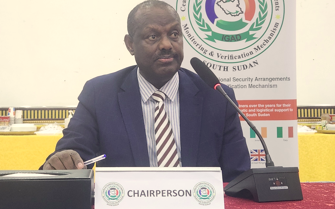
Maj. Gen. Teshome Anagawe Ayana, chairperson of the Ceasefire and Transitional Security Arrangements Monitoring and Verification Mechanism (CTSAMVM), said most of the reported incidents occurred in already fragile areas, particularly in Upper Nile State.
“During the month of April 2026, CTSAMVM recorded 29 new allegations of ceasefire violations,” he said during the CTSAMVM Technical Committee meeting in Juba. “What is particularly concerning is that these incidents continue to occur in the same already fragile areas, especially in Upper Nile State, which remains one of our main areas of concern.”
Gen. Anagawe said the security situation across the country remains “volatile and unpredictable,” adding that continued insecurity is undermining public confidence and slowing the implementation of Chapter Two of the 2018 revitalized peace agreement, which deals with security arrangements.
He added that the situation along the Ulang-Nasir corridor in Upper Nile State remains highly volatile, with insecurity affecting civilians, humanitarian workers, and commercial transport. He noted that the insecurity has significantly restricted humanitarian access and the delivery of aid.
The CTSAMVM chief also raised concern over tensions in Western Bahr el Ghazal State following the killing of an unarmed SPLM/A-IO soldier by an armed group on 11 April. He said civilians around the Natabo checkpoint in Wau fled their homes fearing further violence.
CTSAMVM said it plans to deploy monitoring teams to Nasir, Ulang, and Kapoeta in June to investigate reported ceasefire violations.
The monitoring body also reviewed reports on clashes between SSPDF and SPLM/A-IO forces in Bazia Payam in Western Bahr el Ghazal earlier in April, as well as allegations of arrests and detention of relatives of SPLM/A-IO commanders in Torit County.
Gen. Anagawe urged all parties to the peace agreement to cease hostilities, strengthen command and control over their forces, and ensure accountability for violations against civilians.
For his part, Maj. Gen. Andrea Mangu, representing the SPLA-IO at the meeting, said continued clashes between government and opposition forces were causing suffering among civilians and undermining hopes for lasting peace.
He urged parties to the peace agreement to recommit themselves to dialogue, reconciliation, and healing, saying the 2018 peace deal was achieved through the sacrifices of innocent South Sudanese who lost their lives during the conflict.
Mangu said insecurity in areas such as Ulang, Nasir, Bazia, and Natabo had left civilians vulnerable, noting that the road between Bagari and Wau had been cut off due to insecurity, worsening the humanitarian situation for residents.
He also appealed to IGAD and the international community to continue supporting dialogue among the parties to help restore stability in the country.

 and then