



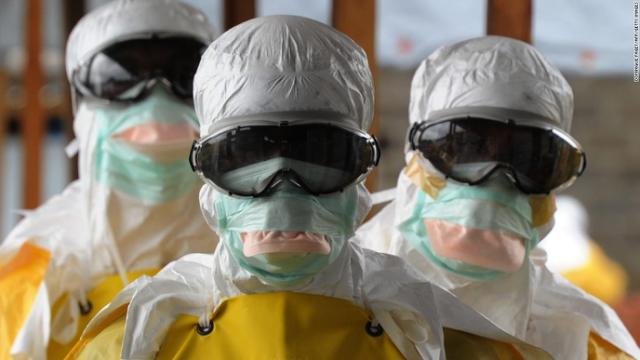
The health ministry in Sudan’s South Darfur State last week concluded a training workshop for rapid response teams drawn from its staff in areas bordering the Central African Republic and South Sudan to strengthen surveillance and early detection of Ebola.
Dr Abbas Hassan Shams al-Din, director of the Emergency and Epidemic Control Department, said rapid response teams had been brought from Um Dafuq locality, which borders the Central African Republic, and from the areas of Al-Sunta, Buram and Al-Radom along the border with South Sudan to attend the workshop and prepare for a possible outbreak before the disease reaches the state.
“There is a need for those trained to maintain the highest level of preparedness following the workshop,” he stated. “Another three-day workshop will be held for focal-point staff responsible for monitoring the disease and submitting reports from the areas where they work.”
For his part, Dr. Mustafa Al-Barmaki, a director at the state health ministry, said the emergence and spread of Ebola in the Democratic Republic of the Congo and Uganda had sounded an alarm for South Darfur. He explained that Ebola is a viral disease that causes a severe and often fatal haemorrhagic fever and can spread rapidly through contact and close interaction with infected people.
“The Ministry of Health prioritizes the prevention of epidemics through several measures, including surveillance and early detection,” he said.
Addressing the trainees, he described them as ambassadors for the ministry in their respective areas of work and urged them to submit timely reports on any suspected cases or developments related to the disease.
Meanwhile, Dr. Badr al-Din al-Sharif, the World Health Organization’s coordinator in the Darfur region, said Ebola was first identified in 1976 in what is now South Sudan’s Western Equatoria region, before spreading to the Democratic Republic of the Congo.
He added that, in recent years, efforts had been undertaken in cooperation with the WHO Regional Office to develop vaccines against most strains of the virus.
“Preventive vaccines have since been developed, but the virus can evolve into new variants against which existing vaccines might not be effective,” he said. “The strain currently circulating has no established treatment, although a treatment is still undergoing trials and has begun to be used in the Democratic Republic of the Congo in recent days.”
Dr. Al-Sharif said the disease had killed approximately 45 percent of those infected in countries where it had appeared, citing an estimated 4,000 deaths out of around 9,000 cases. He noted that healthcare workers were among those most at risk because they often came into contact with patients before the disease was detected.
He said the awareness workshop had therefore been organized to equip medical personnel with basic protective measures to reduce their risk of infection.

 and then