



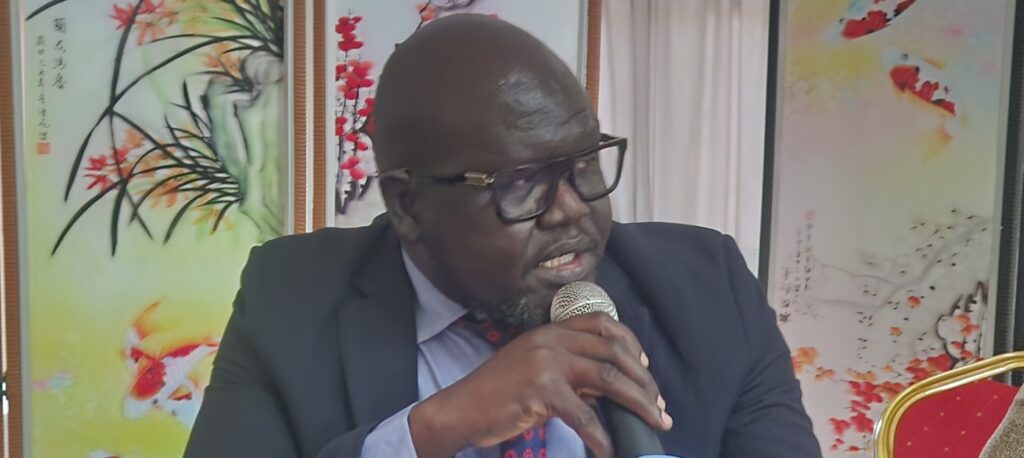
Officials from the South Sudan Human Rights Commission have accused the government of viewing civil society organizations as “enemies” and political opponents, raising concerns over shrinking civic space and limited public participation in governance.
The officials made the remarks during an expert panel discussion on civic space and the operating environment for civil society organizations and human rights defenders, organized by the South Sudan Human Rights Defenders Network (HRDN) on Tuesday in Juba.
Commissioner Fiddensia Charles Ladu said relations between the government and civil society were generally unhealthy, arguing that authorities often regarded civil society organizations as opponents rather than partners.
“It is like the government is looking at the civil societies as an opponent,” she said. “Generally, the civil societies are taken as enemies or political opponents.”
She said this perception had limited meaningful participation by civil society in government processes, including budget discussions, where she alleged that decisions were sometimes already made before civil society representatives were invited.
Ladu cited a community dialogue held several years ago, saying its resolutions had not been made public or, to her knowledge, implemented.
Meanwhile, Ezekia A. Gibson, Deputy Chairperson of the South Sudan Human Rights Commission, separately rated the country’s performance on transparency, participation and accountability as weak.
He said access to public information remained limited and that civil society had little opportunity to participate meaningfully in government processes, including preparing the national budget. He rated transparency as “weak”, participation as “weak” and accountability as “very weak”.
He also linked the accountability gap to concerns over corruption and the country’s economic difficulties.
The officials’ comments came as HRDN called for a more enabling environment in which civil society organizations and human rights defenders can operate independently and participate in public affairs without intimidation or unnecessary restrictions.
HRDN Chairperson Christiana Adut said civil society organizations play a vital role in promoting human rights, accountability, access to justice, humanitarian response and democratic participation.
She said human rights defenders should not have to choose between defending human rights and their personal safety, calling for stronger protection mechanisms and meaningful participation in decision-making.
The panel also raised concerns over access to public information, with participants saying government institutions were not consistently publishing information that should be publicly available.
The discussion specifically cited the National Revenue Authority, which participants said is required to publish revenue collection information but has not consistently done so.
Participants further said the body responsible for access to information lacked sufficient staff and capacity to enforce the law effectively, leaving journalists and members of the public facing difficulties when seeking information from public institutions.
The Human Rights Commission officials’ assessment adds to concerns raised during the discussion about trust between government and civil society, with participants calling for greater transparency, accountability and genuine public engagement.
Adut said strengthening civic space was not a threat to the country, but an essential part of building a peaceful, accountable, inclusive and democratic South Sudan.

 and then