



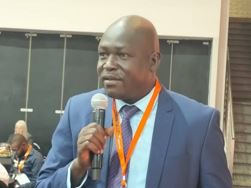
The head of the South Sudan Human Rights Defenders Network (SSHRD) Secretariat, James Bidal, has urged South Sudanese to take messages of peace directly into their communities to eliminate early triggers of conflict as the country prepares for the general election in December.
Speaking during a workshop on Saturday, he highlighted the root causes of electoral instability and emphasized that violence begins long before citizens cast their ballots.
“Violence does not begin at the ballot box; it begins much earlier through inflammatory rhetoric, hate speech, and disinformation,” Bidal said. “When women are empowered as leaders and peacebuilders, they serve as the first line of defense, diffusing rumors, countering disinformation, and restoring hope within their communities.”
He also addressed the challenges that often arise after election results are announced.
“After elections, communities are often left divided. Supporters can become disgruntled when their preferred candidates do not win, creating friction across societal lines. How, then, do we prepare ourselves to restore peace, live in harmony, and counter potential violence?” he asked.
The rights activist added that women play an indispensable role throughout every phase of the process as voters, electoral officers, candidates, and community leaders. Bidal said that by nature and nurture, women are leaders and that every man who reaches adulthood was nourished, guided, and raised by a woman.
Meanwhile, Jenifer Bangbe, Gender and Peace Monitoring Focal Point at the National Ministry of Peacebuilding, stressed that preparing for elections is a continuous process encompassing pre-election, polling day, and post-election phases.
“How thoroughly we prepare right now will determine our nation’s outcome,” she said. “This workshop is essential for all of us as stakeholders. No single institution can deliver a peaceful and successful election on its own. It requires our collective effort, shared responsibility, and proactive community engagement across every level.”
Bangbe highlighted the central role of women in maintaining social stability during tense political periods.
“Everyone in this room is a peacemaker, especially the women. The men who hold influence or sometimes take up arms are our brothers, husbands, fathers, and sons,” she stated. “We live with them, and we have a direct influence on their choices. It is our primary responsibility as women to stand firm, use our voices, and ensure that our country stays on the path toward peace.”
However, Rosemary Kabaki, Head of Mission at Nonviolent Peaceforce, reinforced the necessity of continuous, deliberate planning, noting that women possess the organizational power required to lead peace efforts across the country.
“Women have a voice; we speak, plan, strategize, and support one another. We must ensure our voices continue to be heard. It warms my heart to be surrounded by fellow sisters and brothers who love and care for South Sudan so deeply,” she said. “The spirit and resilience of the South Sudanese people continue to impress me and inspire immense hope for the future.”

 and then