



There has been considerable debate over whether academic qualifications should be a key factor in determining eligibility for political leadership in the forthcoming elections in South Sudan. Some have vehemently opposed this position, advancing the argument that “education status does not matter in leadership.” While I acknowledge that formal academic qualification alone does not necessarily translate into wisdom, competence, integrity, or effective leadership, I find it intellectually shallow and politically short-sighted to dismiss the importance of education in the exercise of public leadership.
Let us be intellectually honest: education may not be the sole determinant of leadership, but intellectual capacity, informed judgement, effective communication, and the ability to translate knowledge into meaningful action are indispensable attributes of responsible leadership.
An academic certificate is not a guarantee of competence, just as the absence of one is not necessarily evidence of intellectual incapacity. However, the ability to comprehend complex national issues, articulate policy positions, interrogate legislation, engage in constructive debates, negotiate competing interests, and defend national priorities requires a certain level of intellectual preparedness. What ultimately distinguishes a good leader is not the number of certificates hanging on their office walls, but their ability to apply the knowledge, demonstrate sound judgement, uphold ethical standards, and deliver service to the people of South Sudan.
The parliament we elect is the nation we present to the world.
Consider the caliber of some of the aspirants currently positioning themselves in the party primary elections for both the State and National Legislative Assembly. One cannot help but question the quality of the legislative discourse, policy formulation, and institutional oversight that our country should expect when some aspiring representatives appear to struggle with basic political, constitutional, and parliamentary vocabulary, including terms as fundamental as “constituency and constitution.”
This is not an argument intended to ridicule individuals or undermine anyone’s dignity. Rather, it raises a legitimate national concern about the preparedness of those seeking the enormous responsibility of representing the millions of citizens.
If we are to elect representatives who will interrogate national budgets, scrutinize government expenditures, debate constitutional provisions, examine complex legislation, challenge executive decisions, and formulate policies that determine the future of our country, should we as the citizenry not be concerned about their intellectual preparedness for such responsibilities?
Parliament is not merely a political gathering where individuals occupy seats, raise hands, applaud political superiors, or endorse decisions without scrutiny. It is an arm of government, the highest institution of democratic representation and legislative accountability. Its members must possess the ability to reason critically, articulate alternative positions, engage in evidence-based debates, and hold the executive accountable. The quality of parliamentary deliberations will inevitably influence the quality of laws, policies, and institutions we build as a nation.
The international arena requires more than political positions and diplomatic passports.
The concern even becomes more profound when we consider our representation at regional, continental, and international institutions. Imagine sending our representatives to the East African Legislative Assembly, the African Union, the Pan-African Parliament, or the United Nations General Assembly. These are not ceremonial platforms where political titles alone command respect. They are sophisticated diplomatic and policy environments where national interests are negotiated, competing geopolitical positions are advanced, international conventions are debated, and strategic partnerships are established.
Our representatives must be able to stand confidently, articulate national positions, defend our sovereignty, negotiate favorable outcomes, lobby for strategic support, and compete intellectually with delegates from countries whose institutions have invested considerably in education, research, diplomacy, and leadership development.
What happens when our representation lacks the confidence, communication skills, policy understanding, and intellectual preparation required to engage effectively in these environments? Do we risk sending delegations that occupy seats without meaningfully influencing discussions, remain silent when national interests are at stake, or reduce international engagements to ceremonial appearances and photographs for social media?
Diplomatic representation is not measured by the number of conferences attended, the photographs taken, the countries visited, or the number of international meetings appearing on one’s social media platforms. Its measures by the national interest advanced, the partnerships negotiated, the policies influenced, the opportunities secured and the tangible outcomes delivered for the people of South Sudan.
We cannot continue to complain about being marginalized, underestimated or inadequately represented in regional and international affairs while neglecting the quality of delegations entrusted with articulating our national issues. Our international standing is influenced, among other factors, by the competence, preparation and effectiveness of those who represent us.
We must move away from the culture of appointing and electing individuals primarily on the basis of political loyalty, personal connections, ethnic arithmetic, financial influence or historical associations, without sufficiently interrogating their capacity to deliver on the responsibilities attached to public office.
The forthcoming general elections must be an exercise in national leadership selection, not simply a contest for political positions.
Elections are not merely about choosing familiar faces, rewarding political loyalty, or determining which individual commands the largest financial resources and political networks. They provide citizens with an opportunity to determine the intellectual, ethical, and institutional direction of their country.
For South Sudan, this election must represent an important opportunity to redefine the standards of political leadership and public representation. We need legislators who understand the constitution, economists who can interrogate both fiscal and monetary policies, lawyers who can strengthen the rule of law, educationists who can reform the education system, health professionals who understand public health systems, diplomats who can advance our foreign policies, and leaders from diverse professional backgrounds who can bring knowledge, experience, and integrity into national decision-making. Above, we need individuals who are intellectually curious, open to learning, capable of constructive engagement, and willing to place national interest above personal and political considerations.
However, let this argument not be misunderstood as a call to establish an elitist political system where university degrees become the exclusive preserve of leadership. Our democracy as a country must be inclusive, and every citizen must enjoy equal dignity and political rights in accordance with the constitution and the law. Practical experience, community wisdom, demonstrated competence, integrity, and a proven record of service must also count.
The real question is not simply whether a candidate possessed a degree. It is whether that candidate has the intellectual maturity, ethical grounding, policy understanding, communication skills, and demonstrated capacity to discharge the responsibilities of the office they seek. We must therefore distinguish between academic credentials and intellectual competence, political popularity and leadership capacity, public visibility and public value. These are not interchangeable concepts.
A person may pose several academic qualifications and still be an effective leader. Equally, someone without extensive formal education may demonstrate exceptional wisdom, integrity and practical leadership. But neither observation should become an excuse for formalizing incompetence or lowering the standards expected of those entrusted with public responsibility.
Our country deserves representative who can speak for the nation, not merely speak on behalf of themselves and their clans.
Our country is at the defining moment in its history. We have enormous human potential, abundant natural resources, strategic geographical importance, and a youthful population whose aspirations remain largely unfulfilled. What we desperately need is a generation of leaders capable of converting these opportunities into sustainable national development.
The responsibility of rebuilding our country requires more than political mobilization. It demands intellectual leadership, policy innovation, institutional accountability, diplomatic competence, and an unwavering commitment to public service. Therefore, as we, the citizens, prepare to exercise our constitutional and democratic mandate, let us interrogate the people seeking our votes. Ask them what they understand about the constitution, what economic policies they intend to advance, how they address unemployment, inflation, insecurity, poor infrastructure, weak public institutions, and challenges facing our education and health systems. Ask them how they intend to represent our country at regional and international platforms.
A vote is not merely a choice of an individual; rather, it’s an investment in the intellectual, moral, and institutional future of a nation. Our country did not attain independence merely to reproduce the same weaknesses of leadership that undermine nation-building. Independence must also mean freedom and capacity to build competent institutions, produce visionary leaders and command respect within the community of nations.
The forthcoming general election must therefore be more than a competition for a political office. It must be a national examination of our collective judgement, maturity and vision for the future of South Sudan. Let us elect leaders who possess not only the ambition to govern, but also the intellectual capacity to understand, integrity to serve, the courage to defend national interests, and the competence to deliver. Because the future of South Sudan will not be determined by the number of political positions distributed but by the quality of minds, character, and leadership we entrust with those positions.
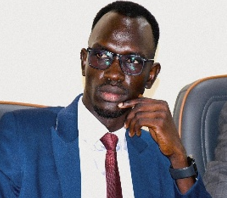
The author is an economist, statistician, policy analyst, and youth advocate passionate about good governance, rule of law, institutional accountability, nation-building, and youth empowerment in South Sudan. He can be reached at otwaridominico@gmail.com.
The views expressed in ‘opinion’ articles published by Radio Tamazuj are solely those of the writer. The veracity of any claims made is the responsibility of the author, not Radio Tamazuj.

 and then