



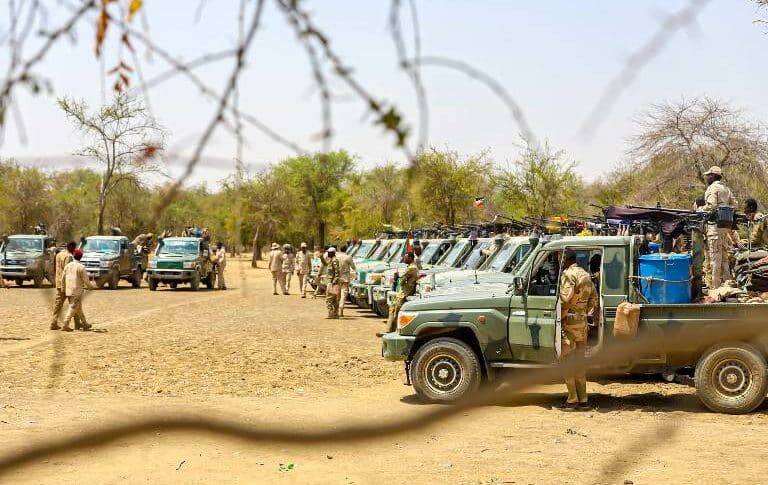
Authorities in the Central African Republic (CAR) have reopened the Um Dafouq border crossing in Sudan’s South Darfur State to Sudanese nationals following a temporary closure triggered by a security misunderstanding between forces from the two countries.
Joint peace committees representing Sudanese and Central African communities announced that the crossing reopened to Sudanese travelers on Tuesday, 10 November 2026.
Radio Tamazuj has learned that the crossing was closed to Sudanese commercial activities for several hours, although pastoralists continued to be allowed through. The temporary restrictions were reportedly imposed by the deputy governor of Um Dafouq following a security misunderstanding involving forces from both countries in the border area known as the Triangle.
Sheikh Juma Abdel-Karim, deputy leader of the Ta’aisha tribal administration, told Radio Tamazuj that cross-border pastoral activities had continued uninterrupted.
“Pastoral movements have not stopped, and the Um Dafouq border crossing is open to Sudanese citizens,” he said.
Abdel-Karim said he had received a message from the governor of Um Dafouq confirming that the crossing had not been closed. “I also contacted the Central African mediation committee, headed by Dr. Mahmoud Kashmir, which similarly confirmed that the border remained open,” he said. “Sudanese traders and residents visited the weekly market in Um Dafouq on Monday and returned safely.”
Abdel-Karim said he expected a meeting with the governor of Um Dafouq in the coming days to review and facilitate cross-border movement between the two countries.
Meanwhile, Suleiman Jaber, a representative of Central African communities, confirmed to this publication that a meeting involving the governors of Birao and Um Dafouq, joint peace committees, military and police representatives, and religious organizations had resulted in an agreement to reopen the crossing to Sudanese nationals.
Relations between Sudanese and Central African border communities were strained by security tensions last year, prompting the closure of the border to Sudanese nationals.
However, representatives of the two sides held reconciliation talks several weeks ago, reaching an agreement on the payment of blood compensation for members of Central African communities killed during the tensions.
The agreement also provided for the resumption of grazing and commercial activities by Sudanese nationals within Central African territory, marking a step towards restoring cross-border relations and economic exchanges.

 and then