



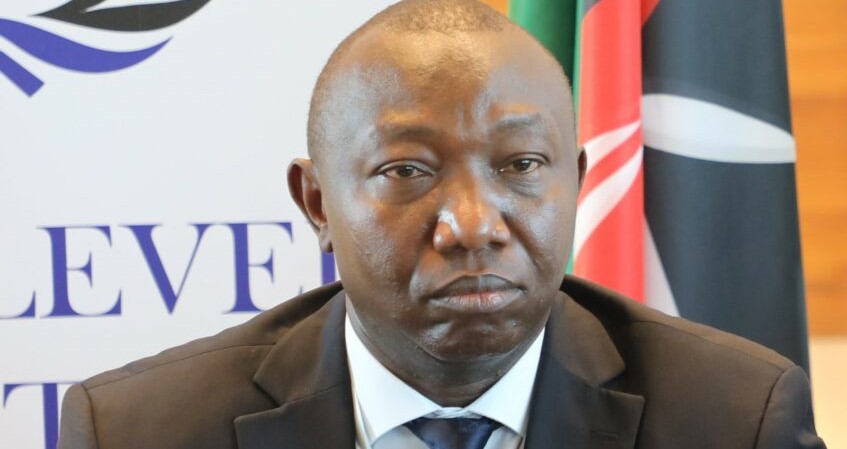
A leading civil rights figure said the $6 million released for civic education and the purchase of a new National Elections Commission (NEC) building signal limited progress that does not reflect genuine electoral readiness.
Rajab Mohandis, a member of the People’s Coalition for Civil Action (PCCA), said in an interview with Radio Tamazuj on Tuesday that key preparations, including voter education, voter registration, constituency offices, boundary demarcation and training of officials, have not meaningfully begun despite official announcements.
He likened the situation to a grounded vehicle being partially repaired while essential parts remain missing.
Rajab also questioned the timing of the funding, saying similar steps have previously been used to show progress ahead of deadlines and could justify extending transitional timelines, casting doubt on the feasibility of holding credible elections within six months.
Below are edited excerpts from the interview:
Q: Mr. Mohandis, what does the government’s release of $6 million to the National Elections Commission for civic education and a new headquarters ahead of December’s planned elections tell us about its intentions?
A: I would say it is important to hear directly from the National Elections Commission because, for a long time, people have been hearing from various sectors, departments and offices, both within and outside the country, on matters related to elections. Information that comes directly from the commission is important because it gives us a clearer understanding of what the commission is doing and where it stands regarding the conduct of elections in the country.
But generally, that press statement does not mean much to the people of South Sudan.
It does not mean much for several reasons. First, the National Elections Commission has not been actively engaged in electoral processes. All the key activities associated with elections have largely not been taking place. These include civic education, voter registration, establishing offices and presence in constituencies, assuming those constituencies have already been demarcated, and training electoral officials.
None of these activities has been happening.
I would describe this situation using an analogy. Imagine passengers in a village waiting to travel in a vehicle that has been grounded for a very long time because it lacks a gearbox, a radiator, an injector pump and tyres. Suddenly, the driver acquires a brand-new radiator and then calls a press conference to announce that the vehicle is almost ready to move. Yet the injector pump is still missing, the gearbox is still missing and the tyres are still absent.
That, in my view, is the situation we are facing.
Q: What is the significance of the commission’s announcement? Are elections realistic in less than six months? Do you think it will be possible to hold elections, or what is the government trying to achieve?
A: We have gone through this experience before.
The government has often used a similar approach whereby, as a deadline approaches, whether related to the transitional period or another process, it initiates activities that can later be used to justify the need for additional time to complete them.
Looking at the resources now being provided to the National Elections Commission, at a time when the extended transitional period is already nearing its end, the intention appears to be to demonstrate that the government is now serious about preparing for elections.
The argument would then be that preparations have begun, but there is insufficient time to complete them. As a result, more patience and additional time would be needed from both domestic and international stakeholders to allow those activities to be completed before elections can be held.
In my view, this serves as a justification for extending the transitional period.
It suggests there is now renewed interest in conducting elections, that activities are underway and preparations have started, but that time is insufficient to complete the necessary work. Therefore, more time would be required before elections can be conducted.
I would see this as an attempt to create justification for obtaining additional time.
Q: Do you think the disbursement could encourage the international community to support elections or request a new electoral roadmap from the government?
A: I do not see elections as a priority for the political establishment in Juba.
What appears to be a greater priority is securing another extension or some form of legitimacy that would allow the current system to continue operating.
This latest allocation of resources to the National Elections Commission could therefore serve as a message to international actors and regional governments that they should support the electoral process and, by extension, support any request for additional time needed to complete it.
That is how I would interpret the situation.
I do not view this funding as evidence of genuine goodwill to conduct elections. The resources have arrived extremely late, and they are very limited compared with the overall budget that the commission has indicated it requires to organize elections.
The commission has spoken of needing funding amounting to hundreds of millions of dollars.
What has now been secured is relatively small, and it comes after a prolonged period during which the commission, like many state institutions, has struggled to function because of inadequate resources.
In my view, much of this money is likely to be used to address arrears and provide some degree of financial security amid uncertainty, while only a portion may actually be directed toward civic and voter education activities.
Q: In your view, why is the government pushing for elections? Is it trying to reduce the size of the current government, which includes five vice presidents, or is it primarily seeking legitimacy?
A: If elections were to take place in December, the intentions behind them would be reflected in the way the process is conducted.
One important indicator would be whether political parties are allowed to register freely and whether they are able to undertake normal political and electoral activities. That includes reaching out to their constituencies, mobilizing campaign agents, engaging supporters, organizing rallies and communicating with the wider public.
At present, we do not see this happening.
Political parties are not actively reaching out to the public. Their offices, both in Juba and across the states, appear largely dormant. This limits their ability to participate meaningfully in any electoral process.
As things stand, there is no indication that political parties, whether registered or unregistered, are engaged in serious electoral activities. They are not actively organizing their members or engaging with the public.
While formal campaign periods are normally announced, political parties should be able to organize meetings and activities long before the official campaign period begins.
They should be able to hold rallies and interact with their supporters throughout the country.
When these activities are not taking place, it suggests that political actors face significant limitations in their ability to engage with the public.
As a result, the environment becomes controlled.
And when an environment is controlled, it often means there is a preferred outcome.
That is how I would interpret the current situation.
Q: If the SPLM-IO, the main opposition group, does not take part in the elections because it has not registered as a political party, do you think the vote will still go ahead?
A: If there is an intention to conduct elections without the SPLM-IO, then elections may indeed proceed without the SPLM-IO.
When you look at the implementation of the peace agreement and examine the broader political environment, you can see that numerous obstacles have been placed in the path of the SPLM-IO.
I do not see a situation in which the SPLM-IO can freely move around the country, organize politically, mobilize supporters and hold public rallies in an effective manner.
There are already several significant obstacles.
The first relates to the movement’s political leadership, including detentions and ongoing court proceedings.
The second concerns registration. The SPLM-IO still maintains military forces, and under the provisions of electoral laws, the existence of a standing army could prevent it from registering as a political party. Those forces should have been integrated by now had the security arrangements under the peace agreement been fully implemented.
As long as that situation remains unresolved, it presents a barrier to registration.
The third issue concerns the movement’s name. I do not see the SPLM-IO registering under the name SPLM/A-IO. The name itself could present difficulties during registration.
I recall the case of SPLM-DC, which was not ultimately registered under that name because the SPLM designation had already been taken.
When you consider all these obstacles together, it becomes difficult to see an open political space in which the SPLM-IO could participate effectively if elections were held in the near future.
Q: What are the legal gaps that could prevent elections from taking place in December?
A: There are quite a number of issues.
First, the constitution itself should have been developed in accordance with the peace agreement. The agreement envisaged elections being conducted under a new constitution.
That constitution was expected to redefine governance arrangements, replace many of the transitional provisions created under the peace agreement and establish the legal framework under which elections would be held.
The provisions of the new constitution would then need to be incorporated into the National Elections Act in order to clearly define how elections should be conducted.
That means amendments would also be required to the National Elections Act.
The Elections Act was amended recently, but there were still concerns regarding those amendments. As a result, both the constitution and the Elections Act require further review, enactment or amendment in order to provide a proper legal foundation for elections.
Unfortunately, none of this has been completed.
Attempts to address some of these issues have either stalled or been delayed.
We therefore continue to face significant challenges regarding the legal framework, both in relation to the constitution and the National Elections Act.
There is also the issue of civic and voter education.
For voter education to be effective, the relevant laws must first be fully enacted. In addition, regulations and guidelines are needed to operationalize the Elections Act.
Those regulations would help define exactly what voters are expected to do and how electoral processes should function.
However, many of these regulations have not yet been produced.
As a result, any civic education conducted at this stage would likely remain broad and general rather than providing detailed guidance based on the legal framework governing elections.
There is therefore a great deal that remains unfinished.
Based on these realities, I would say that the country remains very far from being ready to conduct elections.
Q: What would happen in areas that remain inaccessible because of insecurity or logistical challenges in December?
A: The first challenge is logistical.
Holding elections during the rainy season creates difficulties in accessing many parts of the country because of poor roads and transportation constraints.
That alone presents a major challenge.
The second issue is security. If armed groups are not participating in the electoral process or do not support it, they could significantly complicate election preparations and implementation.
That would affect election officials, voter registration efforts and other electoral activities.
It could also affect candidates seeking to campaign in those constituencies.
Candidates would either have to risk travelling to areas that may be highly hostile, potentially putting their lives in danger, or authorities would have to consider conducting elections in some parts of the country while excluding others.
Neither option is ideal. At present, it is difficult to determine which areas are sufficiently secure for elections and which remain too volatile.
What is clear is that there are areas where it would be difficult to register voters, organize electoral activities and conduct campaigns because of ongoing insecurity and violence.
Q: Do we have enough time to conduct voter registration? Is less than five months sufficient for that process?
A: There have been attempts to separate, or delink, the census process and the constitution-making process from preparations for elections.
If those processes are treated separately, some may argue that they do not need to be completed before elections.
However, I believe a national population census remains a critically important factor in ensuring credible elections.
Reliable population data is not important simply because it provides demographic information. It is also essential for safeguarding the credibility of elections.
Without reliable data, figures can be manipulated, which can undermine confidence in the electoral process and create opportunities for electoral fraud.
That is one major concern.
A second concern is that it is simply not practical to conduct a national census within the remaining time and then use those results to determine constituency populations before elections.
That, in itself, presents a significant challenge.
More broadly, many of the preparatory activities necessary for elections have not been completed.
But even that is not the main issue.
The technical aspects, including voter registration and related preparations, are not what I consider the central problem.
The real issue, in my view, is the absence of political will to conduct elections at this moment.
If elections were held in a genuinely free environment, where citizens could cast ballots without interference and according to their own preferences, there is a strong possibility that many current political leaders would not return to power.
They appear unwilling to take that risk.
For that reason, I believe the failure to organize elections is primarily political rather than technical.
That explains why the National Elections Commission was not funded adequately for such a long period and why essential preparations were not undertaken.
It is not because the country lacks technical solutions.
It is because there has been a political decision not to prioritize elections.
Q: Some people argue that the obstacles to elections are largely technical. Is that your view?
A: No, I do not think the primary obstacle is technical.
If the issue were simply one of resources, the government has demonstrated that resources can be mobilized when there is political will. Resources have been available to finance military operations, procure military equipment, support armed forces and sustain conflict.
The resources devoted to those activities are, in many cases, significantly greater than what has been allocated to the National Elections Commission.
That tells us something about priorities.
The fact that resources were available for war but not for electoral preparations indicates where the interests of political leaders have been focused.
Elections have not been treated as a priority.
The current discussion about elections is taking place not necessarily because there is genuine interest in holding them, but because of concerns over legitimacy.
If the transitional period ends without elections, institutions established under the peace agreement risk losing their legitimacy.
As a result, the question of elections has returned to the political agenda because political actors are seeking ways to maintain legitimacy.
Q: Does South Sudan currently have the technical expertise required to conduct elections?
A: There is not a great deal of difficulty when it comes to technical expertise. South Sudan has sufficient expertise to conduct elections.
There are people within the country who understand electoral processes and who have the capacity to manage them.
There is also considerable goodwill from external partners who are willing to support elections.
Training election officials, particularly field officers who would implement activities in constituencies, is a normal part of any electoral process. Such training can be organized and delivered.
So the country does possess the human capacity needed. The challenge lies elsewhere. The infrastructure required to support elections has not been adequately maintained.
Committees and structures established previously in the states have largely been neglected. There is no guarantee that individuals appointed to those positions remain available or are still waiting to perform those functions. Many may have moved on to other responsibilities.
That means the institutional infrastructure is weak.
However, even that is not an insurmountable obstacle.
South Sudan has many educated young people who are currently unemployed and could be recruited and trained to support electoral activities.
The technical requirements can therefore be addressed.
The bigger challenge is time.
With the limited time remaining, it would be extremely difficult to rebuild the necessary structures across the country, recruit personnel, train officials and establish all the systems required to conduct credible elections.
That is what makes the timeline unrealistic.
Q: What is your final message to the people of South Sudan, the government and the international community at this time?
A: First, I believe the leaders of South Sudan, particularly the president and senior government officials, have failed the people of South Sudan.
There needs to be serious reflection on that reality.
South Sudanese made enormous sacrifices to achieve independence and establish this country. Their aspirations should be reflected in government policies and national priorities.
The country cannot continue on its current path.
There is a need for a change of direction.
Second, to the citizens of South Sudan, the situation the country is experiencing today is both unacceptable and unsustainable. It exposes the country and its people to significant internal and external risks.
Citizens therefore have a collective responsibility to contribute to efforts aimed at changing the country’s direction and securing a better future.
Third, regarding external actors, it is now increasingly clear that the Revitalized Agreement on the Resolution of the Conflict in South Sudan (R-ARCSS) has been deliberately undermined and its implementation obstructed.
What is needed now is a reset. That means all stakeholders must return to the drawing board and reassess what needs to be done differently.
A new approach should focus on building broad consensus among South Sudanese while ensuring that regional and international actors provide support, enforcement mechanisms and consequences for those who continue to obstruct peace.
The current situation cannot continue indefinitely. There must be consequences for individuals and groups that deliberately undermine peace efforts.
An important step for regional and international actors is to coordinate their efforts more effectively.
It is encouraging that the African Union has assumed a greater role through its High Representative for the Horn of Africa and the Red Sea, former Tanzanian President Jakaya Kikwete.
This provides an opportunity for a more unified approach to supporting peace in South Sudan.
Such an approach should bring together key regional actors, particularly Uganda, Kenya and Ethiopia, as members of IGAD and the African Union, around a single coordinated process.
Support from the wider international community should also be aligned through such a framework.
That would help create consensus on how peace efforts should be supported and ensure that assistance is delivered through a coherent and coordinated process rather than through fragmented initiatives.
Only through such unity of purpose can meaningful progress be achieved toward lasting peace in South Sudan. Thank you.

 and then