



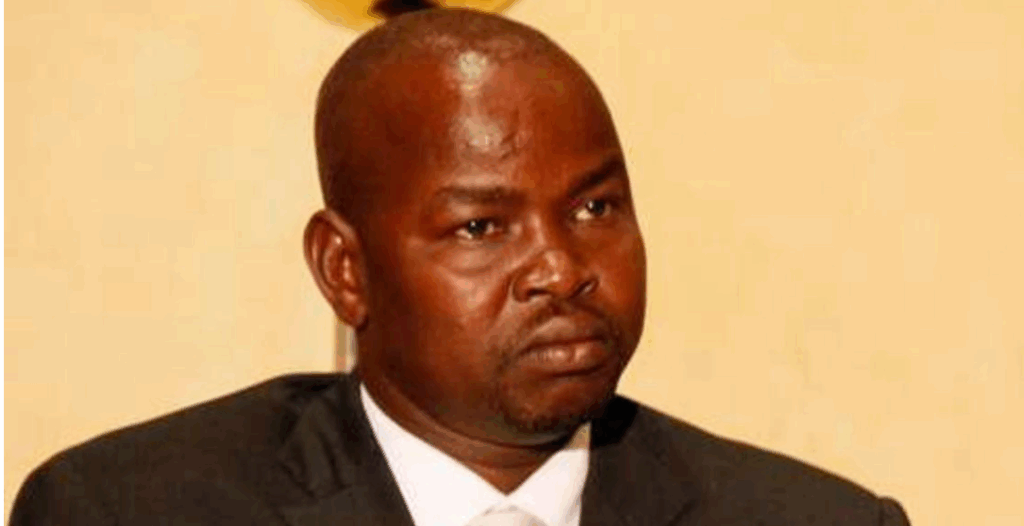
This report is published by Radio Tamazuj as part of an investigative series profiling former Vice-President Dr. Benjamin Bol Mel. It examines his political career, influence, and role in South Sudan’s recent history.
Early political engagement
While in secondary school in Uganda, Benjamin Bol Mel would repeatedly tell peers and friends who cared to listen that he was going to be powerful in the future. His first attempt at actualising this was in Nairobi, while he was at university in the early 2000s, when he vied for the leadership of the SPLM Youth League against Akol Paul Kordit, the recently appointed SPLM Secretary General, who was the incumbent at the time. Bol had the quiet support of a few senior SPLM leaders, including Commander Salva Kiir. However, Akol, with the backing of SPLM Chairman Dr John Garang de Mabior, ultimately won the position.
In 2006, Bol served on the LRA peace secretariat led by Dr. Riek Machar, then Vice President in the Government of Southern Sudan and now head of the opposition SPLA-IO. Despite this early political association with Dr. Machar, Bol later developed a strong relationship with President Salva Kiir and has remained on Kiir’s side throughout the civil war, which ended in 2018.
In early 2010, Salva Kiir, who was then president of the semi-autonomous Government of Southern Sudan, appointed Dr Samson Kwaje, then Minister of Agriculture and Forestry, as SPLM presidential campaign manager for regional elections that were held in Southern Sudan between 11 and 15 April 2010 as part of the Sudanese general election. Bol Mel was part of the presidential campaign team and had his first taste of national politics.
Later in 2010, a few months before the referendum on self-determination for South Sudan slated for early January 2011, which was ironclad in the Comprehensive Peace Agreement of 2005, and brought the Sudanese war to an end, Bol created and was the head of a powerful body dubbed the South Sudan Youth Forum for Referendum, which advocated for separation. The organisation was housed in Juba’s Nimra-Talata neighbourhood, adjacent to the basketball court. Under Bol’s stewardship, the forum chartered special planes to tour states and counties, campaigning and raising awareness about the referendum. The youth organisation had substantial funding shrouded in mystery. Delegates recruited from Juba for the campaign, such as parliamentarians, SPLM Party officials, other influential people, and South Sudanese youth flown in from Kenya, were paid approximately 10,000 Sudanese Pounds, just slightly over USD 4,000, per trip upcountry, a very handsome sum at the time.
The premises of the South Sudan Youth for Referendum offices were initially owned by businessman Garang Deng Aguer, Bol’s uncle, and housed the Ebony Television and Voice of the People Radio, both owned by the latter. Ebony TV was conceived to advocate for diversity and unity across Sudan, but it failed to secure sufficient funding to begin operations. Garang eventually sold the property to Bol, who would later raze the old structure and build a three-storied structure, which he turned into the headquarters of ABMC. By Juba standards at the time, it was a towering and beautiful building that towered over the neighbourhood, characterised by dilapidated tin-roofed houses.
During the referendum campaigns, the political rivalry between Benjamin Bol Mel and Akol Paul Kordit, who was the head of the SPLM Youth League, reared its head again. Akol had created a parallel body called the South Sudan Youth for Separation to mobilise youth for the independence vote on January 9, 2011. He appointed Buda Aban (now a General in the SPLM-IO) to lead this campaign group, which also travelled to states and counties but was cash-strapped, despite being the official party-aligned body.
Bol’s group was dishing out loads of money, had hundreds of brand-new cars and was a well-oiled machine. The huge money for Bol’s organisation was coming from President Kiir and was released through Akol Koor Kuc, who had been promoted to Brigadier and had just taken over as the Director General of the Special Branch, the predecessor of the National Security Service (NSS) in the Office of the President. Koor took over the role from Bol Wek, the current Warrap State governor, who had been sent to represent GoSS in Norway.
The competition between Bol and Akol came to a head over the use of Juba Stadium for a youth rally scheduled for 9 December 2010 by both youth groups they headed. Both bodies appealed to the then-Governor of Central Equatoria, Gen. Clement Wani Konga, for the use of the facility, but he ultimately cancelled both events in an impartial move to avoid possible clashes. However, leveraging his presidential connections, Bol obtained permission for his group to hold their rally at Freedom Square, which hosts national events and where Dr John Garang is interred in a mausoleum.
Budding tycoon
After getting reimbursed in 2007, Bol soon quit the office of the finance minister and set his eyes on business. His first stop was to grab an expanse of land in Juba’s ministerial quarters called Amarat and set up a double-storied business and conference centre complete with a restaurant and bar, which he fittingly christened Home & Away. He would later resolve the land dispute out of court after handsomely compensating the rightful owner.
He linked up with his enterprising uncle, Garang Deng Aguer, who had set up the Alok Group of Companies and was now cashing in on big deals with the government and other private entities. The duo ran several businesses, including Buffalo Commercial Bank in Juba’s central business district, where Bol was the Deputy Chairman of the Board.
At about this time, Bol also started expanding his family by starting to marry several women. His first wife was the daughter of Mori Didimo, a veteran Anyuak politician. To impress his ever-growing ranks of in-laws, he built them houses, gave them Toyota Land Cruiser vehicles, splurged on them, and even gave them jobs in his ‘enterprises.’ Bol’s largesse would soon extend to dishing out cars and money to influential politicians, senior military officers, government officials, chiefs, and cronies, among others. He was buying loyalty and support, silently.
Setting up the ABMC cash cow
Bol Mel, however, had his sights on bigger monies and soon travelled to Thailand to source stone crushing equipment, explore business ideas and cooperation opportunities, and import furniture and equipment for his business centre, restaurant, and bar at Home & Away. He procured stone crushing and related equipment and came back to Juba with Thai engineers and other professionals in late 2007 and set up Aggregate Building Materials Construction Company (ABMC), with him as the syndicate’s President, and President Kiir and then Finance Minister Arthur Akuein as silent partners.
ABMC soon set up a quarry and stone crusher at Jebel (Mountain) Kujur, west of Juba Town, and launched serious operations. The company’s emergence coincided with Juba’s construction boom and the huge demand for aggregate, and they cashed in. Before that, people used to buy aggregate from people, mostly women, who used hammers to break stones at the foot of the mountain.
Bol, now flush with money from several business schemes, set his eyes on courting President Kiir’s trust and working to get the lucrative government contracts that overflowed at the time. The government also had lots of money, which they were expending as if it would never run out. Kiir does not particularly possess intellectual heft, and his minions were running circles around him and pilfering huge sums of government money. He needed someone whom he could trust and work with quietly to grab and stow away his share, and quickly. Benjamin Bol Mel presented as that person. Soon, the duo became thick as thieves with Kiir’s then aide de camp, and later head of security, Gen. Akok Noon, providing the necessary buffer in communication and security.
In late 2007, Gen. Noon was appointed the Deputy President of the ABMC, ostensibly to watch over and protect Kiir’s interests. It worked well for them because they both hailed from Northern Bahr el Ghazal State. To solidify his trust with Kiir, Bol built the president a fancy, storied house in the Hai Jalaba suburb of Juba. The house would later be occupied by Adut Slava Kiir, the president’s daughter and her now estranged Ethiopian husband, Nardes Gebeyehu Alemneh after their marriage in early 2011.
Bol also set about bringing in some of his friends and the brilliant people he went with to USIU in Kenya to help run ABMC and a host of his other enterprises. He also brought in many Ugandans he had known while in school there. He facilitated some of these people, like a one Stella Lorika, a Karamojong from Uganda who now works for the South Sudanese Foreign Ministry.
Chamber of commerce
While strategising for more lucrative government deals, Bol muscled his way to become the Chairman of the South Sudan Chamber of Commerce, Industry, and Agriculture. He did this by orchestrating several moves to nudge aside Ayuel Ngor Kacgor, who was the head of the chamber and an astute businessman who was the managing partner of Sunflower Hotel by the Nile in Juba, the Regional Bus Company, and the Regional Forex Bureau in Juba Town. They would later make up and work together. Bol would set in motion machinations to have his allies in key government positions, and in October 2024, Ngor was appointed the Managing Director of the Nile Petroleum Corporation (Nilepet), the state-owned oil company.
After taking over the chamber of commerce, Bol now had traders and contractors firmly in his grip. To have secure control of the South Sudan Chamber of Commerce, Industry, and Agriculture, Bol appointed Simon Akuei Deng as the body’s Secretary General. The two have been close friends forever, and in November 2024, Bol convinced President Kiir to appoint Akuei the Commissioner General of the South Sudan Revenue Authority (SSRA).
Indeed, over the years, Akuei was active in running ABMC, ARC, Winners Construction Company Ltd and several other businesses owned by Bol, as a loyal and efficient sidekick of Bol, alongside being the secretary general of the chamber of commerce, where they also collected dues from members, which were seldom accounted for. They have been together so long and close that Akuei holds Bol’s most intimate personal and trade secrets. So, it was that premeditated moves were activated to place Bol’s loyal cronies in strategic positions to facilitate his rise to the position of vice president in charge of the economic cluster in February 2025. The others were appointing a finance minister, central bank governor, and military chief who would amicably work with, listen to, and obey Bol.
For good measure and fortification, they cooked up a serious plan and roped in Kiir’s daughter, Adut who had significant influence over the Crawford Company which is registered to dual South Sudanese-UK citizens identified as Garang Mayom Malek, Deng Daniel, Ariec Wol Mayar and Dinnall Bateman Kurtis. The other companies they jointly own include Capital Pay Ltd and Capital Pay Software Solutions Ltd both registered in the UK, and E-Citizen and Crawford Capital which are used as business concerns to collect taxes on behalf of the South Sudan Revenue Authority (SSRA) and collect other monies from the public, mostly in the form of providing “e-Government Services.”
Crawford took control of the visa and tax systems, in the process, draining off huge sums of public funds. For example, in the event you buy and import a car, you pay 30 per cent of the tax at the port of Mombasa to Crawford in their Kenyan bank account, before driving it to Nimule in South Sudan, where you have to pay more taxes to the SSRA. The same applies to cargo shipments. A smooth operation and total ripoff that has left the proprietors of the companies smiling to the bank and living in indescribable luxury.
Adut, her siblings and parents are also involved in mining and trading gold. Several independent investigative reports have provided evidence that Kiir’s family members and close associates hold stakes in a wide array of businesses, including companies involved in the country’s mining sector. Watchdog groups allege this is part of a broader pattern of “kleptocracy” where the ruling elite profits from the nation’s resources with little transparency.
Key findings from reports, particularly by the watchdog organisation The Sentry, indicate direct family involvement with at least seven of Kiir’s children holding interests in companies across various profitable sectors, including mining. Adut Salva Kiir was a shareholder in Rocky Mining Industries Limited, and another daughter, Winnie Kiir, formed a mining company with Chinese investors and received exploration licenses in mineral-rich areas. This network also extends to other lucrative sectors like oil, banking, and telecommunications.
The weak regulatory environment and a lack of transparency have allowed high-level corruption to flourish in the minerals sector, which risks fueling further conflict.
Circumspectly, President Kiir also appointed Bol to the board of the state-owned national oil and gas company, Nile Petroleum Corporation (Nilepet), a couple of years after independence in 2011. This gave Bol more pull to accumulate for himself and Kiir money by, among other things, having a close insight into the country’s and company’s revenues and thus, leveraging large sums of money for dubious contracts. Nilepet is also used by Kiir to disburse money to relatives and cronies and to rent and or loyalty for political hegemony. The Government of South Sudan has always been cagey about proceeds from crude oil revenues and even more opaque about the expenditure of the same, and there has been a deliberate lack of transparency, accountability, and oversight.
At about this time, Bol was conveniently absorbed into the National Security Service (NSS), sans training. When people were going for officers’ training in 2008, he dodged. He did not go again the next year because he was busy making money for Kiir and himself, and left to slide. With his rising stature and closeness to Kiir, Bol’s security detail was now buttressed and akin to that of the powerful SPLA Generals who had convoys and a posse of heavily armed bodyguards. It is important to note that as early as 2007, Bol already had protection provided by elements from the SPLA Tiger Division, who protect the president. He had a small convoy of two cars and sections of soldiers deployed at his homes in Hai Jalaba and Jebel Suburbs of Juba.
The ABMC gold mine
Aggregate Building Materials Construction Company (ABMC) truly became a gold mine for Bol and Kiir after South Sudan’s independence on 9 July 2011. Kiir was now holding sway over financial and security decisions in the new country after it seceded from Sudan and did not have to listen to technocrats and the National Congress Party bigwigs in Khartoum.
In what has become the biggest continuous heist in South Sudan, Kiir and Bol cooked up a concrete plan to incessantly exploit the nascent country’s road construction sector for self-enrichment. The Ministry of Roads and Bridges was their first target in the scheme to skim public funds. On 5 September 2011, President Kiir explicitly directed the then Roads and Bridges Minister, Gen. Gier Chuang Aluong, to promptly release USD 244 million to Benjamin Bol Mel and his ABMC to build 69 kilometres of urban roads in Juba City.
It was a direct order that was not subject to parliamentary approval or ministerial priorities, oversight, or contract. Interestingly, two other companies, the Italian-owned Civil Engineering Company and Eyat Roads and Bridges from Sudan, had done work on more than half of those 69 kilometres during the tenure of Roads Minister Rebecca Nyandeng, who served during the interim period in the Government of Southern Sudan between 2005 and 2011. Knowing what he was dealing with, Gen. Gier Chuang yielded and instantaneously released the demanded funds to Bol.
Bol and his boss had now found and tested an everlasting foolproof method to pilfer public money. ABMC did a semblance of work on two major roads leading out of Juba, to Gudele and Bilpham, 21 kilometres in all at a grossly inflated rate of over USD 11 Million per kilometre. This was another embezzlement record, even for South Sudan. In comparison, the 192-kilometre Juba-Nimule Road construction project implemented by the United States Agency for International Development (USAID) for US$299 million was done at the more realistic cost of USD 1.5 million per kilometre, which is average even by regional standards.
The Government of South Sudan spent a documented USD 1.7 billion on ‘roads’ between 2006 and 2012, but only 75 kilometres of roads were tarmacked and paved all over the country, and all that in Juba City, in that period. That was the commencement of using road construction projects to steal government funds for Bol and his partners’ gain. A new-fangled form of governance characterised by a combination of kakistocracy and kleptocracy had now been perfected under the quiet direction of Bol.

 and then