



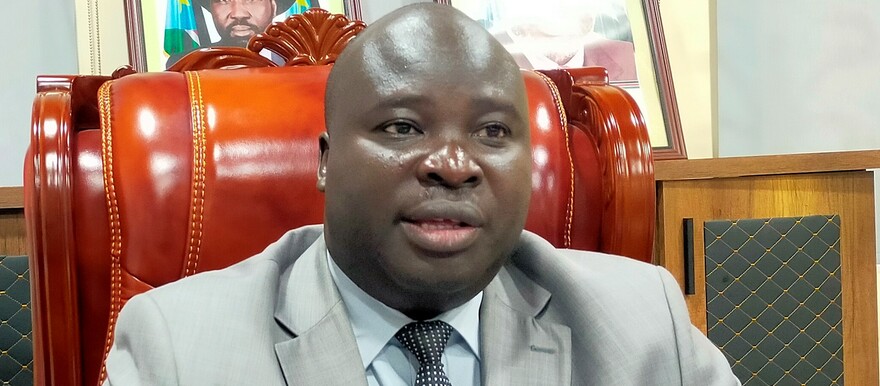
The recent visit of Nathaniel Oyet to Washington comes at one of the most fragile political moments for South Sudan’s opposition movement. Officially, the trip has been framed as a diplomatic effort to mobilize international support for the release of detained opposition leader Riek Machar and to brief U.S. policymakers on the deteriorating political situation in South Sudan. Yet behind the diplomatic language lies a deeper political reality: the visit also positions Oyet as a potential alternative leader within the Sudan People’s Liberation Movement-In Opposition (SPLM-IO). To understand the implications of Oyet’s Washington engagement, one must examine three converging dynamics shaping the opposition movement today: Machar’s legal crisis, the leadership vacuum inside SPLM-IO, and the increasing importance of international legitimacy in South Sudan’s political struggle.
Machar’s Trial and the Political Earthquake in the Opposition
The crisis began after the violent clashes in Nasir in 2025. The South Sudanese government accused Machar of orchestrating the attack through the Nuer White Army militia. He was subsequently arrested, charged with murder, treason, and crimes against humanity, and suspended from the vice presidency. The ongoing trial has become a defining moment in South Sudan’s fragile peace process. Prosecutors have presented witnesses claiming Machar communicated with fighters before the Nasir attack, allegations the opposition strongly denies. For the SPLM-IO, Machar’s detention created a political vacuum. Even though he remains the symbolic leader of the movement, his ability to direct political strategy or maintain cohesion has been severely limited. In movements built around charismatic leadership, such a vacuum inevitably invites internal repositioning. This is the political environment in which Oyet has emerged.
Oyet’s Rise from Deputy to Acting Leader of the movement
Oyet is not a newcomer to the movement. A long-time member of the SPLM-IO hierarchy, he previously served as the First Deputy Speaker of South Sudan’s parliament and as Machar’s deputy within the opposition leadership structure. Following Machar’s detention, Oyet assumed the role of acting chairman of the movement, signing official statements, directing political messaging, and coordinating international outreach. His authority, however, remains politically delicate. Within SPLM-IO, loyalty to Machar remains deeply entrenched, particularly among military commanders and grassroots supporters who see Machar as the symbolic embodiment of Nuer political resistance. Yet the longer Machar remains detained and entangled in legal proceedings, the more the movement must rely on an operational leader capable of representing it internationally. That role increasingly falls to Oyet.
The Strategic Importance of his Washington’s visit
Oyet’s visit to Washington is not merely ceremonial diplomacy. It represents a deliberate effort to secure international recognition and political legitimacy. During his trip, he is expected to meet U.S. officials, congressional figures, diaspora communities, and civil society groups to discuss South Sudan’s political and humanitarian crisis. In South Sudan’s political ecosystem, international recognition often translates into internal legitimacy. Leaders who are seen as credible interlocutors with Western governments gain leverage inside their movements. This dynamic has historical precedent. During the South Sudanese civil war and subsequent peace processes, international actors frequently engaged with opposition figures who demonstrated diplomatic credibility and organizational control. By positioning himself as the primary voice of the opposition abroad, Oyet effectively signals to both domestic and international audiences that he can carry the movement’s political mandate.
The Leadership Question Inside the SPLM-IO
Despite Oyet’s growing visibility, the leadership question inside SPLM-IO remains unresolved. Machar’s supporters argue that any attempt to replace him would fracture the movement and undermine its political legitimacy. Even in detention, Machar continues to function as a powerful symbolic figure capable of unifying disparate opposition factions. However, political realities may force the movement to confront a difficult choice if Machar’s trial results in conviction or prolonged detention. Three possible scenarios could emerge. First, Machar could eventually regain political freedom and reclaim full control of the movement. Second, SPLM-IO could adopt a dual structure in which Machar remains the symbolic chairman while operational leadership rests with figures like Oyet. Third, internal factions might push for a formal leadership transition, particularly if the movement requires a leader capable of participating in future elections or negotiations. Oyet’s diplomatic activism suggests he is preparing for any of these possibilities.
Calculated Positioning or Loyal Representation?
The central debate surrounding Oyet’s Washington visit revolves around interpretation. Supporters portray the mission as a loyal effort to advocate for Machar’s release and defend the peace agreement. Critics within and outside the movement suspect a deeper political calculation. By appearing before international policymakers, mobilizing diaspora support, and acting as the movement’s diplomatic face, Oyet may be consolidating his own political capital. In political movements facing leadership uncertainty, such positioning is rarely accidental.
The Broader Implications for South Sudan
The stakes extend beyond internal opposition politics. The future leadership of SPLM-IO will shape the trajectory of South Sudan’s fragile peace process. If the movement fractures, the country could face renewed instability and armed conflict. Already, clashes linked to the opposition have intensified in parts of Jonglei state, demonstrating how quickly political crises can translate into military confrontation. Whether Oyet ultimately emerges as Machar’s successor or remains a transitional caretaker will depend on the outcome of the trial, the unity of the opposition, and the calculations of regional and international actors.
Conclusion
To conclude my take in this topic, Oyet’s visit to Washington represents more than a diplomatic mission. It is a strategic political moment unfolding within a broader leadership crisis inside the SPLM-IO. While publicly framed as an effort to secure Machar’s release, the trip simultaneously elevates Oyet’s profile as the movement’s most visible international representative. In the unpredictable landscape of South Sudanese politics, visibility often precedes authority. Whether intentional or not, Oyet’s Washington diplomacy may mark the early stages of a potential transition in the leadership of South Sudan’s most powerful opposition movement.
The writer, John Bith Aliap, is a South Sudanese political analyst and commentator on governance, leadership, and state-building in post-conflict societies. He can be reached @ johnaliap2021@hotmail.com
The views expressed in ‘opinion’ articles published by Radio Tamazuj are solely those of the writer. The veracity of any claims made is the responsibility of the author, not Radio Tamazuj.

 and then