



Elections derive their democratic legitimacy not merely from the act of voting, but from the political and institutional conditions under which citizens exercise their choice. The greatest threat to democracy today is not the disappearance of elections, but their continued use after the political and institutional foundations that give them democratic meaning have eroded. When electoral processes are organized in the absence of meaningful political competition, impartial institutions, and agreed constitutional safeguards, they cease to function as instruments of democratic accountability and instead become mechanisms for legitimizing predetermined outcomes.
It is within this broader context that South Sudan’s scheduled December 2026 elections should be understood. Rather than fulfilling the commitments of the September 2018 Revitalized Peace Agreement, they risk functioning as a carefully managed political process designed to consolidate executive authority, weaken the existing power-sharing framework, marginalize major opposition parties, and reinforce political continuity under the appearance of democratic rule.
The tendency to equate elections with democracy has long obscured a fundamental political truth: elections alone do not make a political system democratic. The mere existence of ballot boxes, campaign rallies, and polling stations says little about whether citizens are truly free to determine who governs them or whether their interests are adequately represented. Democratic legitimacy rests on more demanding foundations. It requires impartial institutions capable of administering elections fairly, constitutional safeguards respected by all political actors, meaningful political competition, protection of civil and political liberties, and public confidence that outcomes reflect the will of the electorate rather than the preferences of those already in power. In South Sudan, these foundations remain largely confined to paper.
When these conditions are absent, elections may still occur, but their democratic character steadily diminishes. Rather than enabling citizens to hold governments accountable, they become instruments through which governments seek domestic and international legitimacy while preserving existing political arrangements. Thus, the outward appearance of democracy remains intact, even as its substance erodes. Elections cease to be genuine contests over political authority and instead become carefully staged performances that validate an existing authority already consolidated through other undemocratic means.
The Revitalized Peace Agreement, signed in September 2018, was never intended merely to establish a timetable for elections. Its central purpose was to create the political, legal, constitutional, and security conditions necessary for meaningful democratic reform before elections capable of commanding public confidence could take place. Security-sector reform, constitutional development, institutional restructuring, and broader political inclusion were not secondary aspirations but essential preconditions for a democratic transition. Elections were intended to mark the culmination of these reforms, not substitute for them. Under President Salva Kiir’s rule, securing the appearance of democratic legitimacy—in this case through the scheduled December 2026 elections—has become more important than the democratic process itself.
The credibility of any electoral process, therefore, depends on whether the foundational reforms outlined in the agreement are implemented beforehand. Yet the slow pace of implementation has raised persistent concerns about whether Kiir’s administration is genuinely committed to fulfilling the peace agreement. In August 2022, peace monitoring mechanisms, including representatives from the main opposition parties, estimated that only 27.3 percent of the agreement had been implemented. The government now claims that implementation has reached 31.1 percent. Even accepting this revised figure, an increase of just 3.8 percentage points over nearly four years—an average of approximately 0.95 percentage points annually—illustrates the limited pace of progress and raises serious questions about whether the political reforms necessary for credible elections can realistically be completed within the remaining transition period. This predictably slow progression reveals a deeper structural problem: the gap between the pace of institutional reform and the electoral timetable. A democratic transition is not measured simply by whether elections are eventually held, but by whether the political and institutional environment has been sufficiently transformed to allow elections to function as genuine mechanisms of accountability rather than as instruments for legitimizing existing authority. In South Sudan’s case, the intended sequencing of the transition has been intentionally reversed. The Revitalized Peace Agreement was intended to prioritize institutional transformation before electoral competition. Yet elections now appear likely to proceed while many of the reforms needed to ensure their credibility remain largely unfinished. Among the most significant are the reforms essential to creating a competitive democratic environment. These reforms have advanced far more slowly than the timetable established by the agreement.
This pattern of delayed implementation has fueled concerns that the government’s approach is less focused on transforming the political system than on preserving existing structures of power and influence while leaving unresolved the institutional weaknesses that contributed to the December 2013 civil war and the collapse of the first peace deal in July 2016. The concern is therefore not only the delay itself, but the possibility that elections are likely to proceed without resolving the very weaknesses that produced the need for political reform. Security-sector reform, constitutional development, electoral preparation, and institutional restructuring remain incomplete. These reforms are critical because they determine whether political actors can compete on relatively equal terms and whether citizens can genuinely hold those in power accountable.
These concerns are reinforced by documented allegations that key aspects of the peace agreement have been systematically undermined, including the withholding or delayed provision of financial support to peace implementation and monitoring institutions, thereby weakening their ability to fulfill their mandates. Among the institutions affected are the Reconstituted Joint Monitoring and Evaluation Commission (RJMEC), the Joint Military Ceasefire Commission (JMCC), the National Constitutional Amendment Committee (NCAC), and other bodies established under the peace agreement to monitor compliance, oversee reforms, and foster confidence among the signatories. These institutions were never intended to serve merely administrative functions; they were designed as safeguards to ensure that the transition remained credible, transparent, and accountable. The regime maintains that implementation is progressing as intended. The evidence, however, suggests otherwise.
When institutions responsible for monitoring and implementing peace commitments lack adequate financial and political support, the consequences extend beyond administrative weakness. Their reduced capacity weakens accountability and transparency, allowing disagreements over implementation to be managed through the regime’s preferred political bargaining rather than institutional processes, thereby undermining public confidence in the transition. In a fragile post-conflict society like South Sudan, this institutional weakening undermines the very mechanisms intended to build trust and reduce the risk of renewed conflict. Kiir’s government has obstructed the delivery of food and essential supplies to opposition forces stationed at cantonment sites while they awaited the implementation of the security arrangements and the formation of the unified forces required under the agreement. These actions contributed to further delays, weakened confidence among the signatories, and reinforced concerns that the peace process has been managed politically rather than as a vehicle for the deeper governance reforms intended by the agreement.
The implications of these failures cannot be separated from the electoral question. A credible election requires more than the technical administration of voting; it requires confidence among competing political actors that the rules of competition are fair and that state institutions will not be used to advantage one side over another. In South Sudan, peace implementation mechanisms remain weak, security arrangements are still incomplete, political trust continues to deteriorate, and elections struggle to function as credible, unifying democratic exercises. Instead, they risk transferring unresolved political conflicts from the peace process into the electoral arena, thereby potentially intensifying the ongoing conflict between government and opposition forces. A peace agreement does not derive its value from deadlines alone, but from whether it transforms the political environment that made conflict possible in the first place. Holding elections while fundamental provisions remain unresolved risks reversing that logic. Instead of reforms producing legitimate elections, elections become the justification for postponing or abandoning those reforms. The electoral timetable therefore increasingly risks overshadowing the institutional reforms required to make elections genuinely legitimate.
This raises a broader question that extends well beyond South Sudan: When does an election cease to be democratically legitimate? The answer is not found in turnout figures or the technical act of voting. Elections lose legitimacy when citizens are asked to participate in a process whose essential political conditions remain fundamentally unequal or incomplete. Democracy depends not simply on participation but on meaningful political choice and space. Where political competition is constrained, institutions lack independence, or constitutional commitments remain only partially implemented, voting risks becoming symbolic rather than genuinely decisive. A ballot acquires democratic meaning only when citizens have a genuine ability to influence political outcomes. Without institutional safeguards that protect competition and equal political participation, the December 2026 elections will likely provide participation without empowerment and procedure without meaningful choice.
Political systems such as South Sudan’s that are confronting declining legitimacy often retain elections rather than abolish them. In doing so, they project constitutional normality, reassure external partners, and create the appearance of popular consent. Governments may organize elections to reinforce claims of democratic authority, but legitimacy ultimately depends less on the occurrence of elections than on the conditions under which they are conducted. The result is not the disappearance of democracy’s institutions, but their transformation into mechanisms that reinforce existing power. South Sudan, therefore, illustrates a broader problem facing transitional states: the preservation of democratic procedures without the institutional foundations necessary for democratic accountability.
The debate surrounding South Sudan’s planned December 2026 elections should therefore extend beyond the narrow question of whether voting will occur. If key provisions of the peace agreement remain unimplemented, if confidence among political stakeholders and ordinary South Sudanese citizens continues to erode, and if institutional reforms remain incomplete, then the legitimacy of the electoral process will remain contested rather than assured.
Those who support the government’s decision to proceed with the elections may argue that South Sudan cannot indefinitely postpone democratic participation. They may contend that imperfect elections are preferable to a prolonged political transition, that constitutional development often continues after elections have been held, and that no society benefits from remaining in a state of perpetual transition.
However, the government’s determination to proceed with elections appears driven as much by the pursuit of political validation as by a commitment to completing the democratic transition. Yet even if the authorities move forward with the process and declare a winner—as their actions suggest they intend to do—such elections, conducted without the institutional, political, and legal reforms envisioned by the peace agreement, cannot by themselves confer democratic legitimacy or resolve South Sudan’s underlying governance failures, humanitarian crisis, or persistent insecurity. Rather than bringing the conflict to a conclusion through peace implementation, a contested electoral process risks leaving the structural causes of instability intact, creating the prospect of continued political fragmentation and violence that extends beyond the announcement of the results.
This argument becomes less convincing when elections risk institutionalizing rather than resolving political disputes. If both the people of South Sudan and credible opposition parties view the process itself as lacking credibility, elections may further deepen rather than reduce the current political fragmentation. Stability secured through contested legitimacy often proves temporary because unresolved institutional problems continue to shape political life long after ballots have been counted.
The question is therefore not whether South Sudan should eventually hold elections. The central question is whether elections conducted before the completion of essential reforms can achieve the objectives envisioned by the agreement. If the institutional foundations of democratic competition remain fragile, elections risk becoming an endpoint imposed upon the transition rather than the legitimate culmination of it. The peace agreement was intended to achieve credible elections through institutional reform. Reversing this sequence risks transforming elections from a mechanism of democratic consolidation into a substitute for the institutional reforms required to sustain democracy and bring about lasting peace.
Authoritarian regimes rarely secure durable legitimacy through electoral symbolism alone. Citizens ultimately judge political systems by the fairness of institutions, the protection of rights, the impartial application of the law, and the extent to which public authority serves the nation rather than entrenched political interests. The deeper challenge facing South Sudan is therefore not simply whether elections will be held in December 2026, but whether those elections will represent the completion of a genuine democratic transition or merely the appearance of one. Democratic legitimacy cannot be declared into existence through electoral calendars or campaign slogans. It must be earned through institutions that citizens trust, reforms implemented credibly, and a political environment in which competition is free and inclusive.
When elections are detached from these conditions, they risk becoming less an instrument by which citizens determine their political future and more a mechanism by which existing power structures reproduce themselves under democratic symbolism. The essential question is therefore whether citizen participation will translate into meaningful political influence. If elections become a substitute for unresolved reforms rather than their culmination, they will not fulfill the democratic promise of the peace agreement. Instead, they will risk institutionalizing the very political conditions and institutional weaknesses that the agreement was designed to address. This is a reality that many observers recognize, including Kiir’s regime, even though it appears more interested in deflecting responsibility than acknowledging the underlying problems.
The durability of South Sudan’s peace will therefore depend not merely on holding elections, but on whether those elections are conducted through institutions capable of sustaining genuine competition, accountability, and public trust. The success of the 2026 elections will ultimately be measured not only by whether ballots are cast and results announced, but by whether the process strengthens public confidence in the credibility of democratic governance. A credible electoral process must not only determine who holds office but also demonstrate that political authority can be challenged, limited, and peacefully transferred through legitimate democratic institutions. Without that transformation, the 2026 elections risk becoming not the culmination of South Sudan’s democratic transition but merely the illusion of one.
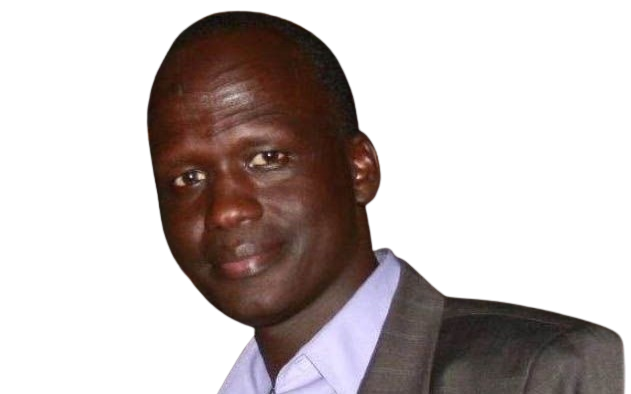
Duop Chak Wuol is an analyst, critical writer, and former editor-in-chief of the South Sudan News Agency. He is a graduate of the University of Colorado and writes on geopolitics, security, and social affairs in South Sudan and the broader East Africa region. His work has appeared in leading regional and international outlets, including AllAfrica, Radio Tamazuj, The Independent (Uganda), The Arab Weekly, The Standard (Kenya), The Chronicle (Ghana), Addis Standard (Ethiopia), and Sudan Tribune. In 2017, the Ethiopian Broadcasting Corporation highlighted his article on Meles Zenawi’s role in Ethiopia’s economic transformation. He can be reached at duop282@gmail.com.
The views expressed in ‘opinion’ articles published by Radio Tamazuj are solely those of the writer. The veracity of any claims made is the responsibility of the author, not Radio Tamazuj.

 and then