



“From Malualchaat, a single bullet rang out, that marked the birth of a nation.”
On this sacred day, the sixteenth of May, we pause, in grief, in gratitude, and in towering pride. Forty-three years ago, at Malualchaat Barracks in Bor, Commander Kerubino Kuanyin Bol pulled the trigger that no oppressor anticipated, marking the birth of the Sudan People’s Liberation Army. That bullet carried with it the tears of every mother who had lost a son, the prayers of every elder who had suffered one injustice too many, and the silent rage of a people who had simply had enough.
THE FIRST SHOTS: KERUBINO KUANYIN BOL AND WILLIAM NYUON BANY
Commander Kerubino Kuanyin Bol did not wait for permission to claim his freedom. On May 16, 1983, he rose at Malualchaat and, through a single act of defiance, opened the door to liberation for twenty-first-century South Sudan. Simultaneously, Commander William Nyuon Bany, a soldier of extraordinary valor, launched an attack at Ayod, decimating enemy forces in a blaze of fire that signaled to the world that the SPLA was not merely a flicker but a raging wildfire. Together, these two commanders embodied the thunder and lightning of our inception. Their names should be spoken in the very first breath of every account of this nation’s struggle for freedom.
THE ARCHITECTS OF FREEDOM: CHAIRMAN DR. JOHN GARANG DE MABIOR & PRESIDENT SALVA KIIR MAYARDIT
Dr. John Garang de Mabior was more than just a commander; he represented a complete liberation in one man. A scholar, strategist, orator, and dreamer, he fused the gun and the pen, making them articulate a singular message: freedom. He ensured the world could not ignore our suffering, articulating our cause with intellectual ferocity that shook palaces and moved parliaments. Though he did not live to walk on the soil of the free republic he envisioned, his spirit is woven into every inch of it.
Standing beside him, both then and now, is President Salva Kiir Mayardit, a soldier first, a statesman always. President Kiir fought through the long war in the bush and endured its darkest hours. When Garang was taken too soon, he raised this nation’s flag with both hands and vowed never to let it fall. He led South Sudan to independence on July 9, 2011, fulfilling the covenant made in the jungles of liberation. To him, and to every general and commander who strategized by firelight and inspired frightened young men to stand firm, this nation offers its deepest salute.
THE FALLEN MARTYRS—THOSE WHO PAID THE ULTIMATE PRICE
The young men who left school mid-sentence to take up rifles. The elderly who chose to walk one more mile for the sake of tomorrow’s children. The women, our female combatants, nurses, and martyrs, who fought, bled, and died alongside the men, whose sacrifices must never again be relegated to mere footnotes. The civilian porters who carried ammunition across harsh terrain under brutal skies, often not by choice but with undeniable heroism. To the nameless graves in the bush, to the bodies swallowed by the river, you are the South Sudan. You are what we have become. Your names may not all be recorded, but your courage serves as the foundation upon which every South Sudanese stands today.
THE HEROES AND HEROEINES THAT FED THE WAR: CHIEFS, FARMERS, FISHERMEN & THE DIASPORA
No army wins alone. Our chiefs maintained order when chaos threatened to consume everything. Our farmers sacrificed their last granaries and gave away their prized cattle so that soldiers could eat and march. Our fishermen, those quiet heroes of the rivers, ferried recruits across the fierce White Nile and the Sudd by night, in silence, against the current and the dangers that lurked. Meanwhile, in the cities of London, Washington, Nairobi, Stockholm, and Ottawa, our academics and diaspora warriors engaged in a different battle, one of testimony, lobbying, and the relentless search for truth, until the world finally recognized that South Sudan’s quest for liberty was just, urgent, and nonnegotiable. Though they wore different uniforms, they fought the same war.
FRIENDS WHO STOOD WITH US: ETHIOPIA, KENYA, UGANDA & THE INTERNATIONAL COMMUNITY
We owe a deep debt of honor to the nations that supported us when the world chose to look the other way. Ethiopia opened its borders and provided our liberation forces with the essential ground to train, equip, and organize. Without Ethiopia’s generosity, the military capacity of the SPLA would have been severely limited. Kenya and Uganda welcomed millions of our displaced people—mothers, children, and the elderly—who fled the bombs and found dignity and safety in those nations’ embrace. To the Intergovernmental Authority on Development (IGAD); the African Union (AU); the United States of America (USA); Norway, with its many NGOs like NPA, NRC, NCA, and others; as well as the international human rights community, the churches, and the NGOs that championed our cause: you were not mere bystanders. You were partners in our liberation. Your unwavering support has laid the foundation for our stand today. South Sudan will remember you for eternity.
THE UNFINISHED WORK: A COUNTRY STILL AT WAR WITH ITSELF
We must confront a difficult truth. The guns that should have been silenced forever continue to fire. Brothers are killing brothers in conflicts that betray the dreams for which our martyrs fought. The nation liberated by bullets has subtly succumbed to corruption, which steals with a pen what no enemy could seize with a gun. Each stolen public coin, each single pound, inflicts a second wound on every soldier who has shed blood for this country. This practice must end. Not tomorrow. Now. We must reject what belongs to others that we have disgracefully consumed. We must resolve not to perpetuate theft again. Otherwise, the fallen heroes and heroines will not experience peace in their resting places while we dishonor them with ongoing war, hatred, disunity, and theft.
THE PROMISES WE MUST KEEP: UNITY, PEACE & THE FUTURE
The peace dividend for which our heroes sacrificed their lives is not merely a fantasy; it is a tangible blueprint for our future. It encompasses classrooms filled with children from Malakal to Yambio and from Nimule to Aweil, hospitals where mothers do not lose their lives in childbirth, and roads that connect our communities with markets where our farmers can thrive. It envisions a South Sudan led by women, where the youth inherit a functioning state and where our oil resources are used to build schools instead of lining foreign bank accounts. This vision embodies the very reason the first bullet was fired at Malualchaat. Let us unite to realize it, bridging every crack and deep tribal wound and healing every political scar, with the same unity that guided us through our liberation struggle.
To our leaders: Govern with the weight of this sacrifice in mind. To our veterans: You have already given everything, now let this nation finally give back. To our young people: You are the fulfillment, not the aftermath, of liberation. South Sudan is not a failed project; it is an unfinished one. Together, we are the ones who must complete it.
Finally, I urge all citizens of South Sudan, especially the leaders, to deeply reflect and discover a way to overcome the temptations of greed, lust, and hatred. We must promise our martyrs, heroes, heroines, and friends that we will honor their sacrifices and not squander what they have given us. Leadership should establish this commitment as a lasting covenant. A nation that rewards its citizens equally will thrive. We need a country where no individual would consider excluding others from government and national affairs simply because of personal grievances.
Let us honor the fallen. Celebrate the living. Strengthen the unity of our nation.”
SOUTH SUDAN SHALL RISE
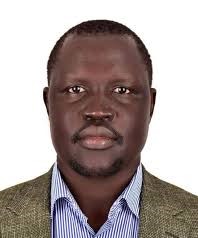
The writer, Dr. Sunday de John, holds an MBA and a Bachelor of Medicine and Bachelor of Surgery (MBChB) from the University of Nairobi, Faculty of Business and Management Sciences and Faculty of Medicine, respectively. He is the current Chairman of the South Sudan United Front-Progressive and can be reached via drsundayalong4@gmail.com
The views expressed in ‘opinion’ articles published by Radio Tamazuj are solely those of the writer. The veracity of any claims made is the responsibility of the author, not Radio Tamazuj.

 and then