



The concern raised in the two-part opinion article by Dr. William Sunday D. Tor deserves reflection, but I respectfully disagree with its central narrative and, particularly, with the impression that December 2026 should be viewed through the lens of December 2013 as though history is preparing to repeat itself. I disagree with treating elections as a potential trigger for renewed conflict, and disagree with allowing political anxieties to become predictions of national catastrophe. South Sudan must learn from December 2013, but it must not be imprisoned by its shadow.
December is a month on the calendar; it’s neither a political destiny nor a prophecy. December 2013 was created by specific political circumstances-it didn’t happen because December itself carries a curse. To fear December 2026 because of the 2013 tragedy is like refusing to cross a bridge because someone once fell from another – the lesson is to learn to build and cross the bridge safely; not declare the bridge cursed.
The author’s repeated comparison between political disagreements today and the events of 2013 is, in my view, unnecessarily deterministic. Disagreement among politicians is not evidence of an approaching war; it is evidence that politics is alive. If every disagreement is interpreted as the beginning of another conflict, then we are effectively asking politicians to stop being politicians before we allow democracy to begin.
I also differ strongly with the suggestion that the existence of political uncertainty makes December elections inherently dangerous. Elections do not create political disagreement; they give political disagreement a peaceful address. When citizens have competing views, the ballot box is the mailbox where those views should be delivered, not the battlefield.
South Sudan must not wait for perfect political conditions before holding elections. Democracy is not a prize awarded after a country becomes perfect – it is one of the tools through which imperfection is peacefully corrected. If every unresolved transitional disagreement becomes a reason to postpone elections, then we will never move an inch to allow citizens to exercise their right. No country canceled the road because accidents are possible; it improves the road, enforces traffic rules, and teaches people how to drive.
The question should therefore not be, “Could elections create conflict?” Almost anything can become dangerous when badly handled. The better question is: “How do we make elections the safest available mechanism for political competition?”
The article’s repeated invocation of December 2013’s individual political rhetoric risks giving the past too much authority over the future. Political statements should be examined critically, but a controversial statement is not evidence of an impending war. We must distinguish between political tension and actual preparation for violence – history is a rear-view mirror, not a steering wheel. We need the mirror to remember where we came from, but nobody drives safely by staring permanently into it. We must distinguish between political tension and actual preparation for violence.
I reject the notion that our country must first achieve complete political harmony before holding national elections. Democracy is not a graduation ceremony awarded after politicians learn to agree – it is the classroom where societies learn to disagree peacefully. If political consensus becomes a permanent precondition for elections, elections will forever remain one political disagreement away from postponement.
The suggestion that continuing differences within the Revitalized Transitional Agreement should make citizens question whether elections can be peaceful also deserves a different interpretation. The differing views by diverse parties may present competing opinions; that does not automatically translate into national instability. A political party having arguments is not the same thing as a country having a war. Sometimes a family can argue over dinner without burning down the kitchen.
I therefore disagree with turning individual political statements, whether from senior party leaders or opposition figures, into pieces of evidence in a narrative of impending conflict. Statements should be debated, challenged, and judged on their meaning and consequences, but political rhetoric should not be converted into a security prophecy without evidence. Otherwise, every microphone becomes a potential weapon.
The author’s argument that we should not “wait for a crisis” is reasonable. We should indeed act before problems emerge, but the action should be preparation for peaceful elections, not preparation for an assumed war. The best fire prevention is not standing outside the house shouting “fire”; it is checking the wiring before the smoke appears. Citizens must eventually move from being spectators of political agreements to participants in choosing their government.
I equally differ with the elevation of the Ugandan church leader’s prophetic warning into a central political lens through which December should be understood. The spiritual warning may deserve reflection, but a prophecy should never become public policy, and fear should never become national evidence. South Sudan needs facts, preparation, and responsible leadership, not predictions that citizens are encouraged to treat December as a destiny.
I also disagree with placing excessive emphasis on political reconciliation amongst elites as the principal answer to South Sudan’s political future. Dialogue among leaders is useful, but we cannot remain a country whose political destiny is negotiated indefinitely among elites. Citizens must eventually move from being spectators of political agreements to participants in choosing their government.
Nor should the country be presented with a false choice between elections and war. There is a third path: peaceful political competition governed by law. Candidates can campaign, parties can compete, citizens can vote, institutions can resolve disputes, and political losers can remain citizens with dignity and security.
Those who believe South Sudan is moving in the wrong direction should embrace the ballot rather than fear it. Organize, campaign, persuade, and win the people. A stronger political argument needs no bullet; it needs a better message and the confidence to take it to voters.
The same standard must apply to those defending the status quo. Political confidence should not fear competition. A government that trusts its achievements should welcome citizens’ judgment, while an opposition that trusts its alternative should welcome the opportunity to persuade those citizens. Democracy becomes meaningful when both victory and defeat are accepted as political outcomes rather than existential disasters.
The author’s strongest recurring phrase is that “if wars are politically created, then peace and stability must also be politically created.” I would turn that proposition in a different direction: if political disagreements can create war, then democratic institutions must be created precisely to prevent disagreement from becoming war. Peace is not created by permanently avoiding political competition; it is created by giving competition peaceful rules.
Therefore, the national task before December 2026 should be neither panic nor complacency. It should be preparedness without fear, vigilance without hysteria, political competition without confrontation, and elections without intimidation. Let us strengthen the institutions, educate the voters, protect political participation, and demand responsible conduct from every political actor; but let us stop speaking as though December has already been convicted of a crime it has not committed.
South Sudan has already suffered enough from the politics of fear. We cannot build a peaceful future by repeatedly telling our people that war is coming. Let December 2013 remain history, and let December 2026 become a choice. A month cannot start a war; people make political choices. And if people once created tragedy, then people can create tomorrow’s peace.
The call for dialogue should therefore not become another elegant excuse for postponing elections. South Sudan has held dialogue after dialogue, agreement after agreement, and transition after transition; at this point, dialogue must produce a doorway, not another waiting room. Elections provide that doorway by allowing citizens to participate directly in determining the country’s political direction.
Therefore, South Sudan does not need another December 2013. But neither does it need to be frightened into believing that December 2026 must become one.
The past has already spoken. Now let the people speak. The past may guide us, but it must never dictate where we are going.
The ballot box is not the enemy of peace; when protected by law, it can be one of peace’s strongest weapons in December 2026.
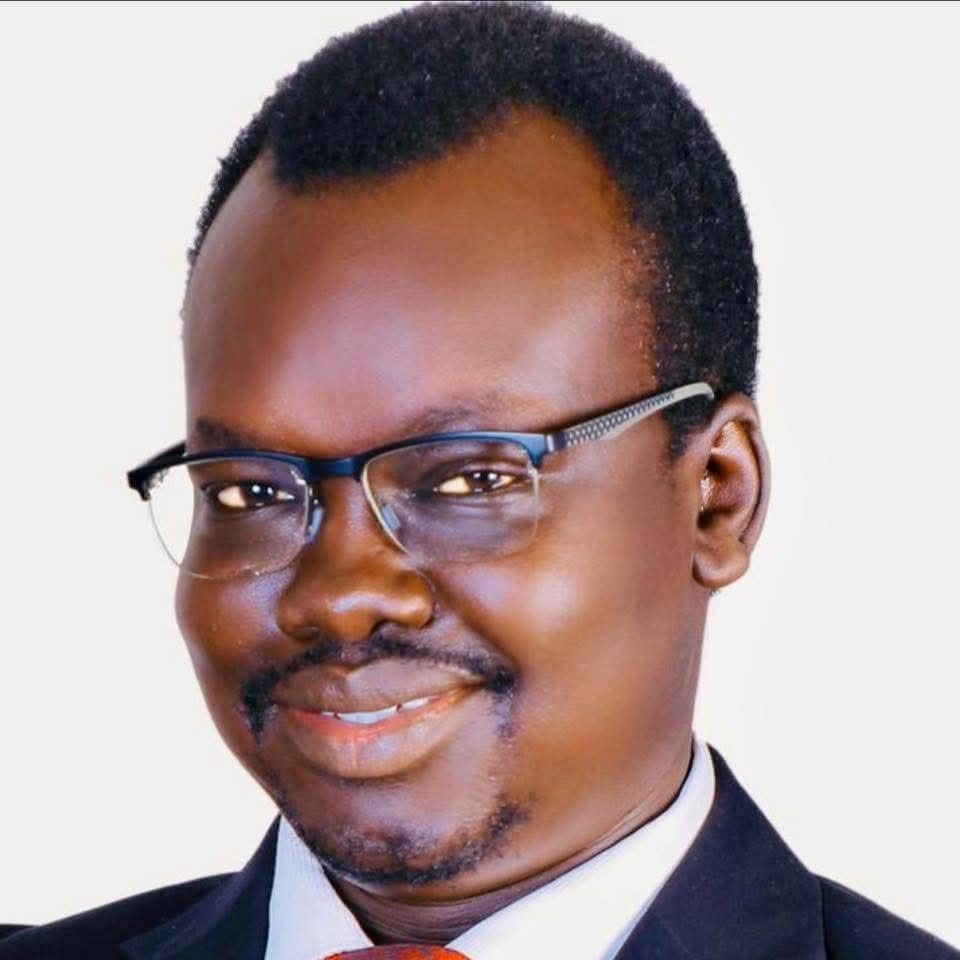
The writer, Dr. Thon Agok Adier, is a humanitarian worker, senior medical doctor, and reproductive health consultant with 19 years of experience across South Sudan, Uganda, and Kenya. He currently serves as the Country Director of LiveWell South Sudan.
The views expressed in ‘opinion’ articles published by Radio Tamazuj are solely those of the writer. The veracity of any claims made is the responsibility of the author, not Radio Tamazuj.

 and then