



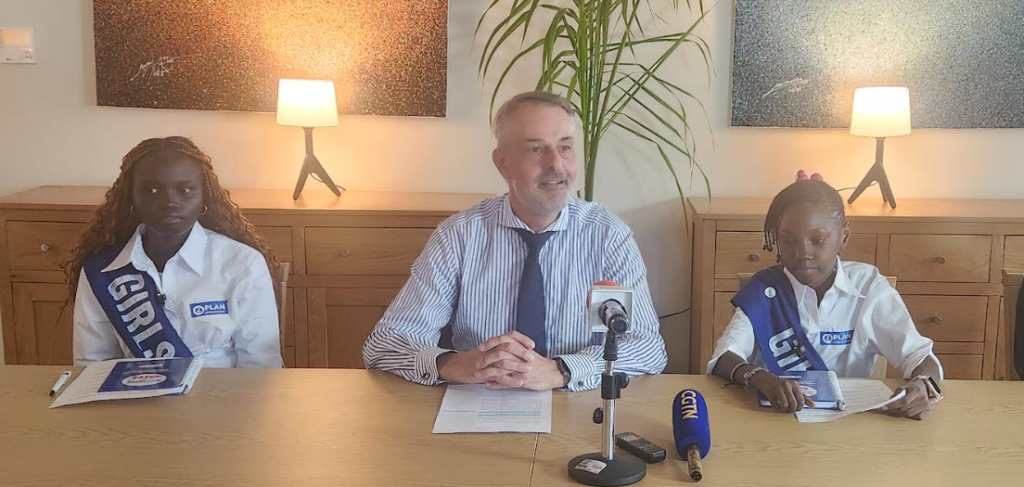
Flooding can force girls from their homes and leave them without access to schools and health facilities, an 11-year-old girl said during a symbolic leadership takeover at the British Embassy in Juba.
Parasha Lamaro, who took on the role of the embassy’s development director for a day on Thursday, said girls displaced by floods often end up in camps where essential services are lacking.
“Floods make girls become displaced,” Lamaro said. “They move into camps, and there are no hospitals or schools for girls to get education.”
The event, organised by the embassy and Plan International to mark the International Day of the Girl Child, saw two South Sudanese girls assume ceremonial roles, with Lamaro serving as development director and 19-year-old Mary Adut as ambassador.
The initiative gave the girls an opportunity to meet embassy staff and partners and raise issues affecting girls.
Adut, a member of Plan International’s Global Youth Reference Group, said girls need access to quality and inclusive education, including those with disabilities.
“If I had the chance to make one priority that would improve the lives of girls, it would be to promote quality education and inclusive education for all girls,” she said.
“Just saying education, when it is not quality, is really not good.”
Seb Fouquet, the British Embassy’s humanitarian and development coordinator, said the United Kingdom and its partners had supported access to education for 1.2 million girls through cash transfers. He said the embassy also supported humanitarian assistance and peacebuilding initiatives focused on women and girls.
“Empowering and investing in women and girls in particular is of huge importance, not just for today but for the future of South Sudan,” Fouquet said.
Fouquet cited figures indicating that half of girls in South Sudan marry before the age of 18 and that only one in four attends secondary school.
Reshma Azmi, Plan International’s country director in South Sudan, said the Girls Takeover campaign sought to raise awareness of girls’ rights and ensure their perspectives informed programme priorities.
She said girls and women should be involved from the outset of climate adaptation programmes, rather than being consulted after decisions had been made.
“Girls and women should not be an afterthought in climate programming,” Azmi said. “They should be engaged from the onset of the programme and have the space and opportunity to talk about their rights and needs.”
Azmi said the initiative had helped keep girls’ needs in focus in areas including education, protection, health and nutrition, but did not cite specific commitments or outcomes from previous events.
Lamaro urged girls to remain focused on their ambitions despite the challenges they face.
“Never give up on your dreams,” she said. “If you study hard, focus in school and avoid peer pressure, you can become a leader.”

 and then