



In Juba today, a baby might be called Dollar because his father saw a US note during a tough market day, or HP because an uncle carries a laptop, or Majoros because a mother delivered inside a moving truck near Custom Market. We laugh off these trends as modern style. Yet, we are losing something sacred along the way.
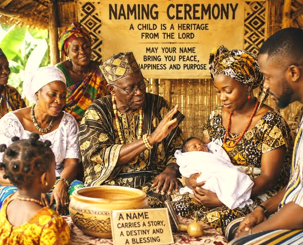
In African tradition, a name was never just an ordinary label. A name was a true baptism. As Mbiti taught, an African philosophy understands that a person does not merely possess a name, because a person is that very name.
Long before foreign missionaries brought holy water and white garments, our ancestors were already baptizing us with meaning. When a Nuer elder named a newborn Gatbel, meaning son of struggle, he was not just describing a difficult delivery. He was offering a deep prayer and a quiet prophecy, placing that child inside a family story much larger than himself.
This forms the vital triad we have broken: Naming, Faith, and Identity.
First, naming is an act of faith. An African name is a powerful theological statement. A name like Nhial among the Dinka is a daily confession that God reigns above all. Nyandeng carries the spirit of rain, divinity, and ancestral heritage. Every time you call out to the child, you repeat that prayer. In Western cultures, names simply identify individuals, but in Africa, traditional names intercede for them.
This connects deeply with our major religions. The Bible notes that God gives a new name and calls His people by name. The Qur’an teaches that to Allah belong the most beautiful names and commands that true lineage and identity be preserved by calling children after their fathers.
Second, naming is identity. You cannot truly know who you are until you understand the meaning behind your call. To be named Bol means you arrive from a proud lineage of warriors or follow twins. A traditional name acts as a national ID, a clan map, and a moral contract rolled into one. When we hand our children random foreign names we cannot even translate, we cut them off from their spiritual GPS. They risk becoming citizens of nowhere, feeling lost even while walking through home streets.
Third, our current identity crisis stems directly from this naming crisis. When you lose your true name, you lose your address in history. A rich traditional name functions as a complete database. It tells you the father, the grandfather, the clan, the birth order, and the family history. You do not need a plastic card when your name carries your entire ancestral history.
In the old days, if you carried a name like Duop, meaning born to fight for what is right, you could never become a coward without your name putting you to shame. The name itself acted as a moral guardian. Today, when a child grows up named after currency or random gadgets, what guiding moral law shapes their steps? None.
Our religious institutions must realize that Christianity and Islam did not invent naming in Africa; they found naming already holy and deeply spiritual. To baptize someone with a foreign name does not make them more faithful than naming them with a word carrying deep ancestral virtue. Even scripture shows God changing names to alter destinies, from Abram to Abraham, and teaching Adam all names.
It is time for a cultural return. Let us name our children again as if we are praying over their futures. Because we truly are.
We were never just tagged. We were baptized by our ancestors through names like Nhial, Nyandeng, Duop, Gatbel, Anyak, Makuei, Lado, Pitia, Wani, Otto, Ocholla, Arok, Bol, Lam, Bakasoro, Lagu, and Deng.
Let us wear them proudly. For One Nation, One People, we must reclaim our true names before we lose our way completely in this global village.
Bec George Anyak is a PhD student at the University of Nairobi, Kenya, and an associate researcher at The Sudd Institute, South Sudan.
The views expressed in ‘opinion’ articles published by Radio Tamazuj are solely those of the writer. The veracity of any claims made is the responsibility of the author, not Radio Tamazuj.
References
Deng, F. M. (1972). The Dinka of the Sudan. Holt, Rinehart and Winston.
Evans-Pritchard, E. E. (1956). Nuer religion. Oxford University Press.
Idowu, E. B. (1973). African traditional religion: A definition. Orbis Books.
Lienhardt, G. (1961). Divinity and experience: The religion of the Dinka. Oxford University Press.
Mbiti, J. S. (1990). African religions & philosophy (2nd ed.). Heinemann.
Ngong, D. T. (2017). The Chiastic Structure of Naming and Identity in African Christianity. Studies in World Christianity, 23(3), 219–235.
Ukpong, J. S. (2001). African names and Christian baptism: An inculturation perspective. Journal of African Christian Thought, 4(2), 1–12.
Holy Bible – Isaiah 62:2, Isaiah 43:1, Proverbs 22:1, Genesis 17:5, Genesis 32:28.
The Holy Qur’an – 7:180, 33:5, 49:11, 2:31

 and then