



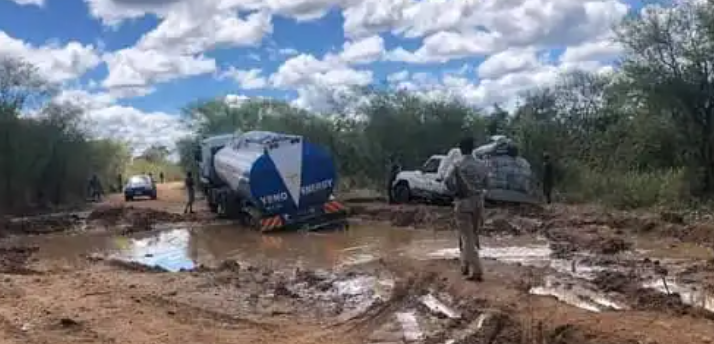
On Wednesday, I came across an article published by Eye Radio that Rhino Construction Company, contracted by the national government to repair or rehabilitate the Juba-Yei Road, is asking for fuel and financial support to carry out the work. This just revealed the pattern of similar failed works by several construction companies. It took me back to an article I worked on in 2019 while I was still at Eye Radio. Since then, the story of the Juba–Yei Road has unfolded as a symbol of failed promises.
Let me take you year by year through these failed promises.
2019: The government announced plans to upgrade and pave the Juba–Yei–Kaya Road. At the time, Rebecca Joshua was the Minister of Roads and Bridges. No contractor was publicly named, and no visible work followed.
May 2020: A rehabilitation contract was reportedly awarded to Samko National Construction Company, an Egyptian firm. Despite the announcement, there was no meaningful progress on the ground.
October 2021: President Salva Kiir renamed the road the “Aggrey Jaden Road” and promised it would be constructed to international standards. The announcement was delivered by Dr. Barnaba Marial during a memorial ceremony for Aggrey Jaden in Rock City, Juba. Again, the promise did not translate into action.
2022: Bush clearing and earthworks contracts were awarded to African Resources Corporation (ARC) and KIT Construction Company. Some work began in certain sections but was later suspended, reportedly due to insecurity.
2023: Construction activities were said to have resumed after security interruptions, though progress remained minimal and inconsistent.
2025: Lawmakers announced that the Yei Road would finally be constructed under the oil-for-roads arrangement, with ARC confirmed as the contractor. Parliament revealed that oil worth millions of dollars had been allocated. Despite this, the road remains largely unpaved.
December 2025: The government announced that full construction would begin in 2026, involving “international companies,” yet no specific company was named.
Today: Rhino Construction Company is asking for fuel and financial support—raising serious questions about planning, funding, and contractual clarity.
The people of Yei, traders, farmers, and consumers across the country deserve honest answers. How many contractors are responsible for this road? Who is currently in charge? Where did the allocated funds go? And when, clearly and realistically, will construction actually be completed?
The Juba–Yei Road is not a political slogan or a ceremonial name; it is a strategic national asset. Yei’s agricultural production has the potential to feed this country and even reduce imports, and stabilize the economy, but only if farmers have the road to transport goods safely and affordably to markets.
The government should be sincere with the South Sudanese. If the road will be constructed, say when, by whom, and with what guaranteed funding. If there are challenges, then tell the people openly. What the country can no longer afford is a cycle of announcements that raise hope and deliver disappointment.
Anyone who comes from Yei and those who had the opportunity to live there know how fertile the area is and the abundance of food there.
The Juba–Yei Road should not be remembered as a symbol of failure, but as proof that the government can finally turn words into action for agriculture, for the economy, and for the people.
The writer is a South Sudanese multimedia journalist known for critical reporting on gender, environment, health, and conflict.
The views expressed in ‘opinion’ articles published by Radio Tamazuj are solely those of the writer. The veracity of any claims made is the responsibility of the author, not Radio Tamazuj.

 and then