



South Sudan stands at a delicate moment in its history. After decades of conflict, displacement, and political instability, the nation continues to carry the visible and invisible scars of war. Communities are rebuilding lives that were shattered by violence, families are mourning loved ones lost to conflict, and young people are struggling to find hope in an uncertain future. In such a fragile environment, the words of national leaders matter profoundly. Every public statement has the power either to strengthen trust and unity or to deepen divisions and fear. At a time when peace remains a national aspiration rather than a guaranteed reality, leadership must be exercised not only through policy and action but also through responsible speech.
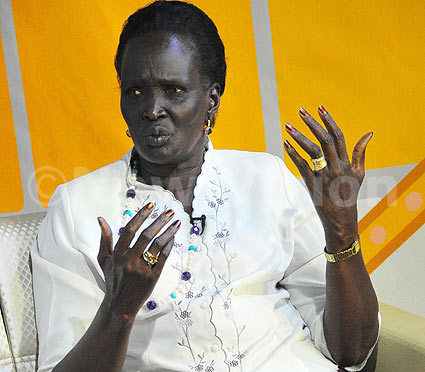
This reality makes the remarks attributed to Vice President Rebecca Nyandeng de Mabior following the funeral service of former Minister of Cabinet Affairs Kosti Manibe Ngai in Juba on August 11, 2026, a matter of significant public concern. According to reports circulating widely among South Sudanese communities, the Vice President reportedly described certain youth as “cowards” and questioned whether “their mothers can fight for them.” Such remarks, whether intended as criticism, encouragement, or political commentary, carry serious implications in a country where many young people have already endured unimaginable hardship. The public deserves clarity regarding whom these statements were directed at and what message they were meant to convey.
The controversy surrounding these remarks also comes against the backdrop of an earlier debate regarding comments attributed to the Vice President Rebecca De Mabior during an Al Jazeera Up-front interview. In that discussion, reports indicated that VP Rebecca referred to the Red Army who joined the liberation struggle as having followed the army because they could access better services, food, and other necessities in the bush. For many former members of the Red Army and numerous South Sudanese observers, such comments appeared to oversimplify a painful chapter of history marked by sacrifice, suffering, and, in many cases, the recruitment of children into conflict. Whether intended or not, the perception created diminished the difficult experiences endured by thousands of South Sudanese families during the liberation struggle.
Leaders, like all human beings, can make mistakes. They may speak emotionally during moments of grief or frustration, and they may sometimes choose words that fail to communicate their intended meaning. However, national leadership carries responsibilities that extend beyond personal feelings or political disagreements. Public officials are entrusted with the duty of promoting national unity, inspiring confidence, and protecting social harmony. When their words create confusion, cause public concern, or appear to undermine the dignity of citizens, responsible leadership demands clarification and, when necessary, correction. Silence in such circumstances often deepens misunderstanding and widens the gap between leaders and the people they serve.
South Sudan has paid an extraordinary price for political recklessness and inflammatory rhetoric. The country’s history offers painful reminders of how divisive language can fuel mistrust, intensify tensions, and ultimately contribute to conflict. Families have been separated, communities fractured, and generations of young people are burdened by circumstances beyond their control. Against this backdrop, public officials must recognize that every major public address carry consequence. National leaders should use solemn occasions, especially funerals and memorial gatherings, to offer comfort to grieving families, celebrate the achievements of those who have passed away, and reaffirm commitments to peace and reconciliation. Such moments should unite the nation in reflection rather than expose it to further division.
Responsible leadership requires more than avoiding offensive language; it requires actively choosing words that heal. South Sudan’s leaders should publicly commit themselves to a standard of communication that promotes peace, respect, and national cohesion. Their words should reassure citizens during times of uncertainty, reduce tensions during moments of political disagreement, and encourage dialogue rather than confrontation. When statements spark public concern, leaders should respond promptly and transparently. When their words are misunderstood, they should explain them clearly. When their remarks unintentionally cause harm, they should demonstrate the humility and courage necessary to acknowledge and correct them. Such actions are not signs of weakness. Rather, they reflect the maturity and accountability expected of those entrusted with the leadership of a nation.
Care must be taken when addressing young people, former combatants, war survivors, widows, orphans, displaced communities, and families still recovering from decades of violence. These groups represent some of the most vulnerable segments of South Sudanese society and carry emotional wounds that remain far from healed. Language that appears to shame youth, dismiss historical suffering, glorify violence, or portray political disagreement as disloyalty risks creating further alienation and resentment. Equally troubling are statements that imply war remains a source of honor or that diminish the sacrifices made by those affected by conflict. Such rhetoric does not advance nation-building. Instead, it undermines reconciliation efforts and makes social healing more difficult.
Political disagreements are a normal feature of any democracy, and leaders have every right to express their views on important national issues. However, there is a difference between healthy political debate and rhetoric that can inflame emotions or deepen existing tensions. Sharp political messages belong in political forums where ideas can be debated openly and responsibly. National moments of mourning should remain focused on remembrance, respect, and unity. Citizens expect leaders to rise above partisan disputes during such occasions and to provide the moral leadership necessary to strengthen social cohesion.
The people of South Sudan deserve leaders who recognize the immense influence their words carry. Every speech delivered by a national leader reaches communities far beyond the immediate audience. It is heard by young people searching for direction, by families grieving their losses, by citizens struggling to maintain hope, and by communities seeking reassurance that peace remains possible. For this reason, leaders must choose restraint over provocation, healing over humiliation, and reconciliation over division. They must understand that their words can either close old wounds or reopen them.
Peace in South Sudan must become more than a political slogan repeated during ceremonies and official events. It must evolve into a guiding principle reflected in every public statement, every policy decision, and every act of national leadership. A country that has endured so much suffering cannot afford careless rhetoric from those entrusted with its future. Leadership should be measured not merely by political position, revolutionary history, or institutional authority, but by the wisdom to inspire unity during difficult times and the courage to speak in ways that promote healing rather than conflict.
As South Sudan continues its difficult journey from conflict toward lasting peace, its leaders must recognize that words are not merely expressions of opinion; they are instruments of national direction. History has shown that careless rhetoric can deepen divisions, while responsible speech can inspire reconciliation and hope. The true test of leadership is not the ability to command attention, but the wisdom to use influence in ways that unite rather than divide. At this critical moment, South Sudan needs leaders who speak with humility, restraint, and a deep awareness of the nation’s wounds. The country’s future will not be secured through provocation or political grandstanding, but through words that encourage healing, restore trust, and strengthen the bonds of national unity. In a nation still recovering from immense suffering, every public statement should reflect a simple but powerful principle: leaders must speak not to inflame passions, but to preserve peace and safeguard the future of generations yet to come.
The writer is a member of the Sudan People’s Liberation Movement (SPLM) and resides in Omaha, Nebraska, USA. He can be reached via manyielpaulino@gmail.com.
The views expressed in ‘opinion’ articles published by Radio Tamazuj are solely those of the writer. The veracity of any claims made is the responsibility of the author, not Radio Tamazuj.

 and then