



Residents of Mugo Payam in Central Equatoria State’s Yei River County are pooling their own resources to improve maternal healthcare at a local health facility that serves patients from neighboring areas and the Democratic Republic of Congo.
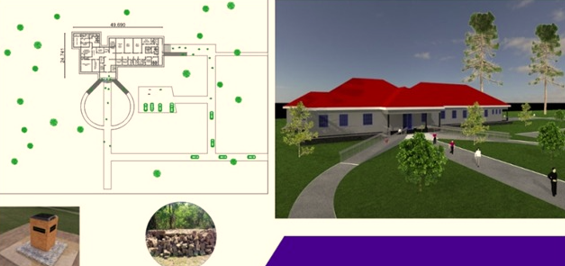
Through the Mugo Community Health Initiative, residents are financing the construction of an eight-room maternity ward at Mugo Primary Health Care Centre (PHCC), hoping to improve services for pregnant women, mothers and newborns.
Speaking on Sunday during a fundraising event meant to raise funds for the completion of the building, Betty July Araba, chairperson of the initiative, said the facility faces challenges meeting the needs of a population larger than the one for which its services and supplies are allocated.
“The unique thing about Mugo PHCC is that the population of Mugo Payam is smaller than the population that comes to services in that facility,” Araba told Radio Tamazuj on Sunday during a fundraising gathering for the construction project. “The drugs that are provided by the government and the partners to that facility get finished even before the end of the month, the allocations that are given to us.”
She said patients travel to Mugo from as far as Morobo, parts of Lainya County and neighbouring areas of the Democratic Republic of Congo to seek medical care.
She cited the death of a close cousin during childbirth as one of the experiences that motivated her to take up the leadership role.
Araba said the maternity ward is intended to help women access maternal healthcare closer to their communities and improve the care available to mothers and newborns.
Accountability builds community trust
According to Araba, transparent financial reporting and accountability have helped build trust among residents and encouraged more people to contribute towards the project.
“The biggest challenge is trust,” she stated. “This is a hard-earned money so nobody wants to give the money and just lose it and for us consistently we have told them your money is safe.”
She said contributions are accepted regardless of a person’s position or financial capacity, with some residents giving as little as 1,000 South Sudanese pounds while others contribute larger amounts.
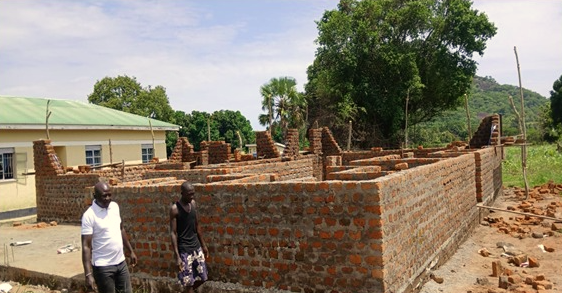
According to the chairperson, the initiative has raised about $15,000 in total contributions, including cash and in-kind support, noting that the amount had been calculated by assigning values to materials, labour, and other contributions made towards the construction. The eight-room ward building has currently reached beam level, awaiting roofing.
The community has provided labour, collected stones, excavated sand and moulded bricks, while engineers from the area volunteered to design the building.
Call for community-led development
Araba called on other communities in South Sudan to organise themselves and contribute towards improving essential services, saying residents can play an important role alongside government and development partners.
“This is a community-grown initiative, and my main message about this is that community has power. Community is a contributor, a partner in any development,” she said.
Araba said local leaders, the Payam administrator and Yei County authorities were aware of the project, adding that the initiative had invited county commissioners to its fundraising activities to explain the community’s needs.
“Thirdly, we have reached out to the government and said it is your responsibility to support this community,” she said. “We know you’ve done a lot, but we would like to tell you that we have gaps.”
The initiative organises fundraising activities and community gatherings known locally as “Tukaro”, where residents meet to share a meal, discuss challenges and plan the next steps for development.
Araba urged residents and well-wishers to continue supporting the project so that construction could proceed and the maternity ward could eventually serve women and newborns in Mugo and surrounding communities.

 and then