



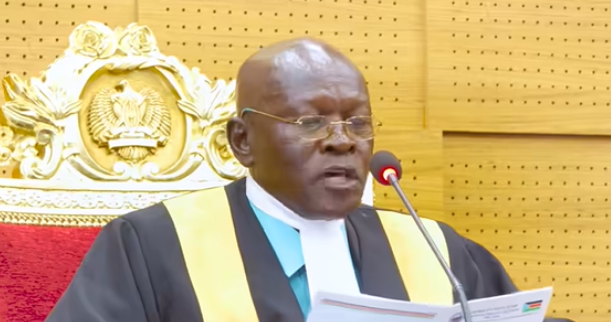
South Sudan’s parliament on Tuesday barred journalists and members of the public from a sitting where lawmakers began debating proposed constitutional amendments ahead of elections scheduled for December.
Speaker Joseph Paciko Ngere ordered the media and members of the public to leave the chamber as lawmakers began the second reading of Constitution Amendment Bill No. 13.
Ngere said the debate would be held behind closed doors, citing national security and the need to safeguard sovereignty, public order and social stability.
“Having regard to our national security, which is the top priority to safeguard our sovereignty and maintain public order and social stability,” he said, invoking Parliamentary Regulation 24 to close the sitting.
“Members of the media, you are requested to leave. Media, out. All everybody there, out,” Ngere said.
The bill seeks to amend South Sudan’s transitional constitution to bring it into line with the electoral timetable, including presidential and parliamentary elections scheduled for Dec. 22, 2026.
The specific provisions being debated by lawmakers on Tuesday were not immediately clear. The sitting is scheduled to hear a presentation from the parliamentary Committee on Legal Affairs on the 2026 Constitutional Amendment Bill.
The cabinet approved the bill in August. Among its proposed changes is the removal of legal requirements linking elections to the adoption of a permanent constitution and the completion of a national population and housing census.
The amendments would allow the Dec. 22 elections to proceed under the amended transitional constitution while the permanent constitution-making process and census are conducted separately.
The bill also proposes a five-year term for an elected president.
The government says the changes are needed to remove legal obstacles to the elections and align the transitional constitution with provisions of the 2018 peace agreement that provide for an electoral process.
Parliament in July approved amendments to the 2018 peace agreement that deferred requirements for a permanent constitution and a national census until after the elections.
The planned vote has faced criticism from opposition groups and international partners, who have questioned whether security conditions and electoral institutions are adequate to support a credible and inclusive election.
South Sudan has repeatedly postponed elections since gaining independence in 2011, with the latest extension of the transitional period due to expire in February 2027.

 and then