



The Government of the Greater Pibor Administrative Area (GPAA) has said that while it welcomes the South Sudan People’s Defence Forces’ (SSPDF) crackdown on child trafficking, it is concerned that the language used appears to collectively link residents and officials to the practice, a reference it says is biased.
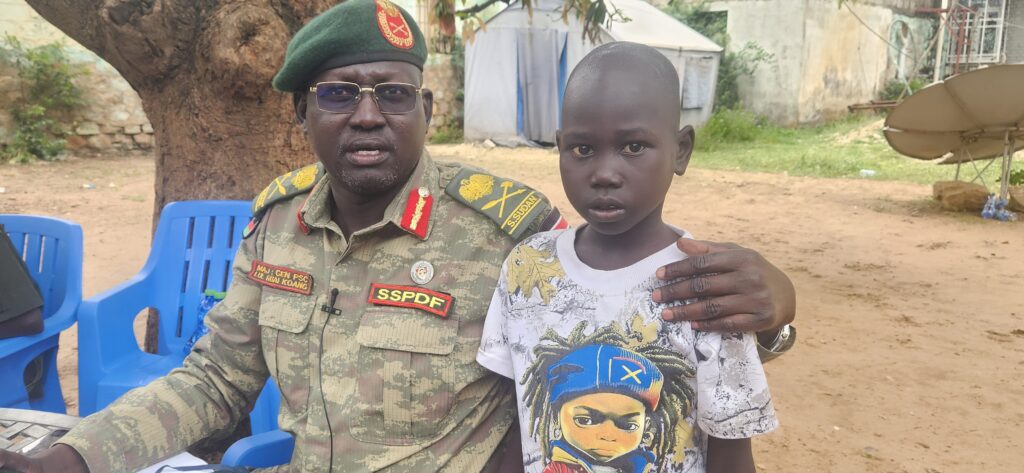
On Sunday, the SSPDF announced the dismantling of a network of child traffickers in Juba, involved in the theft and sale of 23 children in recent weeks. The ongoing crackdown saw the arrest of eight suspects, including former government officials, and a manhunt for suspects still at large.
Speaking to Radio Tamazuj on Wednesday morning, Jacob Werchum Juok, the GPAA information minister, said they condemn child trafficking and welcome the army’s efforts to uncover suspected syndicates. He reaffirmed his government’s commitment to collaborating with security organs in apprehending those responsible.
However, he cautioned the army against language that prejudices the people and government of the GPAA.
“The involvement of any former public official, if established through investigation, remains a matter of an individual case and must not be attributed to the government of GPAA or the entire Murle Community,” he said. “The accusation against Hon. Stephen Jongkok Kudumoch does not establish his guilt or imply that the GPAA government supports, protects, or ignores criminal activities.”
Minister Werchum said their fight against child abduction has been instrumental and evident in checking the vice and that they should be credited.
“The detention of a female suspect in Gumuruk highlights the importance of collaboration between local and national agencies,” he stated. “We call for clarification and acknowledge the role GPAA security personnel played in this operation. The fight against child abduction and trafficking involves no ethnic or tribal bias.”
“We firmly reject any narrative that portrays the people of Greater Pibor as collectively responsible for the criminal acts of some individuals,” Werchum added.
He cited the recent rescue and return of 27 abducted women and children of Jonglei, Eastern Equatoria and Central Equatoria states between June and August this year as evidence of their sustained fight against trafficking.
“Claims that children are openly bought and sold for cattle in Pibor and Gumuruk require credible evidence,” he stated. “Child trafficking is a national security and humanitarian issue, and the GPAA government shall continue to crack down on the criminals and collaborate with the national government and neighboring states on the issue.”
The news of the SSPDF’s crackdown and the GPAA government’s reaction has left many talking.
John Kuren, a resident of Pibor, echoed the minister’s sentiments, saying they feel that the SSPDF statement was politically motivated.
“In our law, you do not call someone a criminal before a court verdict. Publicly declaring a former minister a criminal was intended to dehumanize the entire Murle Community when other tribes are also involved in selling their own children,” he charged. “The SSPDF should also provide evidence that these markets they are talking about are for transactions in human beings.”
Meanwhile, Bol Deng Bol, executive director of INTREPID South Sudan and chairperson of Jonglei Civil Society Network as well as National Civil Society Coalition, said that the minister’s reaction was evidence that child abduction was evil and no one wants to be associated with it. He said the GPAA government should move beyond rhetoric.
“This reaction is anticipated. This tells us that we do not like child abduction as South Sudanese generally,” he said. “My appeal to the GPAA is that they should translate their feeling that they do not like child abduction by passing laws that punish the practice and arrest the suspects. Child abduction is happening. It cannot be denied.”

 and then