



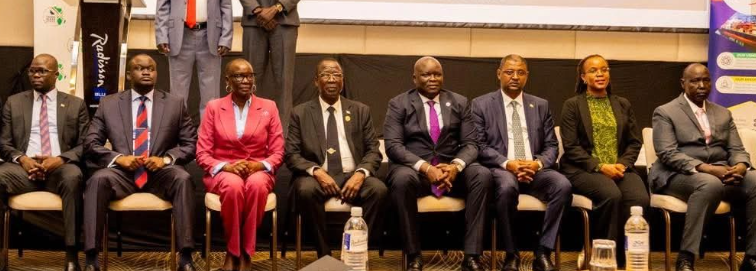
South Sudan is seeking to break its longstanding dependence on oil and is looking at securing a greater share of East African trade, senior government officials said on Friday, as policymakers and business leaders gathered in Juba for the Second National Trade Forum.
The two-day Forum, which commenced on Friday at Juba’s Radisson Blu Hotel, was convened by the Ministry of Trade and Industry and TradeMark Africa and was held under the theme: “From Potential to Prosperity: Harnessing South Sudan’s Competitiveness for Regional Trade Integration.”
Opening the forum, East African Community Affairs Minister Pieng Deng Kuol said the country had failed to convert its abundant natural resources into tangible economic benefits for its citizens despite possessing vast agricultural land, water resources, and oil reserves.
“We have potential in everything,” he told delegates attending the forum. “We have natural resources, but our people are not benefiting from them.”
The minister said South Sudan remained largely absent from regional markets more than a decade after gaining independence, with crude oil continuing to dominate exports while the country imports most manufactured goods and refined petroleum products.
“For me, I am seeing that, especially in East Africa, we have nothing in the market. We are not competing,” he said. “Instead of taking it as crude, why not refine it [oil]? If we have a refinery, for sure we can have a dominant role in this market of the region.”
For her part, Trade and Industry Minister Labanya Margaret Mathya Ugila urged participants to change from what she described as a culture of “pushing” development toward one of attracting investment, trade, and economic growth.
“We need to attract economic growth, we need to attract trade,” she said, describing the forum as an opportunity to identify practical solutions to the country’s economic challenges.
The two-day gathering brought together government officials, traders, investors, development partners, and representatives from neighbouring countries to discuss ways of boosting trade, industrialisation, and regional economic integration.
South Sudan joined the East African Community in 2016, becoming the bloc’s sixth member at the time, but trade volumes with neighbouring countries remain heavily skewed toward imports. Most consumer goods sold in South Sudan are sourced from regional economies such as Kenya and Uganda, while the country exports relatively little beyond crude oil.
The challenge has become more urgent as repeated disruptions to oil exports have exposed the risks of relying on a single commodity. Oil accounts for more than 90 percent of government revenues, making the economy highly vulnerable to fluctuations in global prices and interruptions along export routes through Sudan.
Economic growth has also been constrained by years of conflict, insecurity, weak infrastructure, and limited industrial capacity, despite the country’s significant agricultural potential. South Sudan possesses millions of hectares of arable land and extensive water resources, yet continues to import large quantities of food and manufactured products.
Officials at the forum argued that greater investment in agriculture, manufacturing, and value-added industries could help create jobs, reduce imports, and strengthen South Sudan’s competitiveness within the East African market.
Minister Kuol challenged participants to produce concrete recommendations capable of transforming the country’s economic potential into measurable growth.
“We have many goods and many items that can compete in the markets,” he said. “But we are not developing them.”
The forum concluded on Saturday with policy recommendations aimed at expanding trade, attracting investment, and reducing South Sudan’s dependence on oil revenues.

 and then