



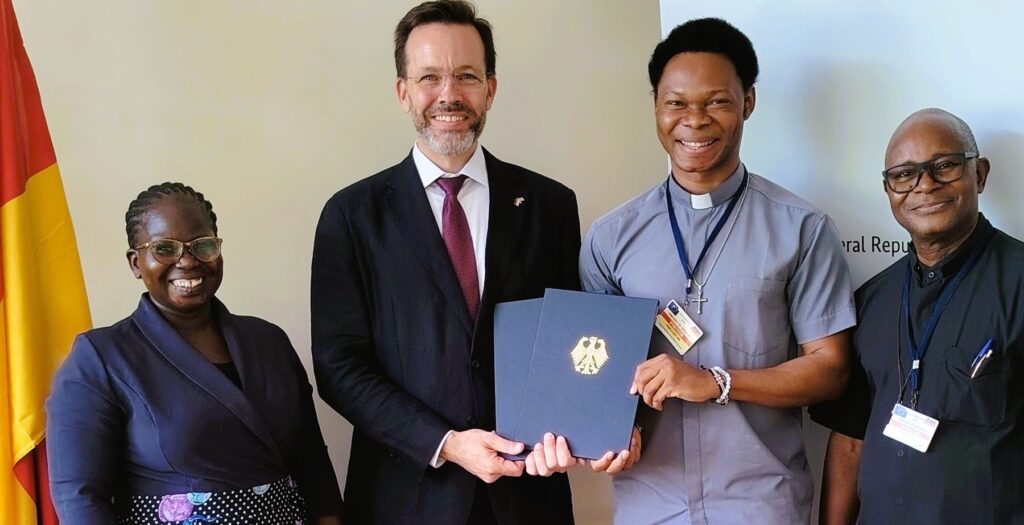
Germany is funding five community-based projects aimed at supporting women and girls in South Sudan, the German embassy in Juba said on Friday.
The projects, funded directly by the embassy, are being implemented in Central Equatoria, Eastern Equatoria and Western Bahr el Ghazal states.
They focus on education, protection, women’s economic empowerment, menstrual health and community cohesion, according to the embassy.
German Ambassador to South Sudan Sebastian Brökelmann said women and girls should be regarded as participants in peacebuilding and development rather than simply beneficiaries.
“Women and girls are not only beneficiaries of peace and development – they are important actors in building peaceful, resilient and inclusive communities,” he said following the signing of the funding agreements.
In Narus, Eastern Equatoria, St Joseph Parish of the Catholic Diocese of Torit is supporting a project to provide a safer learning environment for students at St Bakhita Girls Secondary School.
In Lafon County, African Parks South Sudan is working with Lafon Secondary School to improve the learning environment for students and teachers, with the stated aim of strengthening access to education and skills development.
In Kator Payam, Central Equatoria, the Women and Children Protection Initiative is combining women’s livelihood support with peacebuilding and community dialogue.
Another project in Juba County, implemented by the Community Empowerment Organization for Peace and Development, focuses on adolescent girls’ knowledge of menstrual health, dignity and peer support.
In Wau, Western Bahr el Ghazal, the Acting Community Team is upgrading an existing centre into a space for women and girls, intended to provide protection, economic empowerment and community support.
The embassy said the projects are part of Germany’s support for locally led peace, development and resilience initiatives in South Sudan.
Germany also provides humanitarian assistance and supports longer-term development programmes in areas including local governance, rural development, agriculture, water and sanitation, peace and reconciliation, gender equality and the prevention of sexual and gender-based violence.

 and then