



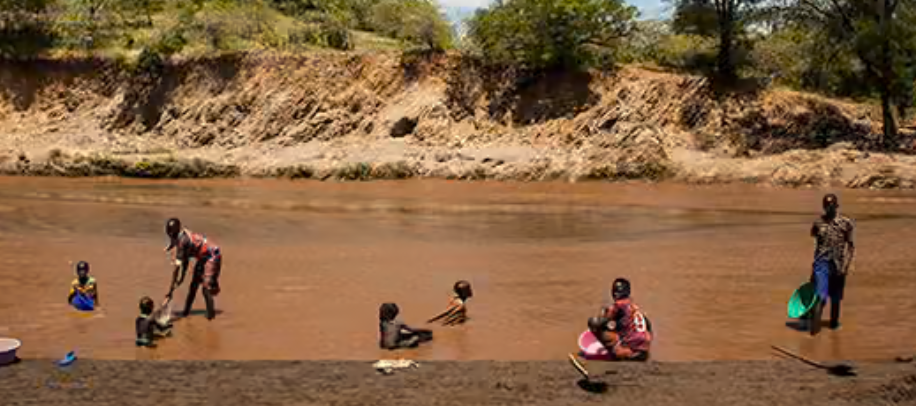
The recent developments surrounding gold mining activities in Nakeke, located in Lolemu Boma, Longeleya Payam in Eastern Equatoria State’s Kapoeta South County, raise serious concerns about the protection of community rights, responsible investment, environmental governance, and the rule of law in South Sudan.
South Sudan is richly endowed with natural resources, including gold, which offer significant opportunities for economic development, employment creation, and poverty reduction. However, these resources can only become a national blessing when their exploration and exploitation are conducted responsibly, transparently and in the interests of both investors and the communities hosting mining operations.
The Nakeke incident should therefore be understood beyond a disagreement between a mining company and a local community. It represents a broader challenge concerning natural resource governance, customary land rights, community participation, and the responsibility of government to protect citizens while facilitating legitimate investment.
The central question is simple: How can gold mining contribute to development when the communities hosting these resources feel excluded from the benefits and are exposed to conflict?
Understanding the Nakeke dispute
In May 2026, Dr. Wang Mining Company allegedly left the Nakeke area following disagreements with the local community over a proposed 3 percent allocation of mining benefits.
On 21 October 2026, the Caretaker Commissioner of Kapoeta South County, Hon. Yusuf Lobai, reportedly presented the community with two alternatives: either pay 1,500 cattle as compensation for the destruction of company property or allow the company to resume its mining operations.
The community maintained that the underlying disagreement should first be addressed through dialogue and an agreed framework before mining activities could resume.
On the evening of 25 October 2026, community leaders, particularly from Karengak, appealed to the state government to facilitate peaceful dialogue. The governor reportedly agreed to the proposed engagement, and communication was conveyed to the affected communities indicating that the government would pursue a peaceful resolution.
However, on the morning of 26 October 2026, government soldiers reportedly launched an operation against the community. The confrontation triggered a response from community youth and resulted in the displacement of residents of Karengak and miners.
These developments are deeply concerning. Whenever peaceful dialogue is being pursued, all parties, particularly government institutions, should exercise restraint and prioritize negotiations over confrontation.
The reported events require an independent and impartial investigation to establish the facts, determine the circumstances that led to the confrontation, and ensure accountability for any unlawful conduct.
Community rights are protected by law
One of the most important issues in the Nakeke dispute is the legal position of host communities under the South Sudan Mining Act, 2012. The Act recognizes the importance of community participation and the protection of people affected by mineral exploration and exploitation.
Section 68 provides for Community Development Agreements in the context of large-scale mining operations. These agreements are intended to ensure that communities affected by mining activities participate in decisions concerning their interests and benefit from appropriate development initiatives.
Furthermore, Sections 139–143 address land access, existing land rights and compensation. These provisions are important because obtaining a mining license does not automatically extinguish legitimate land rights held by individuals or communities under applicable customary law.
Mining companies must therefore respect customary land rights, follow lawful land-access procedures and provide fair compensation wherever legally required.
Equally, communities must respect lawful mining licenses and protect company employees and property. Disagreements should be resolved through negotiation, mediation or competent judicial institutions rather than violence, intimidation or destruction of property.
The rule of law must protect both sides
The 3 percent community allocation: What does the law say?
The proposed 3 percent community allocation is central to the Nakeke dispute and deserves serious national attention.
Section 116 of the Mining Act, 2012 provides for the sharing of specified mining-related government revenues between the relevant levels of government and communities.
Under the provision, 5 percent of the relevant government receipts is allocated as follows:
- Where mining activity is governed by the National Government, 2 percent goes to the State Government and 3 percent to the communities.
- Where mining activity is governed by the State Government, 2 percent goes to the County Government and 3 percent to the communities.
The provision concerns specified rents, royalties, taxes, bonuses and other payments made to the respective governments arising from mineral exploration and mining activities.
This is an important legal foundation for community benefit-sharing. However, it must not be confused with an automatic entitlement to 3 percent of a company’s gross gold production or total sales revenue.
The national and state governments must therefore clarify the applicable mining arrangement, establish transparent revenue calculations, and ensure that the statutory community allocation reaches the legitimate beneficiary communities.
Additional benefits can also be negotiated directly with mining companies through legally enforceable agreements.
The people of Nakeke and other mineral-producing communities should not have to depend on informal promises, political connections, or personal relationships to receive the benefits provided by law.
Environmental protection must not be compromised
Gold mining is not simply an economic activity. It is also an intervention in the natural environment, with potential consequences for land, water, vegetation, biodiversity and public health.
As a geologist, I believe that mineral development must be guided by scientific investigation, environmental responsibility and sustainable land management.
The Mining Act, particularly Sections 121–128, establishes important environmental and social obligations for mineral title holders. These include environmental protection, rehabilitation, restoration, and community development responsibilities.
Before mining operations resume in Nakeke, the competent authorities should ensure that an independent Environmental and Social Impact Assessment (ESIA) is conducted, or that any existing assessment is reviewed and independently verified.
The assessment should examine:
- Groundwater and surface-water quality.
- Soil degradation and possible contamination.
- Effects on grazing land and agricultural activities.
- Mining waste and tailings management.
- Potential chemical contamination, including mercury where applicable.
- Public health and socioeconomic impacts.
- Biodiversity and vegetation loss.
- Land rehabilitation and mine closure arrangements.
This is particularly important because local communities depend on land and water for livestock, agriculture, and household consumption.
Mining investment should never come at the expense of the long-term environmental security and livelihoods of the host population.
Both the community and the investor have rights and responsibilities
Protecting community rights does not mean disregarding investors’ legitimate interests.
Dr. Wang Mining Company, subject to verification of its legal status and mineral title, is entitled to lawful protection of its investment, property and employees.
However, the company must also fulfil its legal obligations, including compliance with licensing requirements, environmental standards, applicable taxation and royalties, land-access procedures and community development commitments.
Likewise, the host community has the right to consultation, protection of customary land rights, fair compensation, environmental safety and equitable participation in mining benefits.
Community members also have a responsibility to avoid violence, unlawful obstruction, intimidation and destruction of company property.
The government must remain impartial and ensure that neither party is placed above the law.
Government institutions should act as neutral regulators and protectors of the public interest, rather than becoming parties to commercial disagreements.
The reported demand for 1,500 cattle requires independent verification
The reported demand for 1,500 cattle as compensation for company property allegedly destroyed during the dispute requires careful examination. If company property was unlawfully destroyed, the responsible individuals should be held accountable in accordance with the law.
However, compensation must be based on an independent assessment of the actual damage, credible evidence of responsibility, and a lawful determination of liability. It should not be imposed arbitrarily on an entire community without establishing the legal basis for collective responsibility.
The company deserves protection against unlawful destruction of its property, but innocent community members should not be subjected to collective punishment or unreasonable financial demands.
The same principles of justice and accountability must apply to everyone.
Civilian protection and accountability must come first
Perhaps the most troubling aspect of the Nakeke incident is the reported military operation of 26 October 2026, particularly given the preceding appeal for peaceful dialogue.
Security institutions are established to protect citizens, maintain public order, and safeguard national security. They should not be used as instruments for resolving commercial disagreements between investors and host communities.
The national and state governments should immediately ensure the protection of civilians, particularly women, children, older persons, and other vulnerable groups.
They should also facilitate humanitarian access to affected communities, assist displaced residents and investigate the circumstances surrounding the reported use of force.
An independent investigation committee should establish the sequence of events, examine the decisions that led to the security operation and identify any violations committed by government personnel or other individuals.
Justice must be impartial. There should be no collective punishment of communities and no immunity for individuals responsible for unlawful conduct.
I further appeal to the relevant security authorities in Kapoeta to review the detention of the following young men, reportedly arrested at Junction INN Hotel:
- Alexander Loteam
- Mathew Loteyo Iko
I respectfully request their immediate release if there are no lawful grounds for their continued detention. If credible allegations exist, they should be informed of the reasons for their arrest, granted access to legal representation, and presented before a competent judicial authority within the applicable legal requirements.
Their families should also be informed of their whereabouts, and their personal safety and legal rights must be protected.
A practical solution: Dialogue, accountability and a legally binding agreement
The Nakeke dispute should not end with the departure of a mining company or the temporary suppression of community grievances. Instead, it should produce a sustainable framework for responsible mineral development in Greater Kapoeta.
I propose the following measures:
First, immediate de-escalation. Military operations that threaten civilians should cease, and a peaceful environment should be established for negotiations. Mining activities in the disputed area should remain temporarily suspended pending legal clarification, environmental assessment, and meaningful community consultations.
Second, an independent investigation. The national government should establish a credible committee to investigate the circumstances surrounding the company’s departure, the proposed 3 percent allocation, the reported 1,500 cattle compensation demand, the events of 26 October, and all allegations of deaths, injuries, property destruction, and unlawful detention.
Third, a legally binding Community Development Agreement. The mining company, government authorities, and legitimate community representatives should negotiate a transparent agreement addressing statutory benefit-sharing, additional negotiated benefits, local employment, corporate social responsibility, compensation, environmental safeguards, and dispute resolution.
Fourth, environmental and socioeconomic assessment. Independent experts should evaluate the environmental and social consequences of mining before any resumption of operations. The findings should be communicated transparently to the affected communities.
Fifth, local economic participation. The government should encourage qualified South Sudanese companies and community-owned enterprises to participate in the mining value chain through transparent business partnerships, procurement opportunities, employment and investment arrangements.
Sixth, compensation and reconciliation. Verified losses should be compensated through lawful procedures. Families affected by confirmed unlawful deaths and injuries should receive appropriate remedies, while displaced communities should be supported to return safely and restore their livelihoods.
Greater Kapoeta deserves responsible investment and equitable development
The Nakeke incident presents an opportunity for the national government to review how mineral resources are managed in Greater Kapoeta and other mineral-producing areas of South Sudan.
The government should establish a stronger coordination mechanism involving the Ministry of Mining, state authorities, county administrations, traditional leaders, investors, and community representatives to oversee mining activities and prevent similar disputes.
Greater Kapoeta should not become a region where gold mining creates divisions between communities and investors. Instead, it should become a region where natural resources contribute to improved infrastructure, education, healthcare, clean water, employment, and economic empowerment.
Our communities should not merely witness the extraction of their natural resources. They should participate meaningfully in the economic opportunities generated by those resources within the framework of national law.
At the same time, investors must be confident that their lawful investments are protected and that commercial disputes can be resolved through predictable, transparent, and impartial legal institutions.
This is how South Sudan can attract responsible investment while protecting the legitimate interests of its citizens.
Conclusion: Gold should bring development, not conflict
The Nakeke incident should serve as a wake-up call for the national government, mining investors, and host communities across South Sudan.
The rights of investors must be protected, but investment rights cannot override the lawful rights of host communities. Equally, community grievances must be addressed without legitimizing violence or unlawful destruction of property.
The solution is neither unconditional resumption of mining nor the permanent exclusion of investors. The solution lies in justice, dialogue, transparency, environmental responsibility, and a legally enforceable agreement that protects all legitimate interests.
As a geologist and a professional concerned with the responsible management of South Sudan’s natural resources, I strongly believe that mineral development must be guided by science, law, accountability, and mutual benefit.
Gold should bring development, not displacement. Investment should create opportunities, not confrontation. Government authority should protect citizens, not expose them to avoidable violence.
I therefore appeal to the President of the Republic, the national government, the Governor of Eastern Equatoria State, the Ministry of Mining, and other relevant institutions to give the Nakeke incident urgent national attention.
Let the Nakeke dispute become an opportunity to strengthen responsible mining, protect customary land rights, and establish a new standard of community-centered natural resource governance in South Sudan.
Peace, justice, accountability, and equitable sharing of natural resources are the foundations of sustainable development in Greater Kapoeta.
The writer is a South Sudanese geologist, natural resources management professional, and advocate for responsible mining and community development. He can be reached via malakumeri@hotmail.com.
The views expressed in this article are those of the author and are intended to promote public awareness, peaceful dialogue, lawful accountability, and responsible mineral development.
The views expressed in ‘opinion’ articles published by Radio Tamazuj are solely those of the writer. The veracity of any claims made is the responsibility of the author, not Radio Tamazuj.

 and then