



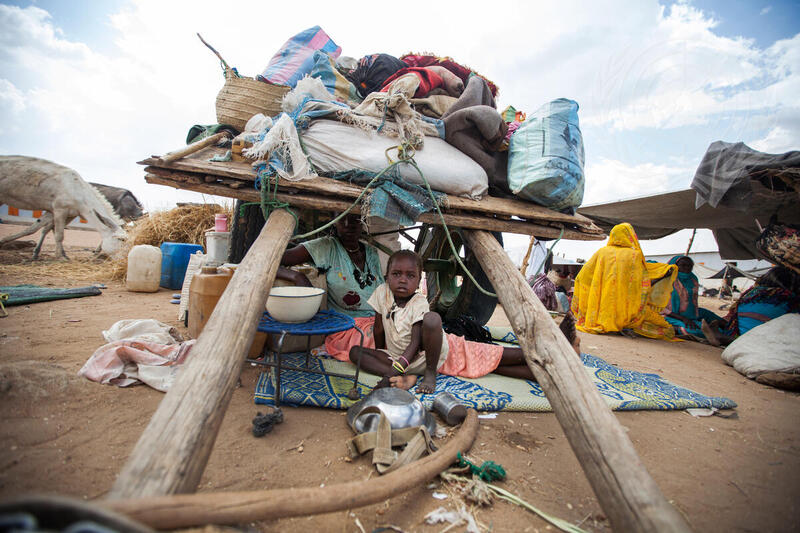
The leaders of Al-Manar displacement camp, west of Ed Daein, the capital of Sudan’s East Darfur State, have raised concerns over inadequate humanitarian assistance, severe drinking water shortages and growing cases of malnutrition among children.
They have called for urgent intervention by humanitarian organizations to protect children and other vulnerable groups.
Fatima Ali Ibrahim, a displaced woman living at the camp, told Radio Tamazuj that residents are in desperate need of necessities and shelter.
“The displaced people need food and drinking water, as well as plastic sheeting, because some of the new arrivals have no shelter,” she said.
Ali explained that the monthly relief supplies reaching the camp were insufficient to meet residents’ needs, particularly following an influx of newly displaced families who had received no assistance since arriving in September.
She called for the urgent distribution of food baskets to help save children affected by what she described as widespread malnutrition in the camp.
Musa Hammad Mohamed Al-Rihima, a community leader at Al-Manar camp, said the settlement was established in 2024 following the arrival of an initial group of no more than 20 families fleeing El Fasher.
“The camp’s population has since grown rapidly as displaced people arrived from other areas, reaching approximately 1,150 people,” he said.
Hammad added that new arrivals from other localities continued to seek refuge at the camp after inadequate rainfall and failed harvests forced them to leave their homes, further stretching already limited food supplies.
“The assistance provided to the camp by humanitarian organizations and local initiatives does not cover even a quarter of the displaced people’s needs,” he lamented. “People are now drinking water from stagnant pools.”
He appealed to international humanitarian organizations and charitable groups to intervene urgently to alleviate the worsening conditions.
Another displaced woman, Umm-Kulthum Al-Sadiq Sheikh Al-Din, complained about the shortage of latrines and the lack of sanitary pads for women of reproductive age.
She called for the provision of additional latrines, clean water, and soap to help prevent the spread of disease in the camp.
“We are also facing enormous challenges, including food shortages and the continued arrival of new waves of displaced people, many of whom are living under trees without shelter,” she said.

 and then