



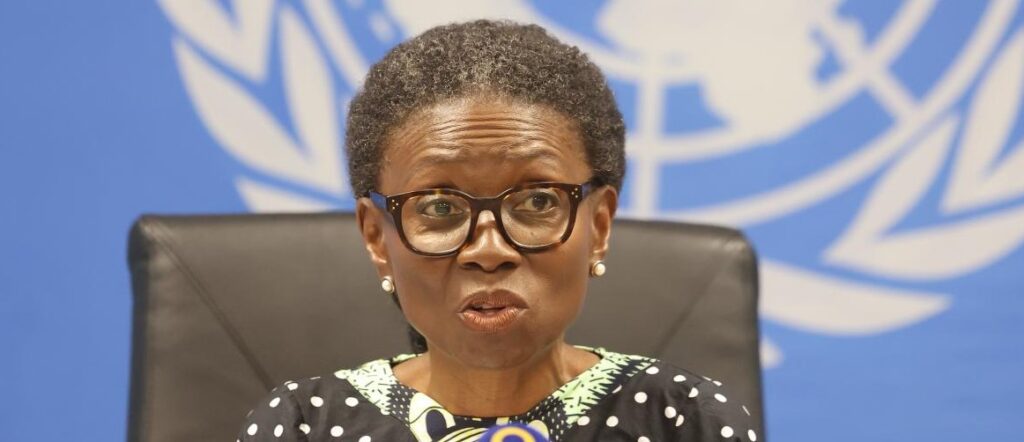
South Sudan’s elections must be a milestone in the peace process, not its conclusion, the head of the United Nations Mission in South Sudan (UNMISS) said on Friday, urging continued implementation of outstanding commitments under the 2018 peace agreement.
Anita Kiki Gbeho, the UN secretary-general’s special representative for South Sudan, said elections alone would not guarantee lasting stability, which also depends on respect for the ceasefire, inclusive governance and political reforms.
“Elections are an important milestone, but not an end to the peace process,” Gbeho said at the launch of an African Union-Intergovernmental Authority on Development-United Nations (AU-IGAD-UN) Joint Task Force in Addis Ababa.
Her remarks came a day after President Salva Kiir closed an inter-party dialogue in Juba, where participating political parties adopted resolutions on political freedoms, security guarantees and preparations for elections scheduled for February 11, 2027.
The polls, South Sudan’s first since independence in 2011, were initially scheduled for December 22, 2026, but were postponed by the National Elections Commission to allow more time for preparations.
Gbeho said outstanding commitments under the Revitalised Agreement on the Resolution of the Conflict in South Sudan (R-ARCSS) included a permanent constitution, transitional security arrangements, judicial reform, transitional justice and national reconciliation.
She said the United Nations is ready to support the process through political engagement, good offices, joint assessments and preventive diplomacy, in partnership with the African Union and IGAD.
National ownership
Speaking at the same event on behalf of Kiir, Foreign Minister Cecilia Adut Manyok said the primary responsibility for peace, security, reconciliation and democratic governance rests with South Sudan’s government and people.
“South Sudan acknowledges that the primary responsibility for peace, security, reconciliation and democratic governance rests with its government and its people,” Adut said.
She cited the inter-party dialogue’s resolutions on political freedoms, security guarantees for candidates and their supporters, political party funding and the 35% affirmative action provision for women.
Adut urged international and regional partners to respect South Sudan’s sovereignty while providing financial and technical support to help complete the transitional period.
However, the dialogue involved political parties based in Juba and excluded some opposition groups operating outside the country, limiting the breadth of political participation in the process.
Gbeho said building broad consensus requires meaningful and inclusive engagement among all stakeholders, adding that South Sudanese ownership and leadership are indispensable to lasting peace.
She also welcomed a presidential decree on humanitarian access, saying its implementation would help facilitate assistance to people in need.
The senior UN official said the safety, dignity and voices of South Sudanese people must remain at the centre of efforts to secure lasting peace.

 and then