



The African Union, the Intergovernmental Authority on Development (IGAD) and the United Nations have called for inclusive political dialogue in South Sudan, warning that divisions among political stakeholders could undermine efforts to implement the country’s peace agreement and complete the transitional period.
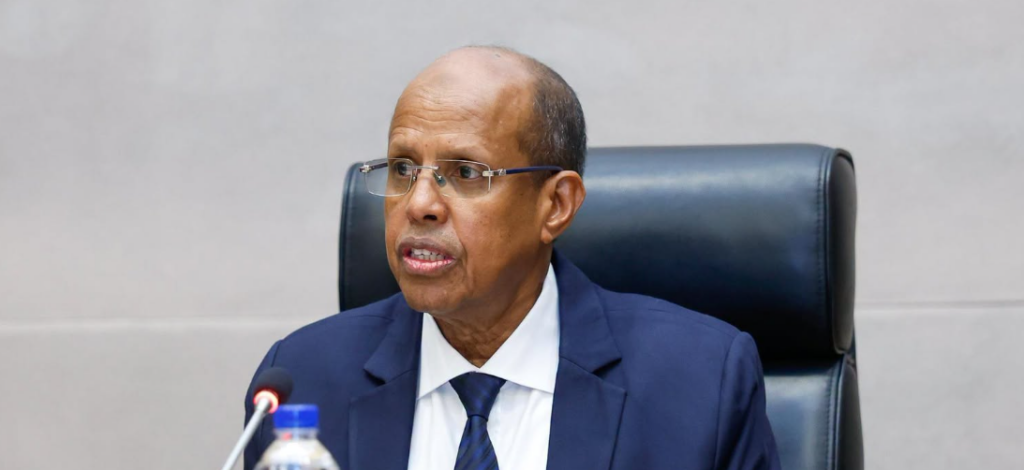
The call came on Friday during the inauguration of the AU–IGAD–UN Joint Task Force on South Sudan by AU Commission Chairperson Mahmoud Ali Youssouf, as President Salva Kiir Mayardit concluded an inter-party dialogue in Juba that involved political parties based in the capital but did not include opposition groups operating outside the country.
In his address in Addis Ababa, Youssouf said the 2018 Revitalised Agreement on the Resolution of the Conflict in South Sudan remains the principal framework for guiding the country’s political transition. However, he expressed concern that repeated extensions of the transitional period had prolonged uncertainty and delayed the aspirations of South Sudanese.
He stressed the need to rebuild trust among political stakeholders through inclusive dialogue, calling for the implementation of confidence-building measures outlined in the C5 Plus Declaration. He also emphasised the importance of meaningful participation by women, young people and civil society in shaping the country’s political future.
Youssouf called for a peaceful, credible and orderly conclusion of the transitional period, supported by a consultative and time-bound electoral roadmap.
He urged all parties to uphold the ceasefire, avoid unilateral actions that could undermine the peace agreement and accelerate the implementation of transitional security arrangements.
He also said the government should take responsibility for implementing and financing its commitments, while international partners should provide coordinated support based on identified needs.
The AU Commission chairperson said the joint task force should strengthen preventive diplomacy, political coordination and sustained engagement, translating high-level commitments into measurable outcomes.
Its initial three-month work plan is expected to establish a common assessment of the situation, identify priority challenges and produce actionable recommendations in coordination with existing peace implementation mechanisms.
AU Commissioner for Political Affairs, Peace and Security Bankole Adeoye reaffirmed the importance of coordinated regional and international engagement, preventive diplomacy and sustained support for implementing the peace agreement.
Former Tanzanian president Jakaya Kikwete also called for time-bound action, stronger coordination among stakeholders and sustained political dialogue to rebuild trust and advance national consensus.
The joint task force brings together the AU, IGAD and the United Nations to coordinate support for South Sudan’s peace process, which continues to face challenges over the implementation of the 2018 agreement and the country’s transitional arrangements.
South Sudan is preparing for its first general elections since independence in 2011, with the National Elections Commission setting February 11, 2027, as the revised polling date. The election preparations remain closely tied to the implementation of the 2018 peace agreement and outstanding transitional arrangements.

 and then