



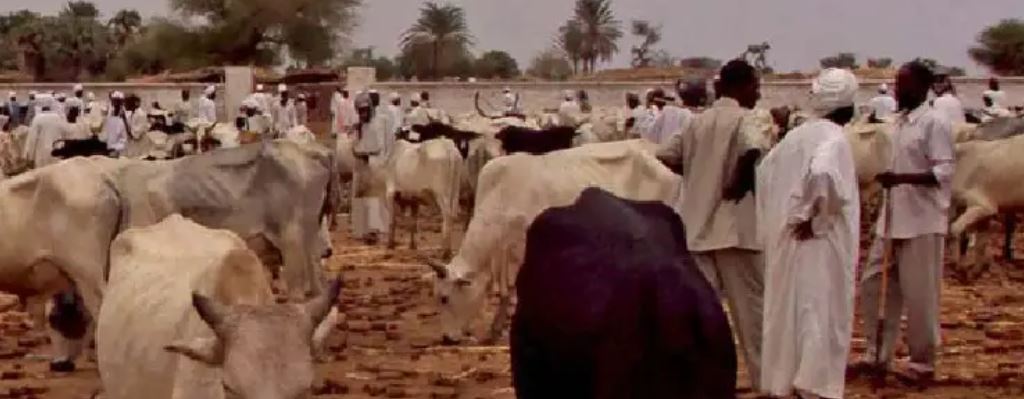
Authorities and traders in Sudan’s Darfur region are looking to West African markets as alternative destinations for agricultural, forest and livestock products following disruptions to trade with areas controlled by the army.
The Rapid Support Forces (RSF), which controls much of Darfur, imposed restrictions in 2024 on the movement of commercial goods between areas under its control and territories held by the Sudanese army. The restrictions disrupted trade in agricultural commodities and livestock and affected producers and traders, according to market monitoring reports.
Mohamed Al-Mahdi Mohamed Ibrahim, director of livestock and agricultural markets at the South Darfur State Ministry of Animal Resources, told Radio Tamazuj on Monday that agricultural products remain commercially viable in local markets despite the disruption to exports.
A tonne of groundnuts is selling for 7 million Sudanese pounds, while a quintal of sesame fetches 180,000 pounds and a sack of onions is selling for 160,000 pounds, he said.
Livestock prices varied, with bulls selling for between 1,500 and 3,500 Sudanese pounds, while some fetch as much as 4,200 at Tumat market, Ibrahim said.
Ibrahim said restrictions on exports had hurt producers and called for the government to negotiate trade agreements with neighbouring countries to create markets for regional products and facilitate imports of essential goods.
He also called for a veterinary quarantine facility to certify livestock and issue health certificates for exports. Other proposals included schools for nomadic communities and cheese-processing factories in areas used for seasonal grazing and livestock migration.
Abubakar Idris Hassan, manager of Al-Manara Trading and Export Company, said West African markets offer opportunities for Sudanese products because of what he described as limited competition and a large consumer base.
“Camels are transported through the desert in northern Darfur to the borders with Chad or the Central African Republic, and then transported by truck to Libya or Algeria,” he said.
Cattle, agricultural produce and forest products are also transported through the Umm Dafog market towards Niger and Cameroon, Hassan said.
He said proceeds from such trade could be used to import essential commodities, including sugar, flour and fuel.
Hassan said he had prepared a study on improving the marketing of agricultural, forest and livestock products and called on traders and governments in the region to cooperate on its recommendations.

 and then