



South Sudan’s security situation remains unpredictable despite a decline in major military confrontations, with localized violence, abductions, forced recruitment and attacks along key roads continuing to threaten civilians and humanitarian operations, the ceasefire monitoring body said Monday.
The Ceasefire Transitional Security Arrangement, Monitoring and Verification Mechanism (CTSAMVM) said insecurity remained a major challenge across several parts of the country, particularly in Greater Upper Nile and Jonglei, where attacks against civilians, intercommunal violence, armed clashes, cattle-related conflicts and road ambushes continued to be reported.
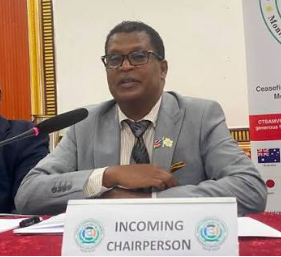
“While major military confrontations declined during the reporting period, localized insecurity, including threats against civilians, forced abduction and recruitment, intercommunal tensions, cattle-related violence, restrictions on humanitarian access, and threats to humanitarian personnel, continued to present significant challenges,” Maj. Gen. Dr. Hailu Endashaw Atomsa, the new CTSAMVM chairperson, said.
He urged the transitional government to strengthen the protection of civilians along high-risk roads and in conflict-prone areas through coordinated security deployments, improved early-warning mechanisms and timely preventive measures.
The call comes amid continued reports of attacks and abductions along important transport routes. CTSAMVM cited a reported ambush of humanitarian trucks along the Buaji-Dollo road and the abduction of three humanitarian workers along the Yei-Lasu road.
In Greater Mundri, Western Equatoria State, the monitoring body said the security situation had deteriorated following reported abductions and allegations of forced recruitment in Bongolo, Loso and Lanyi, which contributed to civilian displacement.
CTSAMVM said Greater Upper Nile and Jonglei remained the country’s most volatile regions, with continued reports of attacks against civilians, intercommunal violence, armed clashes, cattle-related conflicts and disruption of humanitarian activities.
The monitoring body also raised concern over violence in Tonj North County, Warrap State, where an August 9 attack on communities allegedly involving armed youth from Mayom County in Unity State resulted in civilian casualties.
Despite these challenges, CTSAMVM said Greater Bahr el Ghazal remained comparatively stable, although localized cattle-related violence, intercommunal tensions and criminality persisted in parts of the region.
Gen. Endashaw said the Permanent Ceasefire should not only be understood as an agreement aimed at preventing large-scale military confrontations but must also ensure civilian protection, humanitarian access and confidence-building among the parties and communities.
The CTSAMVM chairperson also presented two violation reports to the board. One concerns civilian killings, restrictions on freedom of movement and armed confrontation in Nasir County on May 5, while the second examines an attack on SSPDF personnel in Makpandu involving SPLM/A-IO/NAS.
He said the incidents demonstrate that important provisions of the Revitalized Agreement on the Resolution of the Conflict in South Sudan (R-ARCSS) continue to face implementation challenges.
The parties were urged to uphold the permanent ceasefire, exercise restraint and cooperate fully with CTSAMVM by facilitating access to areas where alleged violations have occurred.
The monitoring body also condemned the August 24 attack on a UNMISS patrol in Pajut, Jonglei State, which killed two peacekeepers and injured seven others.
Atomsa described the attack as unacceptable, saying it undermined peacebuilding efforts and reinforced the need for accountability.
CTSAMVM said it has continued deploying monitoring and verification teams, as well as short- and long-duration patrols and air patrols, to investigate reported violations and security incidents across the country.
Among its recent activities, the CTSAMVM team in Juba conducted a long-duration patrol to Yei in Central Equatoria from August 3 to 7 to investigate the reported abduction of the Atende Boma sub-chief and several youths.
The Malakal team conducted air patrols to Mandeng in Nasir County and Lankien in Nyirol County to investigate reported incidents, while the Wau team travelled to Rumbek in Lakes State to investigate allegations of forced recruitment.
However, the monitoring body warned that its ability to sustain such operations is increasingly being affected by financial constraints.
Gen. Endashaw said recent engagements with government officials, regional bodies and international partners in Juba, Addis Ababa and Nairobi had highlighted the need for additional support to maintain CTSAMVM’s operations.
“Critical financial constraints continue to affect our capacity to fully implement our mandate, particularly in sustaining monitoring and field activities,” he said.
CTSAMVM has called on all parties to the peace agreement to refrain from abductions, forced recruitment, attacks against civilians and actions that obstruct humanitarian operations.
The body also urged the protection of humanitarian personnel, assets and relief supplies in line with the Permanent Ceasefire and the provisions of the peace agreement.
Gen. Endashaw added that CTSAMVM would continue its monitoring and verification activities in coordination with relevant stakeholders and operational partners, despite the operational and financial challenges.
The latest assessment comes as South Sudan continues to navigate the implementation of the revitalized peace agreement, with the monitoring body stressing that sustained security, accountability and cooperation among the parties remain critical to consolidating peace.

 and then