



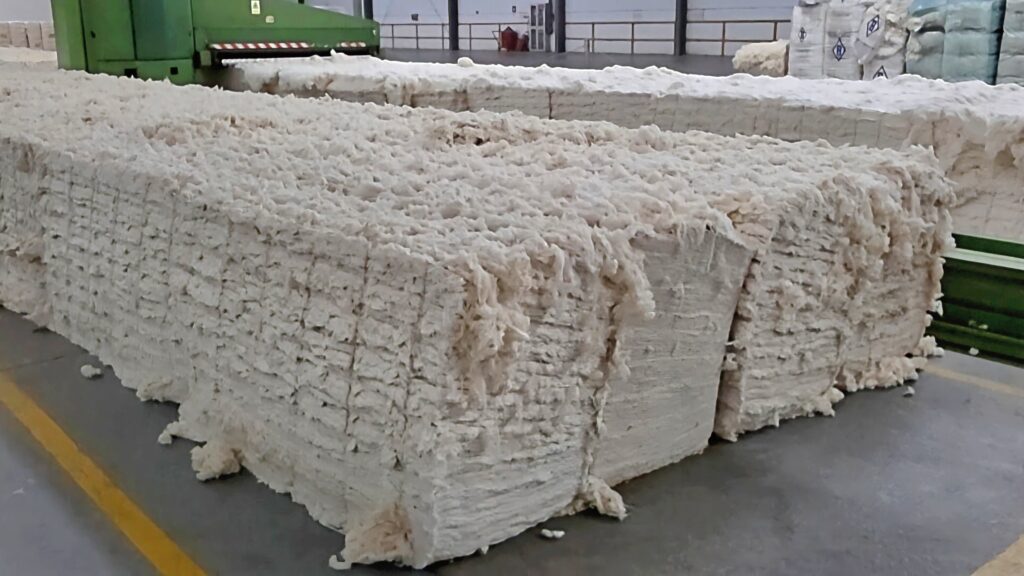
Africa imported USD 624 million worth of second-hand clothes from China in 2021, with Kenya, Ghana and Angola providing the primary destination markets for the used Chinese apparel.
Kenya alone accounted for over 40 percent of all imports that year.
The second-most populous continent in the world, Africa offers a growing need for affordable attire to clothe its 1.58 billion people. In 2023, for example, the global demand for clothing registered a 19 percent increase in sales, to USD 211 billion.
Africa has cotton, but China has textile mills.
While Africa continues to depend on European and Asian products to satisfy its growing market demand, most of the raw materials like cotton are produced right here on the continent.
African cotton travels thousands of kilometres to China before it is turned into yarn and fabric, which is then transported back to Africa as a finished product. Cameroon alone exports nearly 38 percent of its lint to China, making the Central African country one of the top cotton exporters to Asia. Its market extends to countries such as Bangladesh, Vietnam, and Indonesia.
Cameroon exports $12 million worth of cotton to China annually (as of 2023). In 2022, exports were valued at $26 million, and in 2019, raw cotton accounted for 3.4 percent of Cameroon’s total exports to China.
While demand for textile materials from Africa is on the ascendancy, South Sudan still lags despite having nearly 48 million hectares of black cotton soil available for cotton farming. The country’s overreliance on oil revenue is denying the nation revenue from agriculture, which is yet to be mechanized in South Sudan.
But with a population growth of 2.03 percent per year, South Sudan in particular will need more textiles to clothe its growing population until it sorts out the glaring dearth of local production.
South Sudan can borrow a leaf from China’s established cotton production to produce and create value further down the supply chain.
Inside Wuxi No.1 Cotton Textile Group in Beijing, the transformation is visible on an industrial scale.
Founded in 1919, the company operates 700,000 spindles and 500 looms, producing about 40,000 tonnes of yarn and 50 million metres of fabric a year, according to company data.
Its products are sold into global textile markets including Juba, while its TALAK brand is registered in 55 countries and regions across Europe, Asia and the Americas.
The factory’s scale exposes the challenge facing African cotton producers.
The company says it used to source African cotton in the past. Today, however, its African supply is limited.
“When we mix different cotton, we need the cotton fibre quality to be similar to each other,” Zhu Ping An, vice director of the company’s sales department told Radio Tamazuj in Beijing.
Where is the value being lost?
Cotton is only the beginning of a long production chain.
After the fibre is picked and ginned, it can be spun into yarn, woven or knitted into fabric, dyed and finished, and eventually cut and sewn into garments sold to consumers.
The more stages that take place locally, the greater the potential for countries to capture value, create jobs and develop industrial expertise.
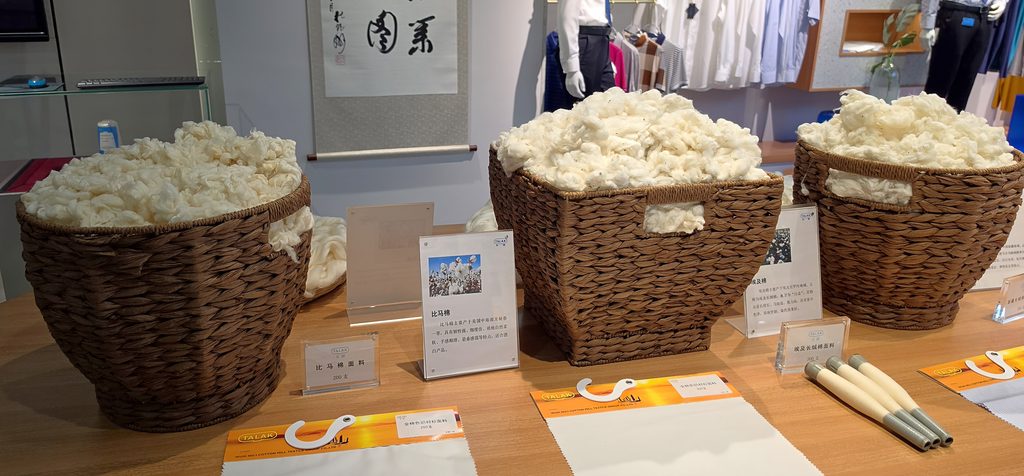
At a high-level cotton meeting in Yaoundé in March, the World Trade Organization said around 98 percent of cotton from West and Central Africa is exported as raw fibre. The WTO has since backed efforts to attract investment into regional cotton-textile-garment value chains.
The International Trade Centre’s executive director Pamela Coke-Hamilton put the challenge bluntly: “The future of African cotton lies in value addition.”
The WTO says a new phase of the regional cotton partnership aims to mobilise $5 billion in investment over 10 years, generate $6 billion in value-added products and create an estimated 500,000 direct jobs.
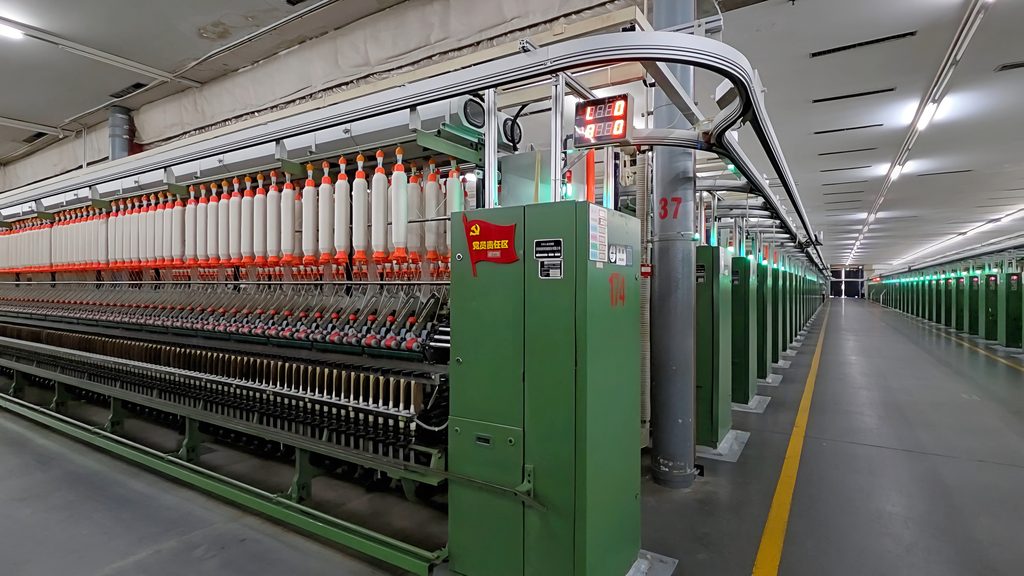
For Wuxi No.1, value addition is not a new concept. The company has spent decades investing in spinning and weaving technology and now uses digital systems to monitor production. Company representatives say the factory is moving towards what they describe as “Industrial 4.0”, with sensors and centralised monitoring helping track machinery and maintain quality.
That technology matters because China’s textile industry is no longer competing only on cheap labour.
Zhu said rising labour costs in China have increased pressure from countries such as India and Pakistan, pushing manufacturers to reduce the number of workers required while maintaining quality.
“We have to reduce labour force…and compete with them,” he said.
The result is a production model built around machinery, quality control, skilled management and access to international markets.
A Chinese cotton factory in Ethiopia
Wuxi No.1’s African experience offers another way to examine the value-chain question.
The company says it began working with an Ethiopian textile factory in 1999, helping train local workers and provide management expertise. It later invested directly in Ethiopia, where its 100,000-spindle first-phase plant began production in 2019.
The Ethiopian operation uses both local and imported cotton, according to the company.
“Currently, we mostly use cotton imported from Brazil, the United States and Australia,” Zhu said.
Building a textile factory in Africa does not automatically mean building an African cotton value chain.
The raw material can still come from elsewhere. Machinery and technical expertise can still be imported. Finished products can still be destined for overseas markets.
For African countries, the larger question is whether investment can connect farmers to ginneries, spinning mills, textile factories and garment manufacturers, creating a chain in which more of the economic value remains on the continent.
The Chinese company says Africa nevertheless has advantages, particularly its labour force and access to some preferential trade arrangements with Europe and the United States.
The South Sudan question in Africa’s textile industry
Zhu said African producers could improve their competitiveness by addressing quality problems and investing in production technology.
He also pointed to demand for African cotton among European buyers, including initiatives such as Cotton Made in Africa.
The country has arable agricultural land. But South Sudan still relies on the international market, not just for its textile shortfalls, but also for consumables.
While at Wuxi No.1 factory in China, cotton enters one end of a highly organised industrial system and emerges as final fabric destined for another part of the global supply chain, South Sudan is still in a deep lull, despite having vast land that can produce the ‘white oil’ with a ready market in China.

 and then