



The Community Empowerment for Progress Organization (CEPO) has urged South Sudanese citizens to take part in the country’s first post-independence elections, now set for February 2027.
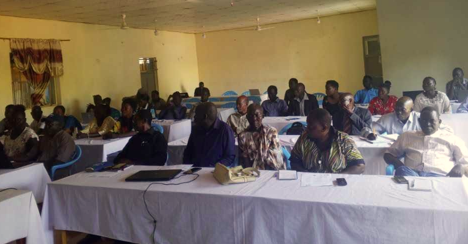
Speaking during the opening of a three-day capacity-building training on civic and voter education in Torit on Wednesday, CEPO representative Mark Jambu said citizens must understand the electoral process to make informed decisions when choosing their leaders.
“Civic and voter education is a collective responsibility; it is not only the Commission, but it is not only civil society, and it is not only political parties. All of us have a role to play,” he said.
Jambu explained that civic education will equip citizens with the knowledge and skills to understand the electoral process, exercise their constitutional rights, and elect leaders of their choice.
“Elections are not only about casting votes, but also promote peace, bring unity among us, bring rule of law and promote the value of democracy,” he said.
He encouraged participants to actively engage in the three-day discussions, share their experiences and ask questions that could strengthen civic and voter education in their respective communities.
Jambu said the programme was entering its final phase after several years of civic awareness activities, including initiatives conducted in 2024.
He challenged citizens to recognise their power to choose their leaders, saying the electorate bears responsibility for selecting them.
He urged citizens to register and participate in the elections, warning that failure to make informed electoral decisions could prolong the country’s governance challenges.
Meanwhile, Ochola Bosco Oringa, the Chairperson of the Sudan People’s Liberation Movement-in-Opposition (SPLM-IO) in Eastern Equatoria State, loyal to National Peacebuilding Minster Stepehn Par Kuol, declared his party’s readiness to participate in the elections.
Oringa, a former state agriculture minister, said the training provided an important opportunity for political parties, civil society and other stakeholders to exchange experiences and strengthen citizens’ understanding of the electoral process.
“We, as the citizens and a political party in Eastern Equatoria State, are ready for these elections. We want this election to take place so that we have a government in place that will represent its people,” he stated. “Political parties in Eastern Equatoria should recognize and respect political pluralism, and parties should be allowed to participate in the democratic process.”
On his part, Emmanuel Oryema, Deputy Chairperson of the State High Electoral Commission in Eastern Equatoria, explained that civic education is essential in helping citizens understand elections, democracy, governance, human rights, inclusion and peacebuilding.
He said the electoral education manual used in the training covers key areas of democratic participation, including human rights, governance, elections, inclusivity and peacebuilding.
The Electoral Commission representative also highlighted logistical and security challenges affecting preparations and the delivery of electoral information to communities.
The training, organized by CEPO in partnership with the Centre for Inclusive Governance, Peace and Justice (CIGP) and Friedrich-Ebert-Stiftung (FES), brings together civil society representatives, women and youth groups, persons with disabilities, journalists, traditional leaders, faith-based organizations, government stakeholders and political leaders.
The programme is designed to equip South Sudanese citizens with the knowledge and practical skills needed to understand the electoral process, take responsibility for democratic participation and exercise their constitutional rights in the anticipated elections.
CEPO also announced that the final day of the training would feature a one-hour radio talk show, with three participants selected to discuss civic and voter education and extend the discussions to members of the public who could not attend the workshop.

 and then