



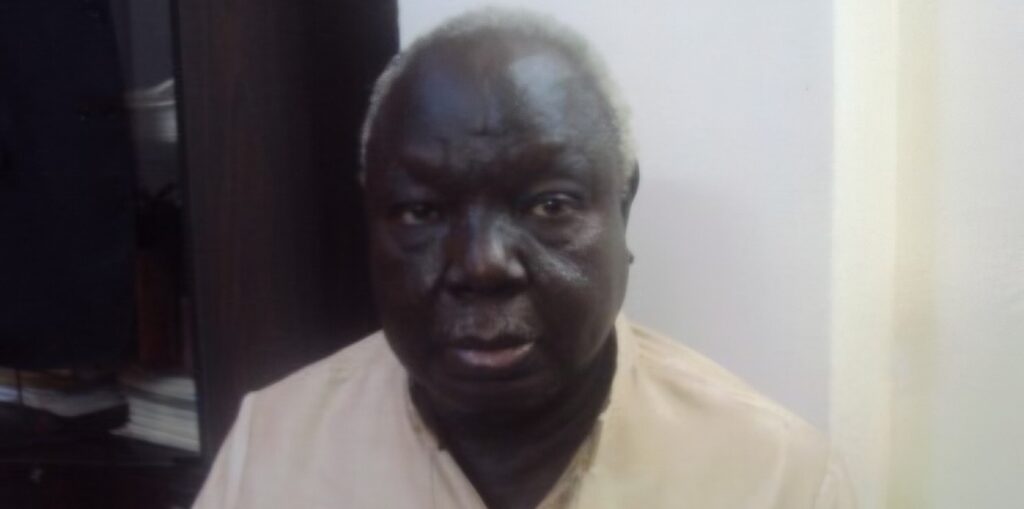
The United Sudan African Party (USAP), one of South Sudan’s registered political parties, has criticised the National Elections Commission (NEC) over its decision to postpone the December 2026 elections to February 2027, questioning its legal authority to change the polling date and warning that the revised timetable could violate constitutional provisions.
In a six-page position paper dated November 17 and addressed to NEC Chairperson Gabriel Bol Deng, USAP Chairman Professor Ajang Bior Duot said the commission had not identified the legal provision empowering it to move polling day from December 22, 2026, to February 11, 2027.
The party argued that changing an election date established under the electoral law and announced in June required legislative action and a constitutional amendment rather than an administrative decision by the commission.
“The Commission has not cited a provision empowering it to change the date by timetable,” the party said, urging the NEC to clarify the legal basis for its decision or refer the matter to the National Legislature and the constitutional amendment process.
The criticism comes after the NEC issued a revised electoral timetable on November 14, moving the elections by 51 days beyond the previously scheduled December 22 date. The commission had announced the December polling date in June, but later revised the calendar as preparations for the vote continued.
The NEC said the original timeframe was insufficient to complete outstanding electoral activities, including candidate nominations, submission of candidates’ lists and printing of ballot papers. Its spokesperson, Josephine Achiro Fortelo, said the commission had invoked Article 57(1)(c) of the National Elections Act 2012, as amended, which she said empowered it to adjust the electoral timeline.
The revised timetable was published on the same day voter registration was scheduled to begin, with the exercise running from November 14 to 28 at 3,161 centres across the country’s 10 states and three administrative areas.
USAP, however, questioned whether the new polling date complied with Article 197A(9) of the Transitional Constitution, which provides for elections to be organised 60 days before the transitional period ends on February 22, 2027.
According to the party, the constitutional deadline for holding the elections is December 24, 2026, while the revised February 11 date falls outside that framework.
It warned that proceeding with the revised calendar without resolving the constitutional questions could create a gap in lawful authority after the transitional period expires.
USAP further criticised the commission for what it described as inadequate consultation with registered political parties before announcing the revised electoral timetable.
The party said the NEC met political parties on November 12, but issued its public notice the following day and released the revised calendar a day later, without establishing whether parties had been consulted on the content of the changes.
It said broader consultations would strengthen confidence in the electoral process and help prevent disputes over the legitimacy of the elections.
Registration concerns
While welcoming the commencement of voter registration, USAP raised concerns about the short notice given to citizens and logistical challenges facing registration centres across the country.
The NEC announced the commencement of registration on November 13, with the exercise taking effect on November 14 across 3,161 centres in 10 states and three administrative areas.
USAP said the commission’s chairperson had acknowledged that registration materials had not reached all registration centres when the exercise was announced, with deliveries to some state capitals and administrative-area headquarters expected within two days.
The party argued that citizens needed adequate time to learn about the exercise and travel to registration centres, particularly in remote areas.
It called on the commission to ensure that every operational registration centre remains open for the full 15 days provided for under the electoral law, with extensions for centres that become operational late.
The party also questioned the absence of a comprehensive public list of registration centres, saying the NEC notice referred citizens to its website without providing details of the centres by state, county, payam and boma.
It called for the publication of a detailed list through radio, local authorities and political party offices.
USAP further urged the commission to clarify acceptable identification documents and establish written procedures for citizens without conventional identity documents, including safeguards for displaced people, refugees, people in detention and persons with disabilities.
Timetable discrepancies
The party also identified what it described as inconsistencies in the revised electoral calendar, questioning whether several activities could be completed within the periods prescribed by law.
It said the revised timetable scheduled publication of the provisional voter register for January 17-23, 2027, while polling was set for February 11, leaving only 19 to 25 days before election day.
The party said the electoral law requires publication of the register no later than three months before polling.
It also questioned the proposed seven-day inspection period for the voter register, saying the law provides for at least 15 days of inspection within 60 days of the election notice.
USAP raised concerns about the sequencing of candidate nominations and the verification of supporters’ signatures, arguing that nominations should be checked against a ratified voter register to ensure equal treatment of political parties.
It also questioned the campaign period, which the revised timetable lists as running from December 27, 2026, to March 9, 2027, saying the 45-day period would extend beyond the scheduled polling date.
The party further pointed to discrepancies involving the dates for election disputes, run-off voting and the processing of results, urging the commission to publish one authoritative and internally consistent calendar.
Calls for consultations
USAP proposed that the NEC publish a signed, dated and reasoned decision within seven days, explaining the legal basis for each election date and correcting the inconsistencies identified in the timetable.
It also called for urgent consultations involving registered political parties, the Political Parties Council, the Reconstituted Joint Monitoring and Evaluation Commission (RJMEC), IGAD, the African Union and the United Nations Mission in South Sudan (UNMISS).
The party said the discussions should address the legality of the revised election calendar and any constitutional arrangements required before the transitional period ends.
Despite its objections, USAP said it supported voter registration and would mobilise its members and supporters to participate in the exercise. It also pledged to deploy trained party agents to registration centres and cooperate with the commission in identifying possible multiple registrations.
The party, which said it intended to contest elections at every level, maintained that its participation in voter registration did not amount to acceptance of the revised electoral timetable.
South Sudan’s long-awaited elections are intended to mark the end of the country’s transitional period under the 2018 peace agreement, which ended a five-year civil war.
The party said it preferred dialogue to legal action but reserved the right to seek relief from the Supreme Court if its concerns were not addressed by the commission.
“South Sudan has waited a long time for its first elections,” USAP said, adding that the vote should be timely, lawful and accepted by all.

 and then