



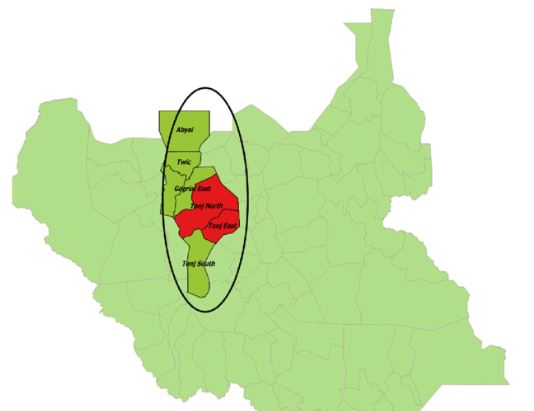
The caretaker commissioner of Warrap State’s Tonj East County on Tuesday said calm has returned to the area following Sunday night’s deadly attack and clashes that claimed at least 23 lives.
Machuei Bith told Radio Tamazuj that displaced residents have begun returning to the Bol-bol cattle camp in the aftermath of the violence, which also left several others affected.
“Our county borders Mayendit in Unity State. The attackers came from the direction of Mayendit and retreated toward Mayendit, though I do not know the individuals personally,” he said. “I call upon armed youth from Mayendit County to cease attacks on innocent civilians and embrace peaceful coexistence, particularly as South Sudan prepares for the February 2027 general elections.”
He warned that continued violence risks further destabilizing the region and disrupting ongoing preparations for the polls, noting that local communities are currently focused on voter registration.
Commissioner Bith urged neighboring communities to resolve their differences peacefully so that residents can participate in the electoral process without fear.
In South Sudan, the Communal violence and cattle raiding in South Sudan represent a deeply entrenched, multifaceted crisis rooted in socio-cultural traditions, economic necessity, and the catastrophic legacy of decades of civil war.
According to academic research and authoritative literature on East African pastoralist societies, cattle are much more than mere livestock; they form the bedrock of the economy, culture, and social stratification.
Among pastoralist and agro-pastoralist communities—most notably the greater Bahr el Ghazal and Upper Nile peoples—cattle serve as a currency, a store of wealth in the absence of formal banking systems, a source of sustenance (primarily through milk rather than slaughter), and the ultimate symbol of social status and prestige.

 and then