



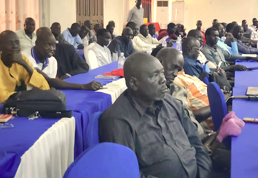
The education department in Jonglei State’s Bor County, in partnership with education partners, on Tuesday held a one-day annual education review conference to discuss challenges affecting public schools and adopt resolutions aimed at improving the education sector.
Speaking at the close of the conference, Gabriel Panchol, the Director of the Bor County Education Department, said the meeting focused on finding practical ways to improve education for vulnerable children who cannot afford private schools.
“The meeting was about how best we can actually go forward with the education of vulnerable communities, those who are unable to pay for their children in private schools,” he said. “It was resolved that parents and the community stakeholders, together with the county administration, will join hands to support teachers in the public schools.”
Panchol also thanked education partners, including CSI, CINA, Save the Children, and LWF, for their continued support to education programmes in Bor County.
For his part, Bor County Commissioner Ateny Pech pledged his administration’s full commitment to implementing the resolutions adopted during the conference, stressing that strengthening public schools is critical to improving access to education.
“My administration will fully support the implementation of these resolutions because public schools are the foundation of education for the majority of our children,” he stated. “We cannot allow our public schools to collapse while many families cannot afford private education. I urge every parent to contribute a small amount, such as 100,000 South Sudanese Pounds, to support teachers in public schools.”
“This is far more affordable than paying private school fees, where some schools charge close to one million South Sudanese Pounds per child. By supporting our public schools together, we can keep them operating and ensure every child has access to quality education,” Commissioner Pech added.
Meanwhile, Daniel Majok Ghai Abiar, the chairperson of the Jonglei Union of Private Schools, welcomed the initiative and called for greater support for teachers serving in public schools.
“Our fellow teachers at the public schools are living a miserable life, and we know the situation we are in,” he said. “I am not saying that teachers at private schools are much better than those in government schools, but yes, we have to find a solution that can better our fellow teachers at the public schools.”
The conference brought together members of parliament, education officials, county leaders, learners, education partners, and traditional leaders.
Participants identified several key challenges affecting the education sector, including delayed and inadequate teachers’ salaries, low learner enrollment, the absence of school feeding programmes, mismanagement of school property, and encroachment on school land by surrounding communities.
During the conference, the Bor County Education Department and its partners presented reports outlining achievements, challenges, and recommendations for strengthening education in the county.
Among the key resolutions adopted was a commitment by communities, parents, county authorities, and other stakeholders to take greater responsibility for supporting the welfare of public school teachers and learners. Other resolutions included introducing school feeding programmes, banning the distribution of assorted gifts to examination candidates, regulating learner admissions, and prohibiting schools from charging fees in U.S. dollars.

 and then