



On July 1st, the Communist Party of China (CPC) celebrates the 105th anniversary of its founding. Having worked in South Sudan for nearly four years, I am frequently asked by South Sudanese friends: “How did China make it?” At this special historical juncture, the answer has become clearer than ever—it is the leadership of the CPC.
A Spanned Journey of 105 Years: from the Depths of National Crisis to the Heights of National Rejuvenation
The CPC was founded in 1921. Upon its birth, the CPC established its original aspiration and the mission: to seek happiness for the Chinese people and rejuvenation for the Chinese nation. Uniting and leading the Chinese people through 28 years of hard struggle, the CPC defeated Japanese imperialism, overthrew the reactionary Kuomintang rule, completed the New Democratic Revolution, and founded the People’s Republic of China. It then carried out the socialist revolution, abolished the feudal system of exploitation and oppression that had persisted in China for millennia, established the basic socialist system, advanced socialist construction, and successfully triumphed over subversive sabotage and armed provocations by imperialist and hegemonist powers.
Moving forward with unswerving determination, the CPC pushed forward reform and opening up, achieving a historic breakthrough from a state of relatively backward productive forces to becoming the world’s second-largest economy.
Since the 18th CPC National Congress, the cause of the CPC and China has achieved historic accomplishments and undergone historic transformations. The CPC’s leadership has been comprehensively strengthened. China’s economic strength, scientific and technological abilities, and composite national strength have all ascended to a new, grand height. Moreover, nearly 100 million rural residents have been lifted out of absolute poverty. Over the past five years, China’s economy has grown at an average annual rate of 5.4%, maintaining a contribution rate of approximately 30% to global economic growth. Emerging industries such as artificial intelligence and new energy have achieved breakthrough milestones, driving profound transformations in China’s modes of production, lifestyle, and social governance. China’s high-level opening up has continued to advance, and the high-quality cooperation on the Belt and Road Initiative (BRI) has yielded fruitful results.
On May 1st, 2026, China has fully implemented zero-tariff treatment for 53 African countries that have diplomatic ties with China, including South Sudan, effectively transforming the “great Chinese market” into a “great world opportunity,” and providing strong momentum for Africa’s industrialization and agricultural modernization.
A Retrospective on 105 Years: the Code of Enduring Success
The CPC’s ability to continuously lead the country to achievements stems fundamentally from three core institutional advantages.
First, the scientific ideology that keeps up with the times.
The CPC has always taken the scientific theory of Marxism as its guide to action, and has consistently enriched and developed it in practice, giving rise to Mao Zedong Thought, Deng Xiaoping Theory, the Theory of Three Represents, and the Scientific Outlook on Development. After the 19th CPC National Congress, Xi Jinping Thought on Socialism with Chinese Characteristics for a New Era, as the latest outcome of adapting Marxism to the Chinese context, was enshrined into the Constitution of China and the Constitution of the CPC, and has been established as a guiding ideology for long-term adherence.
Guided by this vital thought, China upholds the principles of sincerity, real results, amity, and good faith, as well as the right approach to justice and interests, and continuously enhances practical cooperation with South Sudan across various fields, bringing numerous key projects to fruition, including the Air Traffic Management (ATM) system, drilling borehole for water supply, and the Juba Teaching Hospital.
Second, the foundational philosophy of exercising state power for the people.
As an ancient Chinese proverb states, “Bringing benefit to the people is the fundamental principle of governance”. Serving the public and governing for the people is the persistent value pursued by the CPC. The starting point of all the Party’s decisions and endeavors is to ensure that the fruits of development fairly benefit every citizen.
Having endured a century of war and turmoil in modern history, the CPC and the Chinese people deeply understand the preciousness of peace and the value of development, viewing the promotion of world peace and development as their sacred duty. China’s cooperation with South Sudan in sectors such as public health and agriculture, alongside the provision of humanitarian assistance, stands as a manifestation of this people-centered philosophy in our bilateral relations.
Third, the immense courage for self-revolution.
The courage for self-revolution is the most distinctive character and the greatest advantage of the CPC. In 2026, the CPC launched a party-wide campaign for the establishment and application of a sound understanding of what it means to perform well. This campaign requires all CPC members to reject formalism and short-sighted pursuits of quick success, and instead commit to doing practical and long-term deeds that can withstand the test of time.
In developing China-South Sudan relations, China also adheres to a sound understanding of what it means to perform well. We do not chase purely commercial interests or short-term visible gains, but instead deeply cultivate cooperation in infrastructure, agriculture, and education — fields that bring long-term benefits to South Sudanese people. This approach remains the key to why China-South Sudan relations have withstood various tests and progressed steadily.
Looking to the Future: The CPC is still in its prime
From just over 50 members at its inception to now the world’s largest ruling party with over 100 million members, the CPC has never halted its steps. Recently, Xi Jinping Thought on Party Building was officially put forward. As political party figures, experts, and scholars from multiple countries note, this not only provides guidance for the world’s largest political party to become the world’s strongest political party, but also contributes Chinese wisdom to the development and progress of global political civilization.
Looking ahead, the CPC will continue to strengthen engagement with political parties worldwide, share experience in party building and state governance, and work together with people across the globe to advance the building of a community with a shared future for humanity, joining hands to build a better world!
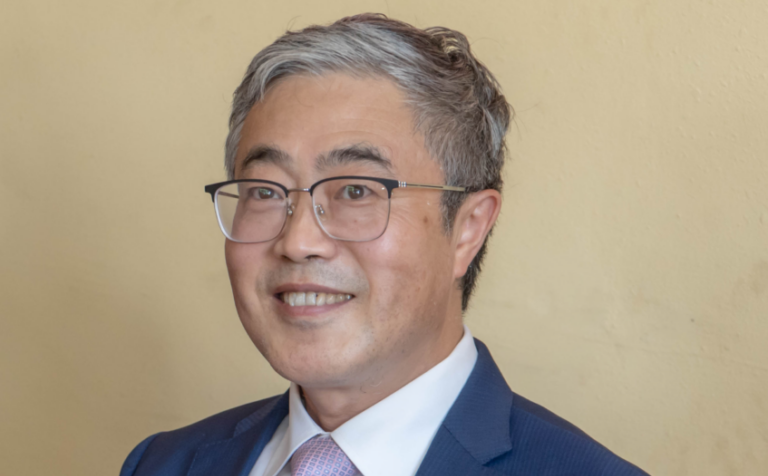
The author, Ma Qiang, is China’s ambassador to South Sudan.
The views expressed in ‘opinion’ articles published by Radio Tamazuj are solely those of the writer. The veracity of any claims made is the responsibility of the author, not Radio Tamazuj.

 and then