



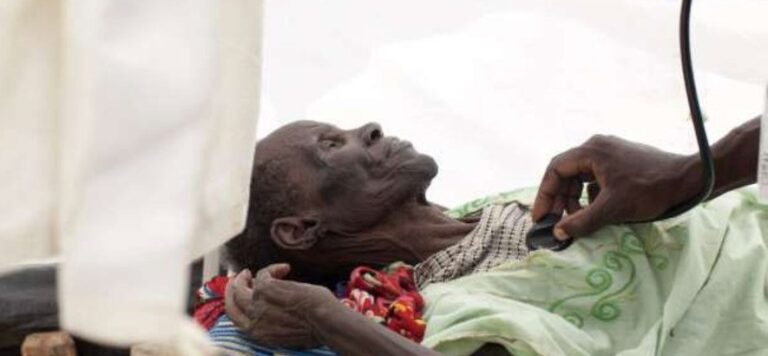
Nearly half of all health facilities in South Sudan’s Western Bahr el Ghazal State have closed due to a crippling shortage of medicines and medical supplies, state health officials said, warning that the state’s healthcare system is on the verge of collapse.
Dr. Francis Michael Hassan, the state minister of health, told Radio Tamazuj Saturday that 48 of the state’s 123 health centers have suspended operations, many of them in remote and conflict-affected areas where residents now have no access to care.
“The situation is dire,” Hassan said. “Since the conflict in 2016, supplies from the national Ministry of Health have been cut off to some hard-to-reach areas, leaving communities stranded.”
Only 31 health facilities, including Wau Teaching Hospital, currently receive medicines through the National Ministry of Health’s Health Sector Transformation Project. Another 44 facilities have been reopened through limited support from humanitarian partners, leaving 48 facilities completely non-operational.
“We are appealing to the national government to intervene and reintegrate those health facilities into the supply system,” Hassan said. “People are suffering, and our main hospitals are overwhelmed.”
Health officials say the shortages have forced patients to travel long distances to Wau or go without treatment altogether. At Wau Teaching Hospital, staff report severe congestion, with wards over capacity and patients sharing beds.
The state government recently raised the issue with National Health Minister Sarah Cleto Rial during her visit to Wau last week. Rial was in the state to assess healthcare challenges, but no immediate action plan has been announced.
Civil society activists are calling for urgent local and private-sector intervention.
Romadan Adam, a community activist in Wau, said, “We are urging businesspeople and institutions to step in. Even small contributions can save lives.”
Residents say the crisis exposes South Sudan’s heavy dependence on foreign aid.
“This is the result of relying entirely on NGOs to run our health system,” said Wau resident Stephen Badagoni. “When aid slows down, people die.”
Badagoni added that rural residents are now more vulnerable, forced to walk for hours to reach the few functioning health centers. “Health care is a basic right, but our people are being denied it,” he said.
The health sector in Western Bahr el Ghazal has struggled since renewed fighting in 2016 destroyed infrastructure and disrupted supply routes. Local officials warn that without national intervention, the state risks losing its fragile healthcare system entirely.

 and then