



Health authorities in Yei River County in Central Equatoria State have recorded 748 epilepsy cases and 448 mental health cases since the beginning of 2026, with hundreds of patients still receiving treatment.
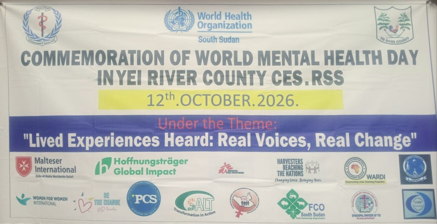
The county announced the figures on Monday, October 12, during its commemoration of World Mental Health Day, held under the theme “Lived Experiences Heard: Real Voices, Real Change.”
According to county health authorities, 25 epilepsy patients have recovered, while 723 remain under treatment. Of the 448 mental health cases recorded, 40 patients have recovered, while 408 continue to receive care.
Speaking during the event, County Health Director Simon Sebit attributed the rising mental health burden to depression and called for appropriate interventions, including counselling and medical treatment. He further appealed to health partners to ensure a continued supply of medicines for epilepsy and mental health patients.
“There are many people who ran mad or mentally ill here in Yei, and that is what we call depression because the mind is not thinking straight,” he said. “However, with treatment, the person can come back and think straight. Tramadol and smoking marijuana can bring such disorder in the brain. If you see anyone in such a situation, bring them to the hospital for treatment.”
Gaga Frank, a youth leader, called for sustained public awareness to combat stigma and encourage people experiencing mental health challenges to speak openly about their experiences.
“We must end stigma in our communities and families at different levels, encourage open conversations and create safe spaces where young people can express their feelings without fear or discrimination or judgment,” he said. “I call upon schools, churches, government institutions, health workers and development partners to work together to promote mental health awareness and ensure that those who need support can access it.”
For her part, Christine Siama, a mental health survivor, commended health workers in Yei for supporting her recovery.
“I was treated in Juba, but there was no doctor who could heal me, but I finally got healed here. They say our place, Yei, is small and insecure, but thankfully I received my treatment here in Yei,” she said. “I have suffered a lot there in Juba, running up and down in between cars and motorcycles, but thank God that I am now okay.”
Another survivor, Agness Kaku, described her recovery journey as challenging and highlighted difficulties in accessing essential medicines.
“I am one of the people who recovered from mental illness, but it is not easy considering what I went through,” she stated. “To those who are supplying the drugs, we have difficulties in accessing drugs consistently, and a mentally unwell person will think negatively about their illness and have no hope.”
Meanwhile, Agnes Nyoka, representing the South Sudan Health Association (SSUHA), urged communities and health partners to take collective responsibility in addressing mental health challenges, including tackling gang-related activities.
“Let us come together and make sure we kick out mental health issues. Let us take patients to the hospital, and the health department will determine whether they need drugs or psycho-social counselling,” she said. “Narcotic drugs are the problem, and our children have joined gangs and even raped girls. We say the children are spoilt and give up and fail to talk to them. Let us work to heal them so that they become productive.”
The World Health Organization (WHO) estimates that one in five people in South Sudan is likely to experience a mental health condition due to ongoing conflict and dire humanitarian situations.
The commemoration was organised in collaboration with the World Health Organization, the Ministry of Health and local partners to promote awareness, challenge stigma and amplify the voices of people living with mental health conditions.
 and then