



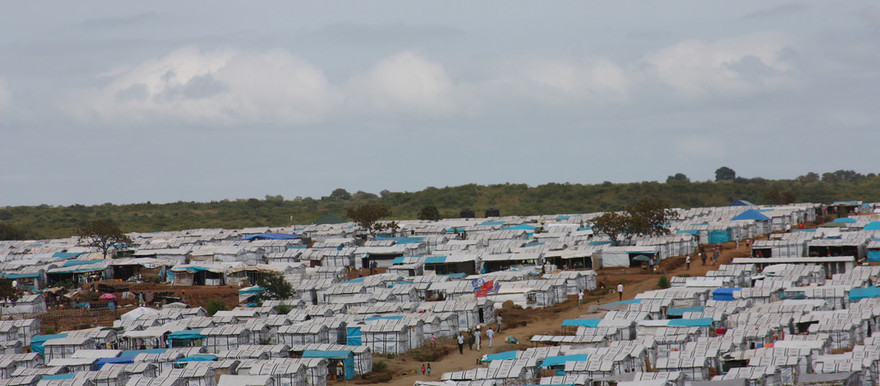
Nyatiek Chuol has lived in displacement for 11 years, but the most dangerous part of her day is not the threat of conflict—it is the risk of falling ill.
Inside Juba IDP Camp III, where thousands of displaced South Sudanese live in cramped conditions, there is no primary health care center. For those who face a medical emergency, the journey to the nearest hospital is often a race against time that many lose.
“You can fall on the way and lose your life because there is no transportation,” Chuol said. “If there is no ambulance, it is very hard for you to reach Juba Teaching Hospital.”
Residents of the camp are urging the South Sudanese government to establish a primary health care unit within the site. They warn that preventable deaths, particularly among pregnant women and children, are rising due to the absence of basic medical services and emergency referral systems.
James Tariak Bol, another resident, said the danger peaks after dark.
“If you fall sick at night, there is nowhere to go,” Bol said. “You wait until morning. If you do not have money for transport, you may die in the process.”
The country’s main public referral facility, Juba Teaching Hospital, is technically accessible, but the 30-minute journey is often too long for those in critical condition. Laya Lydia, a program manager for the aid group IsraAID, said she has witnessed the consequences of this gap firsthand.
“The worst scenario was witnessing a mother die because she did not have where to deliver,” Lydia said. “To get somebody from the IDP camp to the treatment center… we lost a lot of people during this process.”
The health crisis is compounded by a lack of infrastructure. Open defecation is widespread, and water sources are insufficient. During the rainy season, contaminated runoff frequently triggers outbreaks of waterborne diseases like cholera. During a recent outbreak, IsraAID could only provide oral rehydration; patients requiring more intensive care had to be moved, a delay Lydia described as fatal for many.
Malnutrition is also worsening health outcomes for children under 5 and lactating mothers. Chuol noted that food insecurity often leads directly to illness, creating a cycle of sickness in a place with no cure.
While humanitarian organizations have traditionally filled the gaps in South Sudan’s healthcare system, Lydia noted that aid groups are currently facing severe funding cuts. She argued that the responsibility now lies with the government.
“All partners are suffering from funding constraints,” she said. “I would only advocate to the government.”
For the families of Camp III, a basic clinic is no longer viewed as a secondary need.
“We do not have a clinic,” Chuol said. “I am urging the government to intervene.”

 and then