



The deputy chief of the International Organization for Migration (IOM) concluded a five-day visit to South Sudan on Friday, calling for urgent global investment to bridge the gap between life-saving aid and long-term recovery in the face of climate change and conflict.
Ugochi Daniels, IOM deputy director general for operations, visited the border town of Renk and Bentiu in Unity State from Feb. 23–27. Her visit comes as humanitarian operations face drastic global funding cuts and a steady influx of people fleeing the war in neighboring Sudan.
“There are acute life-saving needs,” Daniels said. “But we also heard clearly from the displaced themselves — they do not want to sit and wait for humanitarian assistance. They want to move forward with their lives.”
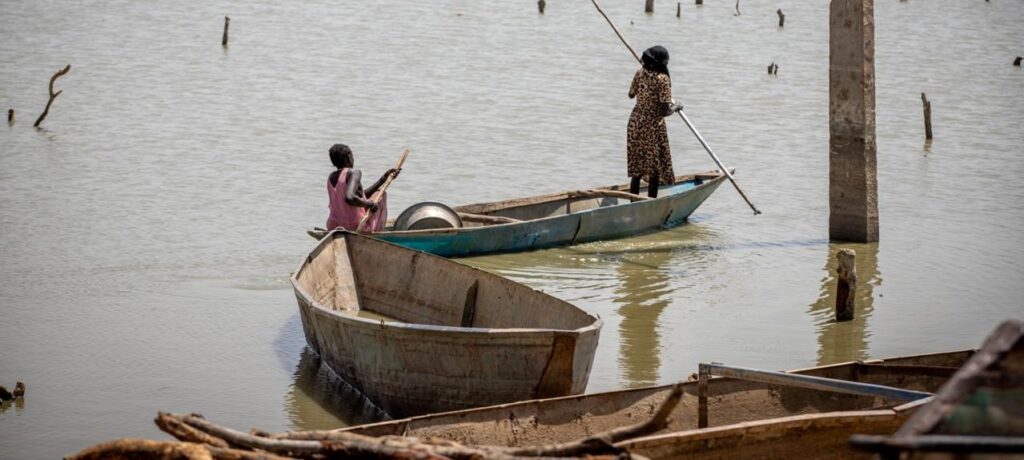
In Bentiu, a region hit by both conflict and recurrent flooding, Daniels inspected flood mitigation projects. In the Nhialdiu area, crews are currently reclaiming about 16 square miles of land from floodwaters and have constructed an 11-mile dyke to prevent future inundation.
Despite shrinking budgets, Daniels reaffirmed the IOM’s commitment to the region but stressed that land donations from the government must be matched by infrastructure.
“Land alone is not enough,” Daniels said. “Communities need schools, healthcare, clean water. Ensuring security and sustaining peace is the government’s foremost responsibility.”
The delegation included ambassadors from France and the Netherlands, as well as IOM regional leaders. Philippe Michel-Kleisbauer, France’s ambassador to South Sudan, urged a shift in how the region views its climate challenges.
“We should not see floods only as disasters,” he said. “South Sudan has abundant water resources — with the right investment, it can strengthen agriculture and improve food security.”
Unity State Governor Justice Riek Bim Top said the area remains relatively calm despite “recent provocations,” including the shelling of civilian areas and displaced persons’ camps by opposition forces. He said those incidents were contained through political engagement.
Renk remains a major transit hub for thousands of refugees and returnees crossing from Sudan. IOM officials emphasized that the resilience found in these communities requires “predictable funding” to transition from emergency protection to permanent social cohesion.

 and then