



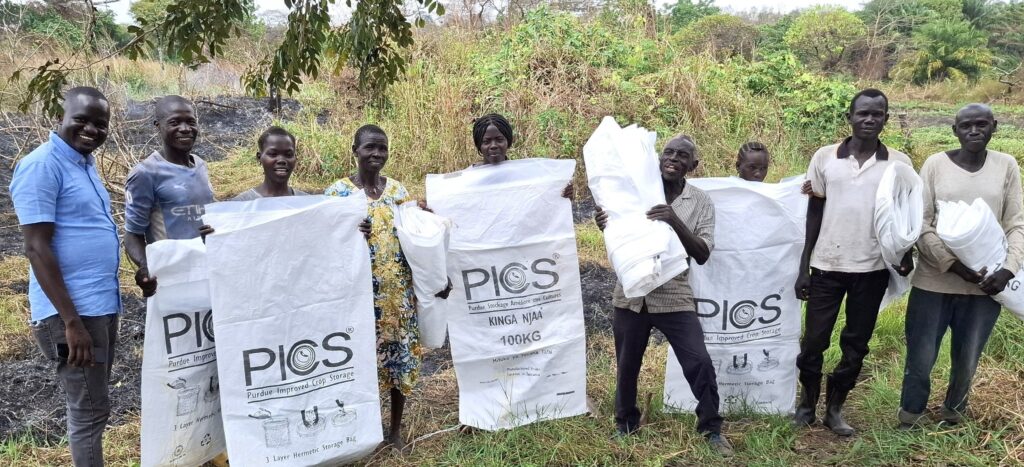
German government development agency Deutsche Gesellschaft für Internationale Zusammenarbeit (GIZ) GmbH said it has distributed 21,000 hermetic storage bags to more than 2,500 smallholder farmers in Yei and Magwi counties to help reduce post-harvest losses and improve food security.
Farmers in the two areas face persistent post-harvest losses due to poor infrastructure, limited storage facilities, and inadequate knowledge of post-harvest handling, the agency said in a statement on Friday. These losses often force farmers to sell crops immediately at lower prices.
The bags, provided through the Community-Driven Rural Development (CDRD) and Improved Living Conditions and Psychosocial Support (ILiPS) projects, have a combined storage capacity of about 2,100 metric tons. Each bag holds up to 100 kilograms and is designed to protect grains from pests, moisture, and mold using airtight, multi-layer technology.
Crops such as maize, beans, sorghum, cowpeas, soybeans, and pigeon peas are particularly vulnerable to pest damage, especially from weevils, contributing to significant losses, GIZ said.
Project advisers said the bags were well received by farmers, who described the timing as well aligned with the recent harvest season, which ran from December to February.
The ILiPS project is implemented by GIZ on behalf of the German Federal Ministry for Economic Cooperation and Development and supports returnees, internally displaced people, and host communities through agricultural assistance, training, and access to farming inputs.
The CDRD project is also implemented by GIZ on behalf of the ministry and is co-funded by the European Union and the Embassy of the Kingdom of the Netherlands.
Germany supports South Sudan’s development in areas including rural development, food systems, water and sanitation, governance, and peacebuilding, GIZ said.

 and then