



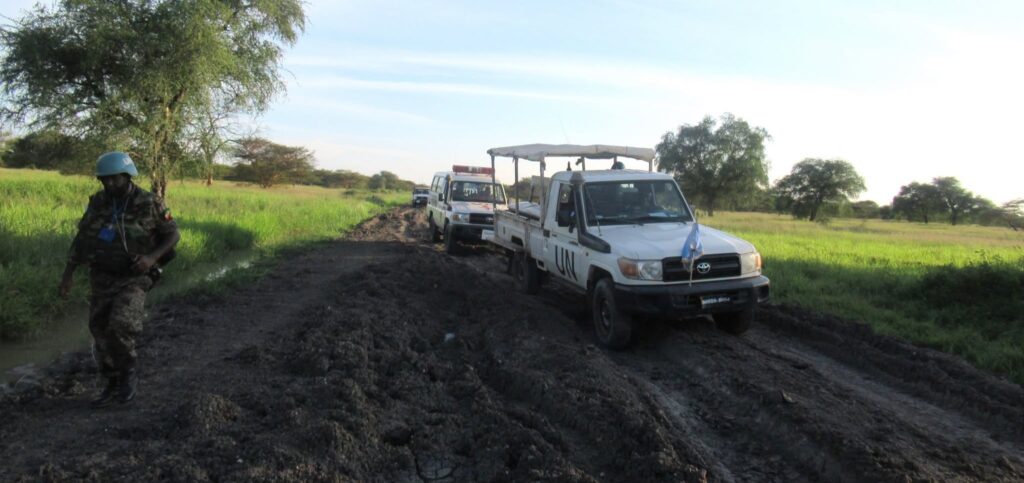
The United Nations has increased patrols around an internally displaced persons (IDP) camp in Bentiu, Unity State, after violence on Wednesday killed at least five people and injured 33, as a U.N. human rights panel warned that South Sudan’s planned elections are unfolding amid growing risks of renewed conflict and atrocity crimes.
The U.N. Mission in South Sudan (UNMISS) said on Friday it had strengthened patrols in and around the camp following violence on Aug. 19 involving civilians and security personnel.
The violence followed an attempt by authorities to arrest a self-proclaimed prophet, Taban Puol, who claims to be the reincarnation of Ngundeng Bong.
The incident heightened tensions inside the camp, the mission said, adding that it was engaging community leaders, state authorities, security actors and youth representatives to help ease tensions.
Ngundeng Bong, who lived from about 1830 to 1906, was a prominent Nuer prophet whose teachings and prophecies continue to hold influence in South Sudan. He was regarded by followers as a spiritual intermediary with the sky god Deng.
At least five people were reportedly killed and 33 injured in the violence, UNMISS said.
“Such violence is unacceptable,” UNMISS chief Anita Kiki Gbeho said, urging those with influence to prioritise dialogue and avoid confrontation.
UNMISS said it would maintain an enhanced protective presence around the camp until efforts to restore calm take hold.
The violence in Bentiu came a day after the U.N. Commission on Human Rights in South Sudan warned that the country was approaching elections while key political, security and human rights safeguards for a peaceful and credible vote remained largely absent.
In an August advisory, the commission said armed conflict had resumed in several parts of the country and warned that multiple risk factors for atrocity crimes were converging.
It cited renewed armed conflict, weakened institutions, entrenched impunity, exclusionary governance, corruption, shrinking civic space and inflammatory rhetoric among the risks. The commission said the factors were mutually reinforcing as mechanisms designed to prevent escalation, including ceasefire monitoring, independent justice institutions and inclusive political dialogue, had been weakened or suspended.
The commission said its concern was not whether South Sudanese should vote, but whether citizens would be able to participate freely, safely and without fear.
It warned that elections without adequate safeguards and genuine political dialogue could deepen existing divisions rather than provide a peaceful means of resolving political disputes.
The commission called for an immediate end to hostilities and a return to inclusive political dialogue involving the SPLM-IO, holdout groups, civil society, women and youth.
It also warned that the political contest surrounding the elections could deepen divisions if significant sections of the population remained excluded from meaningful political participation.

 and then