



The Union of Journalists of South Sudan (UJOSS) on Wednesday called for stronger protection of journalists and greater respect for media freedom ahead of the country’s anticipated December elections, warning that restrictions on civic space could undermine a credible electoral process.
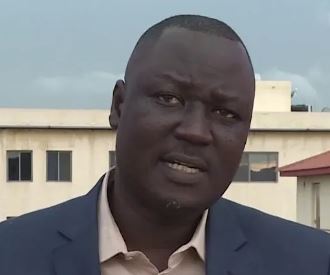
Speaking during a roundtable dialogue organised by the South Sudan Human Rights Defenders Network (SSHRDN) in Juba, UJOSS President Oyet Patrick Charles said journalists continue to face censorship, intimidation and uncertainty over what constitutes a national security issue, making it difficult for the media to perform its watchdog role.
“As journalists, we still face challenges as far as civic and political space is concerned,” he said. “Articles are still removed based on what others may think is not good enough, or they say it might not support some groups, or they say it might be a national security issue. The definition of a national security issue is not clear to us in most cases.”
According to Oyet, an open civic and political environment would be essential if South Sudan is to hold credible elections.
Referring to the recent summoning of youth activist Angok by National Security after he called on citizens to demand accountability from the ruling Sudan People’s Liberation Movement (SPLM), Oyet questioned whether opposition parties and journalists would be free to criticise those in power during the election campaign.
“We have seen in the recent past one youth leader, Angok, who was summoned for asking the population to ask SPLM to be accountable,” he said. “If we are really going for elections, where people are going to point out things that maybe SPLM has not done well, and we are not allowed to talk, then what election are we going for?”
“How are we journalists going to report about other political parties that are going to point out issues they think are not going well?” Oyet asked.
The UJOSS president also expressed concern over delays in the justice system, saying the Supreme Court has at times been unable to hear human rights cases because it lacks the required quorum.
“These are human rights issues, and the only court you can go to in our current system is the Supreme Court. If the quorum is not met, it simply does not help us to promote human rights,” he added.
EU calls for protection of journalists
The European Union also stressed that journalists and human rights defenders should be able to work freely without fear of intimidation.
Ines Narciso, Programme Manager for Governance at the European Union Delegation to South Sudan, said credible and peaceful elections depend on citizens being able to express themselves freely and participate in political life without fear.
“We need civic and political space to remain open and to become even more open, to be safe, and to be a space where no one feels threatened,” she said.
Narciso noted that restrictions on freedom of expression, harassment of journalists and activists, limited access to information, and shrinking civic space remain major challenges ahead of the elections.
She said protecting journalists and human rights defenders was essential to ensuring transparent, inclusive and peaceful elections, and urged government institutions, civil society organisations and the media to work together to safeguard civic and political space throughout the electoral process.
Government urges dialogue ahead of elections
Responding to concerns raised during the discussion, James Francis Kufiyole, Undersecretary in the Ministry of Parliamentary Affairs, acknowledged that South Sudan still faces challenges but urged stakeholders to continue engaging through dialogue.
He defended the government’s commitment to the electoral process, saying the country should proceed with elections even if some shortcomings remain.
“Whatever election that is going to be held today, if it is lacking a few things here and there, but if it is an election, let us go for it. The next election will be better,” he said.
Kufiyole also acknowledged that civic education, which falls under his institution’s mandate, has not yet begun because of resource constraints, but expressed hope that the programme would commence once funding becomes available.
“My own institution is directly responsible for civic education, and we have not yet started. But we are hopeful that within the shortest time possible, we shall get resources,” he said.
He encouraged journalists and civil society organisations to continue engaging government institutions through dialogue while operating within the country’s legal framework.
The roundtable dialogue brought together representatives from government institutions, civil society organisations, journalists, development partners and human rights defenders to discuss ways of safeguarding civic and political space ahead of South Sudan’s anticipated first elections since independence.

 and then