



The South Sudan Human Rights Defenders Network (SSHRDN) has warned that the country’s shrinking civic and political space could undermine the credibility of the planned December 22 elections, saying authorities must guarantee fundamental freedoms if the vote is to be peaceful, inclusive and credible.
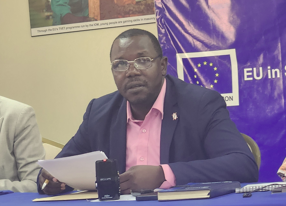
Presenting a report during a roundtable dialogue in Juba on Wednesday, Omara Joseph Wani, SSHRDN’s Protection and Advocacy Officer, said that while the government’s commitment to holding elections marks an important milestone in implementing the 2018 peace agreement, the prevailing political environment remains too restrictive to support a genuinely democratic process.
“Organizing a credible electoral process requires an open civic and political environment where citizens, political parties, civil society, the media fraternity and human rights defenders can participate freely without fear of intimidation or violence,” he said.
Wani said South Sudan is approaching the elections amid political tensions, insecurity, local conflicts, economic hardship, displacement, and declining public trust in state institutions.
According to the network, reports from both national and international organisations indicate that freedoms of expression, peaceful assembly, and political participation continue to face significant restrictions across the country.
The rights group warned that the election period is likely to increase pressure on journalists, civil society organisations, and human rights defenders, who play a crucial role in documenting abuses, promoting accountability and informing the public.
“We have also reported arbitrary arrests and detentions linked to reporting and advocacy activities of both journalists and human rights defenders,” Wani stated.
He further warned that increasing surveillance could discourage independent reporting during the electoral period.
“There is a high rate of self-censorship. Many media institutions and civil society organisations fear that if their advocacy is perceived as going too far, they could be shut down or accused of engaging in politics,” he said.
The network also expressed concern that recently enacted cybercrime legislation and government plans to deploy sophisticated surveillance technology could further restrict civic freedoms during the election period.
Wani said public statements by officials suggesting that advanced monitoring equipment had been acquired have heightened fears among activists and journalists that their communications could be monitored.
“We have heard officials insisting that they have purchased sophisticated equipment that will monitor people. There is a possibility that conversations could be tapped at any time,” he said.
He warned that tighter surveillance during elections could discourage free political debate and civic participation.
Although the SSHRDN acknowledged ongoing preparations by the National Elections Commission, including training election officials abroad and continued support from regional and international partners, it questioned whether the commission currently possesses sufficient capacity to deliver credible elections.
“We still don’t believe that the National Election Commission has a strong capacity to present credible and fair elections to the South Sudanese people,” Wani said.
He nevertheless described the government’s continued insistence on holding elections as a positive development that offers an opportunity to strengthen democratic governance and constitutional order.
The network also questioned continued requirements for obtaining official permission before conducting public events, warning that such restrictions could interfere with election campaigns.
“As we prepare for elections, will candidates be required to seek permission every time they want to hold a rally?” Wani asked. “If so, this will become an issue because rallies could easily be disrupted.”
He said restrictions on public gatherings and access to information could limit voter engagement and reduce public confidence in the electoral process.
Another growing concern identified by the network is the spread of misinformation, disinformation, and hate speech on social media ahead of the elections.
Wani said that some online platforms are being sponsored to spread false information and inflammatory content, increasing the risk of political tensions and election-related violence.
He urged authorities, media organisations and civil society to work together to counter false information while protecting freedom of expression.
Despite the challenges, the rights group said opportunities still exist for collaboration between the government, civil society, the media, and the National Elections Commission through voter education, civic awareness campaigns, election observation, and conflict prevention initiatives.
However, Wani noted that relations between state institutions and civil society remain complicated, particularly on issues involving civic freedoms, public accountability and access to information.
He said government agencies often justify restrictions on civil society and media activities on grounds of national security and public order, especially during politically sensitive periods.
The SSHRDN urged authorities to protect journalists, election observers, community monitors and human rights defenders, saying they are essential for ensuring transparency and accountability throughout the electoral process.
“The success of these elections will depend not only on technical preparedness but also on the existence of an open, safe, inclusive civic and political environment,” Wani said.
He added that strengthening trust and dialogue among government institutions, the media, and civil society would be critical to reducing tensions and ensuring South Sudan’s first elections since independence are peaceful, credible, and accepted by the public.

 and then