



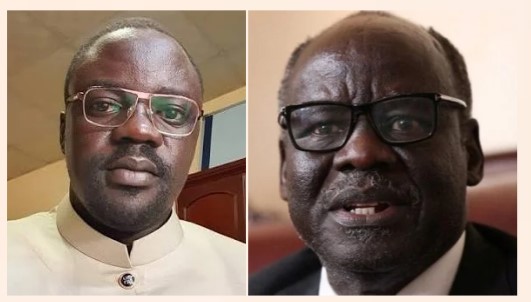
Three South Sudanese political parties have accused the chairperson of the Political Parties Council (PPC) of unilaterally altering their official registration records and replacing their leaders, raising questions over the council’s handling of party registration ahead of December’s elections.
The opposition National Democratic Movement (NDM) and South Sudan National Movement for Change (SSNMC) say the changes could prevent them from contesting the 22 December elections under the names and leadership structures under which they were registered. The changes also affected the Federal Democratic Party (FDP).
The NDM is led by veteran opposition politician Dr. Lam Akol, while the SSNMC is led by Moro Isaac Genesio. Both parties were part of the 2018 peace agreement that established the now-dissolved transitional unity government.
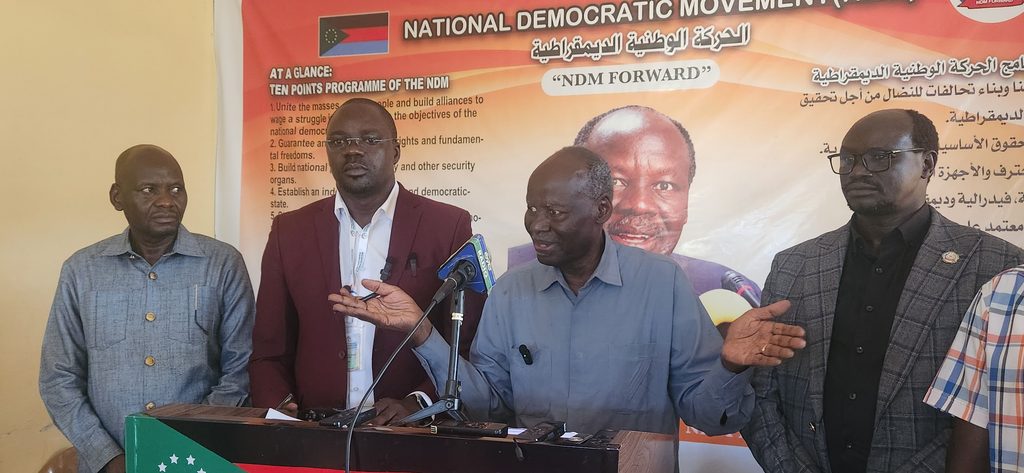
The parties made the allegations at a joint press conference at the NDM headquarters in Juba on Wednesday, after a new list of registered political parties began circulating in the capital.
They said the list contained changes to the names and leadership of some previously registered parties and increased the total number of registered political parties from 39 to 46.
Bol Joseph Agau, secretary-general of the NDM, said 39 political parties had been officially registered by the time the registration process closed on 30 June.
He said the changes affected the Federal Democratic Party (FDP), NDM and SSNMC, with the leaders listed for all three parties replaced. He also said the FDP’s logo had been changed.
Agau said the parties contacted the PPC after receiving the new list and were subsequently provided with PPC Order No. 5 of 2026.
According to Agau, the order confirmed that the changes had been made on the instructions of PPC chairman James Akol Zakayo.
The order, he said, also granted registration to nine political entities to participate in democratic processes, including the 22 December elections.
Agau alleged that seven of the newly registered parties had been added without following the registration procedures required under the Political Parties Act.
The allegations have not been independently verified.
Authority of PPC chairperson
NDM chairman Dr. Lam Akol Ajawin said his party and the SSNMC had previously been formally recognised by the PPC, with the council publicly identifying their leaders when their registration was announced.
He said neither party had been notified of any decision to alter its registered leadership.
“There is nowhere in the Political Parties Act where the chairperson of the Political Parties Council can change the name of a leader of one party to another person,” Dr Akol said.
Dr. Akol has been involved in a leadership dispute with a rival NDM faction led by Mahjoub Biel, which also claims the party name.
The dispute over the registration records centres on whether the PPC chairman had the authority to make the changes and whether the council followed the procedures required by law.
Dr. Akol said the changes could have a direct impact on the parties’ participation in the elections because registration is required for political parties to operate and field candidates.
“The most immediate reason is for us not to participate in the elections under our names as political parties,” he said.
The NDM and SSNMC also questioned the registration of seven additional political parties, alleging that they had not submitted documents required under the law.
Dr. Akol said the parties affected by the changes had submitted leadership lists, constitutions, manifestos and other documents during the registration process.
He alleged that the newly registered groups had not fulfilled similar requirements.
Concerns over electoral inclusivity
SSNMC chairman Moro Isaac Genesio said his party’s registration process started in 2021 and that it had followed the requirements set by the PPC, including paying a $10,000 registration fee.
He said the party had received confirmation that it had fulfilled the registration requirements before the 30 June deadline.
Genesio said the changes could exclude some political actors from the forthcoming elections and called on President Salva Kiir and security institutions to intervene.
“Certain people are being targeted,” Genesio said, adding that the dispute could affect the inclusivity of the elections.
He also accused the PPC chairman of acting outside his powers and said the dispute risked damaging public confidence in the electoral process.
“It discredits the integrity of the institution of the PPC, discredits the integrity of the forthcoming elections,” Dr. Akol said.
The dispute comes at a sensitive stage in South Sudan’s electoral preparations, with political parties and other stakeholders already engaged in discussions over how the December elections should be conducted.
Legal action
The NDM and SSNMC said they had attempted to meet the PPC chairperson to seek an explanation but had been unable to do so.
They said the PPC secretary-general and deputy chair had confirmed that the order came from the chairperson rather than from a collective decision of the council.
The parties called for Zakayo to step down, accusing him of abusing his office.
The parties said they reserve the right to pursue legal action to restore their registration status, party names and leadership.
“We reserve the right to follow the legal procedures to reclaim our right of ownership to our parties,” Genesio said.
Efforts to reach PPC chairperson Eng. James Akol Zakayo for comment were unsuccessful. Calls to his phone went unanswered.
Under South Sudan’s Political Parties Act, the Political Parties Council is responsible for registering political parties, regulating their activities and overseeing their compliance with the law.

 and then