



South Sudan’s government says only 37% of the country’s 2018 peace agreement has been fully implemented, but insists the progress made is sufficient for the country to hold general elections on 22 December 2026.
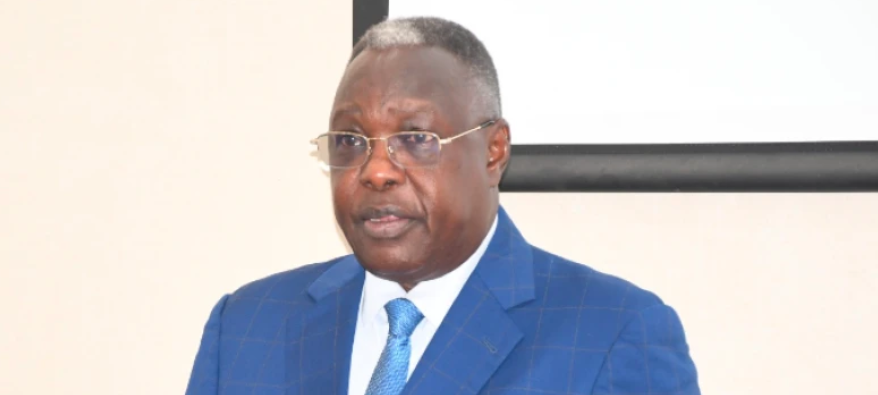
Speaking at a plenary meeting of the Reconstituted Joint Monitoring and Evaluation Commission (RJMEC) in Juba on Thursday, Cabinet Affairs Minister Martin Elia Lomuro said there would be no further extension of the transitional period, despite nearly half of the agreement remaining unimplemented.
The minister also defended controversial amendments to the Revitalized Agreement on the Resolution of the Conflict in South Sudan (R-ARCSS), saying they were necessary to remove legal obstacles to the elections.
Presenting the government’s pre-election implementation report, Lomuro, secretary general of the government’s High-Level Standing Committee for the Implementation of the Peace Agreement, said an assessment by an ad hoc committee found that 37% of the agreement had been completed, while 16.5% was under implementation and 46.4% remained outstanding.
He said the figures represented “substantial progress” compared with an assessment carried out in August 2022.
“The meeting considered the implementation report of the ad hoc committee, which showed that 37% of the provisions of the agreement were completed, 16.5% were in progress and 46.4% were outstanding,” he said.
Despite the large proportion of unfinished provisions, Lomuro said the parties to the agreement had unanimously concluded that the transition should end through democratic elections.
“The parties unanimously agreed that the transition of South Sudan from the current revitalized transitional government to a democratically elected government is an urgent national necessity,” he said.
“The people of South Sudan should be afforded the opportunity to elect their leaders without further delay.”
He said the parties had agreed that elections would be held on 22 December 2026 and that the transitional period would not be extended beyond 22 December 2026.
Lomuro acknowledged that some provisions of the peace agreement would not be completed before the vote, but said they would instead be implemented under an agreed post-election framework.
“The outstanding provisions which cannot be completed before elections shall continue to be implemented after the elections in an agreed post-election framework,” he said.
He also defended amendments to the peace agreement approved by parliament on Wednesday, saying some provisions had become obstacles to holding elections on schedule.
“The parties resolve to amend specific provisions of the R-ARCSS to facilitate the conduct of elections in December 2026,” he said.
Lomuro, a close ally of President Salva Kiir, said the proposed amendments had first been submitted to RJMEC in January 2025, but the peace monitoring body responded in February 2026 that the matter involved political issues falling outside its mandate.
“Considering the shortage of time for the elections, the presidency and the parties took a sovereign decision to bypass RJMEC and table the bill before the Revitalized Transitional National Legislature,” he said.
He said the Council of Ministers subsequently approved further amendments before forwarding the revised bill to parliament, which ratified it on 1 July.
According to Lomuro, the amendments would pave the way for changes to the Election Act and the Political Parties Act to bring them into line with the revised peace agreement.
The government’s report comes as South Sudan presses ahead with preparations for elections despite continued concerns from opposition groups, civil society organisations and international partners that several key provisions of the peace agreement, including security arrangements and governance reforms, remain incomplete.
The RJMEC meeting took place a day after lawmakers approved controversial amendments to the 2018 peace agreement, postponing the requirements for a national population census and the completion of a permanent constitution until after the planned December 2026 elections.
In a further step towards the polls, the Political Parties Council on Tuesday granted full registration to five additional political parties, increasing the number eligible to contest the elections to 36.
The National Elections Commission announced on 22 June that voting would take place in December 2026, meeting the legal requirement to declare the election at least six months in advance.
However, the commission has warned that funding shortages, legal inconsistencies and delays in implementing key provisions of the 2018 peace agreement could hamper preparations.
While allies of President Salva Kiir insist the elections will go ahead as scheduled, opposition groups, including the Sudan People’s Liberation Movement in Opposition (SPLM-IO), led by detained First Vice President Riek Machar, argue that key benchmarks such as security sector reforms, constitution-making and the unification of armed forces remain incomplete, raising doubts about whether the conditions for a credible election are in place.

 and then