



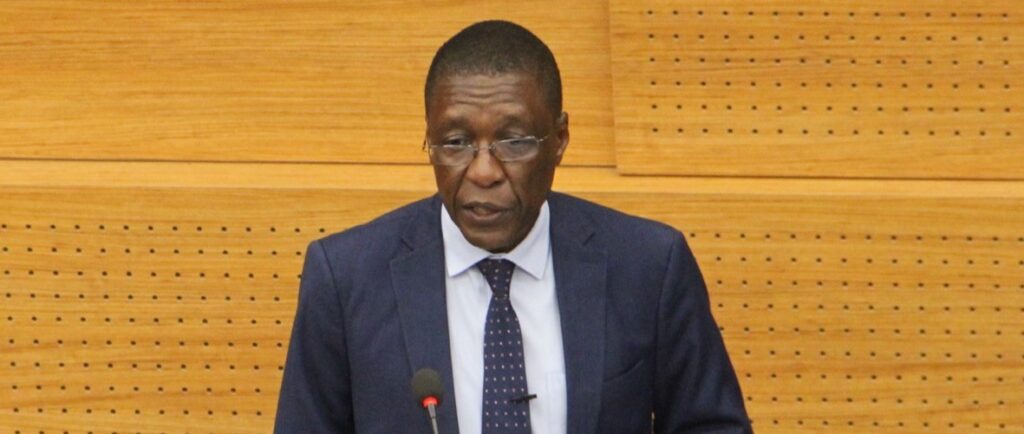
The Reconstituted Joint Monitoring and Evaluation Commission (RJMEC), the body mandated to monitor and report on the implementation of South Sudan’s 2018 peace deal, on Wednesday released its latest quarterly report, warning of minimal progress and calling for an inclusive political dialogue to prevent further deterioration.
The report, covering Jan. 1 to March 31, 2026, was prepared under Article 7.9 of the Revitalised Agreement on the Resolution of the Conflict in the Republic of South Sudan (R-ARCSS).
It said implementation remained slow during the period, citing persistent political tensions, continued ceasefire violations and a worsening humanitarian situation.
The report documented ongoing breaches of the permanent ceasefire between the South Sudan People’s Defence Forces (SSPDF) and the Sudan People’s Liberation Army-in-Opposition (SPLA-IO), along with allied groups.
It said the Ceasefire and Transitional Security Arrangements Monitoring and Verification Mechanism (CTSAMVM) recorded 133 alleged violations during the quarter, including armed clashes, crimes against civilians, sexual and gender-based violence, forced displacement and the occupation of civilian areas.
“Progress on key transitional benchmarks and reforms remained slow, constrained by limited time, capacity gaps and funding shortfalls,” the report said, urging an immediate cessation of hostilities and the launch of an inclusive dialogue in line with the AU C5 Plus Declaration.
It warned that without such steps, the risk of political fragmentation and renewed large-scale violence would increase, with serious implications for national and regional stability.
The report also expressed concern over political and security challenges affecting implementation of the agreement, saying continued clashes threaten civilian protection and humanitarian access while undermining confidence in the peace deal.
“Without a sustained cessation of hostilities, progress on governance reforms, electoral preparations and transitional justice remains fragile and reversible,” it said.
RJMEC highlighted what it described as a growing deficit of political trust among key actors, pointing to unilateral actions, limited consultation and recurring confrontations that have weakened the agreement’s consensus-based approach.
“In this context, the need for an inclusive political dialogue has become increasingly pronounced,” the report said, adding that the absence of structured engagement risks deepening polarization and narrowing political space at a critical stage of the transition.
The commission issued recommendations to the parties to the agreement, the Revitalized Transitional Government of National Unity, the Transitional National Legislature, and regional and international partners including Intergovernmental Authority on Development (IGAD), the African Union (AU) and the United Nations (UN).
Key recommendations include an immediate cessation of hostilities, renewed commitment to implementing outstanding tasks, adherence to agreed amendment procedures, accelerated security sector reforms, stronger oversight and accountability, improved protection of civilians and humanitarian access, and sustained funding for transition institutions and election preparations.

 and then