



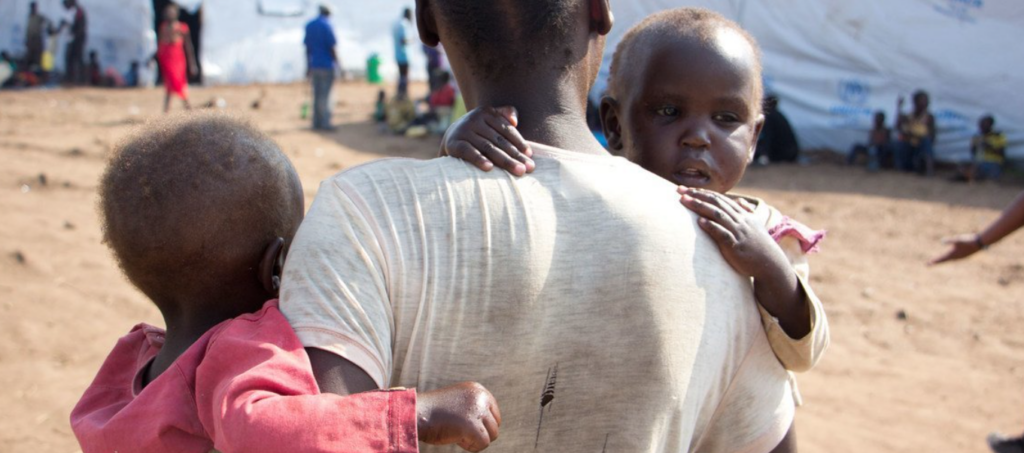
South Sudanese refugees in neighbouring Uganda and the Democratic Republic of Congo, as well as those who have voluntarily returned home, are reacting with a mixture of hope, caution and uncertainty to preparations for the country’s 22 December 2026 elections.
Their reactions come as President Salva Kiir dissolved the transitional government on Tuesday, three months before the elections are due to take place.
The dissolution marked the end of the transitional administration established under the 2018 peace agreement.
For many who fled violence and instability, the prospect of elections has revived hopes that a peaceful political transition could create conditions for stability and eventually allow them to return home.
But others remain cautious, questioning whether the political and security environment is ready for a credible and peaceful vote.
Susan Tabu, a South Sudanese refugee living in Uganda’s Imvepi refugee settlement, told Radio Tamazuj that she hopes the December elections would create conditions for refugees to return home and rebuild their lives.
She said life in the refugee settlement had become increasingly difficult.
“People are suffering in someone else’s country and it is not good. If our leaders are listening to our cries, we don’t want another conflict in the country again that will force people to flee. Let us embrace peace so that our children can go to school. We expect the elections to be a success so that they can help us in the future.”
Franko Cons, a returnee from the Meri refugee settlement in the Democratic Republic of Congo, also welcomed the planned elections.
He said he fled South Sudan in 2016 and was happy to have returned home.
“I am a returnee from Meri refugee settlement. I fled the country in 2016 and I am happy that I am already in the country. My message to our people in South Sudan is that our upcoming elections in December should be successful so that this country does not go back to conflict.”
Cons said his experience in a refugee camp had shown him how difficult life in displacement could be.
“What I want from our leaders is that the elections be successfully conducted. People should vote freely and no harm should come to them, so that people can exercise their rights, because elections are a process.”
Victoria Dawa, another returnee from Uganda, said she hopes the elections would produce a positive outcome and allow South Sudan to focus on developing the country.
She said South Sudanese should not have to continue fleeing their homes because of conflict.
“We pray to God that we are not given another conflict because all we need is peace to enable us to live peacefully in our country. If we don’t develop our country, no other person can do so. We have to be strong to develop our country because we cannot continue running. As for me, I am ready to cast my vote in the upcoming elections.”
Francis Duku, another returnee from Uganda’s Bidi Bidi refugee settlement, welcomed President Kiir’s decision to hold elections this year.
He said the vote would give citizens an opportunity to exercise their political rights after years of conflict and displacement.
“Let the country be free from conflict because we don’t want it again. As returnees from the camps, we have only one voice, and it is that we want peace, not conflict. We want the elections to take place peacefully and everyone should be given the chance to exercise their voting rights because we want democracy to go ahead.”
The UN Commission on Human Rights in South Sudan has warned that elections without adequate safeguards and inclusive political dialogue could risk deepening divisions and conflict.
According to UNHCR, more than 2.3 million South Sudanese refugees remain hosted mainly in Uganda, Sudan, Ethiopia and Kenya, while more than 500,000 South Sudanese refugees have returned to the country since the signing of the 2018 peace agreement.

 and then