



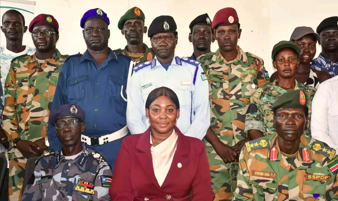
The National Press Club-South Sudan (NPC-SS) on Thursday trained forty security personnel and journalists in Rubkona, Unity State, to promote freedom of expression and improve the safety of journalists.
The two-day training, which began on Wednesday, brought together security personnel from different units and journalists to engage in interactive sessions focused on security-media relations, freedom of expression, and the protection of journalists while carrying out their professional duties.
Poverty Alfred, Executive Director of the National Press Club South Sudan, told Radio Tamazuj that the initiative is intended to improve understanding and cooperation between the security sector and the media.
“This initiative aims to strengthen knowledge and practical cooperation between security personnel, journalists, media spokespersons and government information officials on freedom of expression, access to information, media laws and the safety of journalists,” he said. “Journalists joined selected discussions on the second day. But of course, from the planning, we journalists actually had to proceed from day one up to the second day to encourage dialogue, shared understanding and constructive professional relationship between the media and the security sectors.”
The training builds on a UNESCO Police Media Training of Trainers held in Juba in June 2026 and uses UNESCO’s Global Toolkit for Law Enforcement Agents.
The sessions cover national, regional and international standards on freedom of expression, media laws and policies, journalist safety, election-related reporting, and countering hate speech, misinformation and disinformation.
According to Alfred, the UNESCO toolkit is designed to help law enforcement personnel balance their public-order responsibilities with the protection of freedom of expression and the safety of journalists.
The training seeks to reduce misunderstandings between the media and security sectors, promote lawful engagement with journalists, and strengthen protection for women journalists, who may face gender-specific risks including harassment, discrimination and online abuse.
The National Press Club-South Sudan will document participants’ attendance and conduct post-training assessments to gather recommendations and produce concise training reports.
The initiative will also encourage the establishment of local media-security cooperation mechanisms, including designated focal persons and communication channels to help resolve concerns promptly and peacefully.
The training comes as South Sudan prepares for a critical electoral period, when cooperation between security actors and the media is expected to play an important role in ensuring journalists can safely access and report information in the public interest.

 and then